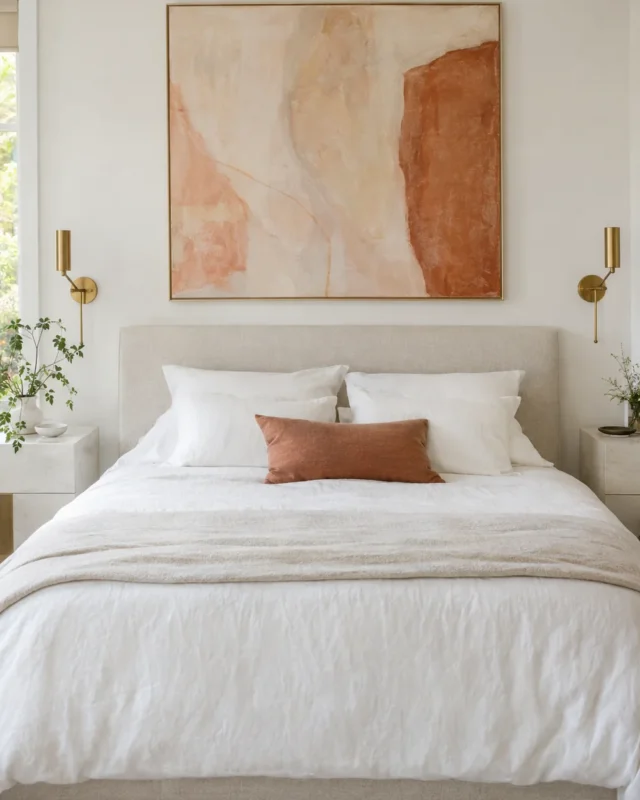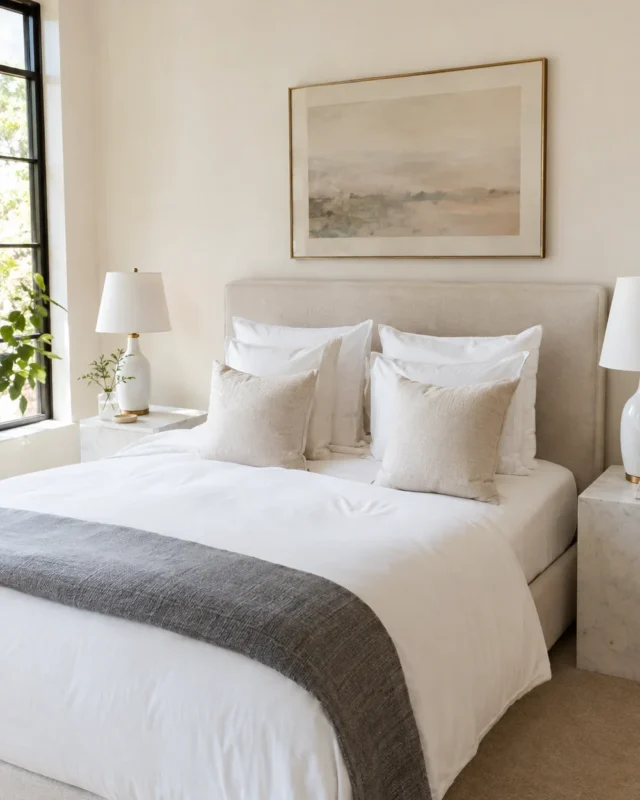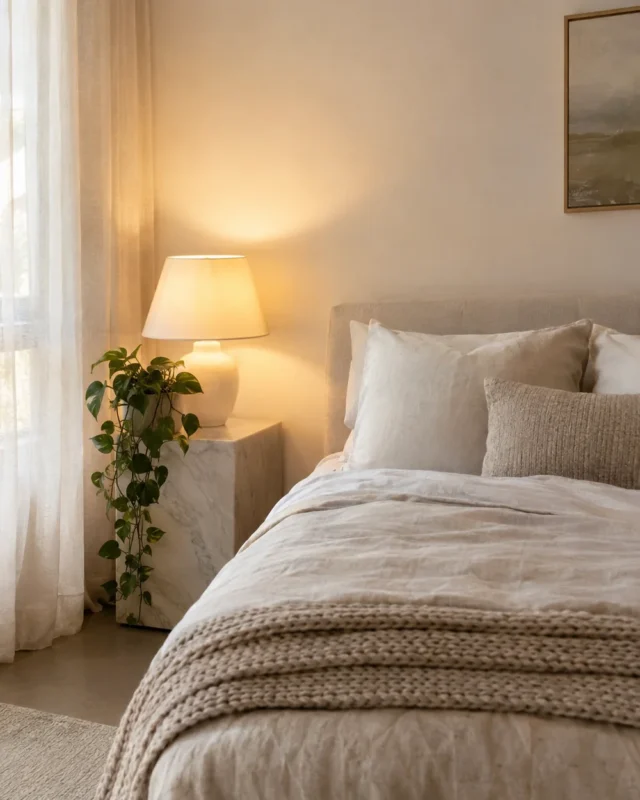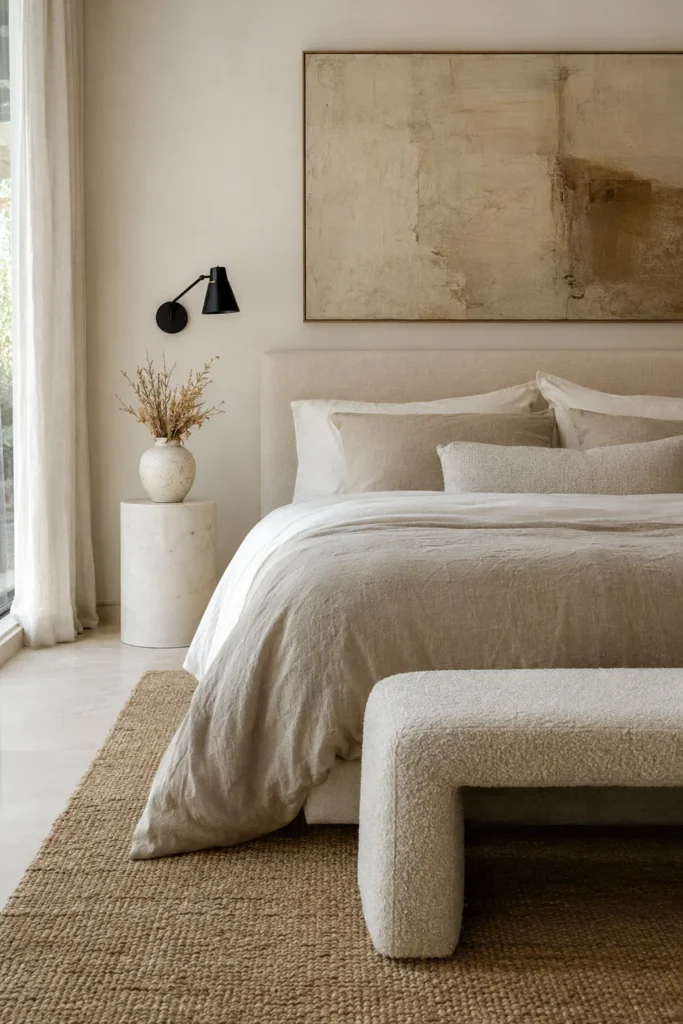
A neutral bedroom sounds simple. Pick beige, add white, done. But anyone who has tried it knows the result can go two ways: a soft, calm retreat, or a room that feels a bit like a waiting room.
The difference comes down to a few choices. Warm versus cool undertones. Lots of texture versus flat surfaces. A little contrast versus none at all.
These neutral bedroom ideas walk through each of those choices, so your room feels restful and layered instead of bland.
1. Choose Your Undertone First
Every neutral leans warm (yellow, pink or red underneath) or cool (blue, green or gray underneath). Mixing them by accident is the most common reason a neutral room looks slightly off.
- Warm neutrals: cream, ivory, sand, oatmeal, camel, mushroom. These feel cozy and soft.
- Cool neutrals: crisp white, dove gray, stone, greige with a gray base. These feel fresh and airy.
A quick test is to hold a paint chip or fabric next to a sheet of plain printer paper. Next to pure white, the undertone shows clearly. Pick one direction and keep most of the room in it.
2. Layer at Least Five Textures
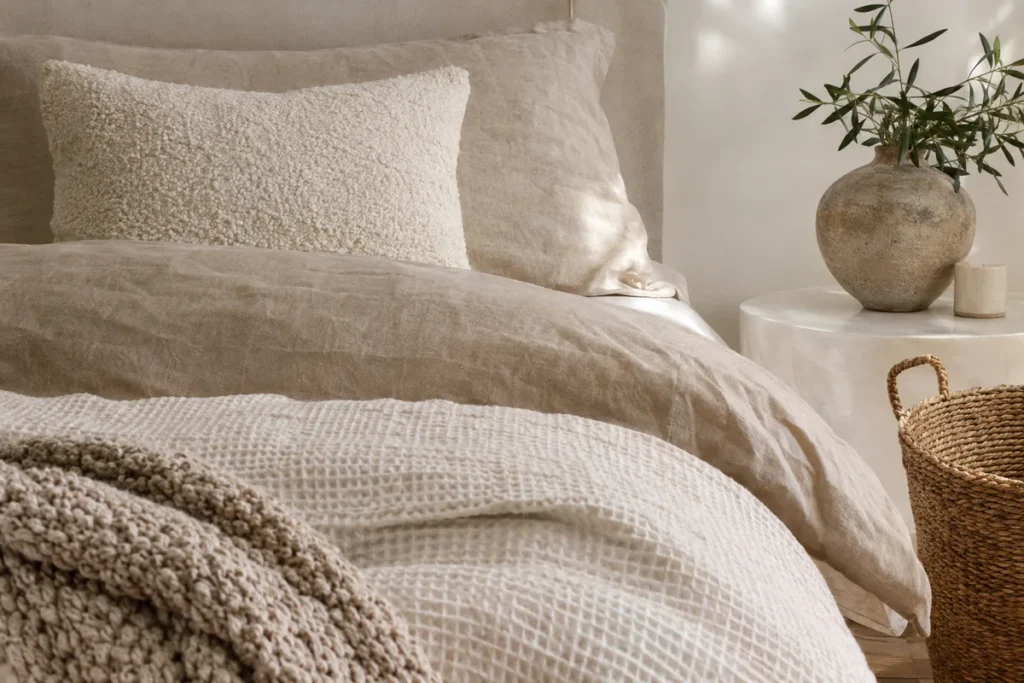
Texture is what keeps a neutral room from feeling flat. When the colors are quiet, the surfaces have to do the talking.
Try to include at least five of these:
- Linen bedding or curtains
- A knit or waffle blanket
- Boucle or a nubby wool pillow
- Jute, sisal or seagrass in a rug or basket
- Ceramic or stoneware on the nightstand
- Rattan or cane in a mirror or chair
- A smooth stone or marble tray
Stand in the doorway and look. If everything looks smooth, add one rough or nubby piece.
3. Use Three Shades, Not One
A room in a single shade of beige can look washed out. Instead, use three related tones:
- A light base for walls and bedding, like warm white or ivory.
- A mid tone for larger textiles, like sand or oatmeal.
- A deeper anchor for small pieces, like camel, mushroom or soft brown.
The deeper anchor is what gives your eye a place to rest. Repeat it two or three times, for example in a pillow, a vase and a picture frame.
4. Pick the Right White for the Walls
Plain bright white can feel cold in a bedroom, especially in north-facing rooms with cooler light. A warm white with a soft creamy undertone usually feels better.
Always test paint on the wall before committing. Paint two large swatches, about the size of a sheet of paper, on different walls and check them in morning, afternoon and lamp light. The same white can look very different across a day.
5. Add a Touch of Black for Contrast
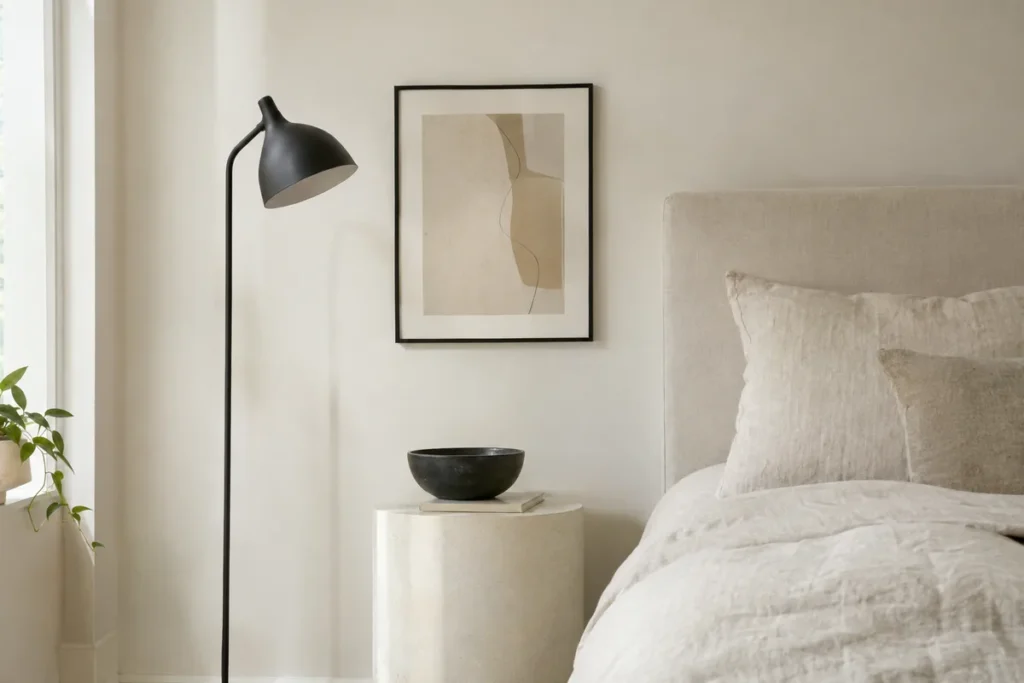
A small amount of black makes neutrals look more intentional and modern. Think of it as punctuation.
- A matte black lamp or sconce
- Thin black picture frames
- A black ceramic bowl or vase
- Black curtain rods or cabinet pulls
Keep it to a few small pieces. Too much black can start to dominate a soft room.
6. Bring In Soft Green
Plants are the easiest way to add life to a neutral bedroom. Their green reads almost as a neutral and keeps the room from feeling sterile.
Good low-light bedroom plants include snake plant, ZZ plant, pothos and cast iron plant. Water most of them only when the top inch or two of soil is dry, roughly every one to two weeks. If you have pets, check before buying, since several common houseplants are toxic to cats and dogs.
7. Choose Calm, Tonal Art
Art in a neutral bedroom works best when it repeats the room’s colors. Look for:
- Soft abstracts in beige, cream and brown
- Black and white landscape photos
- Simple line drawings in thin frames
- Textured plaster or canvas art
One larger piece above the bed usually looks calmer than a busy gallery wall.
8. Mix Metals Softly
Brushed brass adds warmth, while matte black adds contrast. Using both in a neutral room works well. A brushed brass lamp base with a black picture frame and black curtain rod feels balanced. Avoid very shiny chrome, which can look cold next to warm neutrals.
9. Choose Bedding You Can Mix and Match
Neutral bedding is easy to swap between seasons. Build a small collection:
- Two sets of white or ivory sheets
- One linen duvet cover in sand or oatmeal
- One lighter cotton quilt for summer
- A heavier knit throw for winter
Because everything is in the same family, any combination looks put together.
10. Add Warm Light in the Evening
Warm light flatters neutrals. Under cool bulbs, cream can look gray and beige can look dull. Use 2700K bulbs in lamps, and add a dimmer if you can. Linen lampshades soften the glow even more.
11. Use a Large Neutral Rug
A large rug grounds the bed and adds another texture underfoot. Jute is durable and affordable but a bit rough on bare feet. A wool and jute blend or a soft cream wool rug feels nicer next to the bed. Layering a smaller sheepskin-style rug on top of jute gives you both texture and comfort.
12. Keep Clutter Out of Sight
Calm color schemes show clutter more clearly. Closed storage helps a neutral room stay restful:
- Lidded baskets on open shelves
- Nightstands with drawers instead of open shelves
- A bench with storage at the foot of the bed
- Under-bed storage boxes in fabric
Putting It Together
Start with your undertone, then pick three shades in that family, layer at least five textures and add a tiny bit of black. With warm light and a plant or two, a neutral bedroom feels restful, warm and quietly put together for years.
Do you lean toward warm creamy neutrals or cooler soft grays in your bedroom? Tell us in the comments.
Quick Questions
How do I make a neutral bedroom not boring?
Layer different textures like linen, knit, boucle and jute, use three shades instead of one, and add small touches of black and green. Texture and contrast keep neutrals interesting.
What is the best neutral color for a bedroom?
Warm whites and soft creams are the most popular because they feel restful in both day and lamp light. Test paint swatches on your walls before choosing.
Can I mix gray and beige in a bedroom?
Yes, if you choose a warm gray or a greige that shares some of the beige’s warmth. Cool blue grays next to yellow beiges are harder to pair.
What accent colors go with a neutral bedroom?
Soft sage, muted clay, dusty blue, warm terracotta and black all pair well. Add them in small doses through pillows, art and a throw.