Grout is porous, which means it soaks up everything: mud from shoes, spilled coffee, soap scum and the steam from every shower. Over time, those light lines turn grey, brown or even black, and the whole floor starts to look dirty no matter how often you mop.
The good news is that most grout can be brought back with simple supplies and a stiff brush. You do not need to regrout or hire anyone for ordinary dirt.
Below you will find the gentlest method first, then stronger options for stubborn stains, plus how to keep grout clean once it looks good again.
What You Will Need
- A stiff narrow grout brush (a few dollars) or an old firm toothbrush
- Baking soda
- Warm water
- Oxygen bleach powder (a color safe, non chlorine bleach)
- A spray bottle
- Rubber gloves
- Microfiber cloths and a bucket
- Grout sealer (optional, usually under $20)
Safety Notes Before You Start
Grout cleaning often tempts people to reach for every product under the sink. Please do not.
- Never mix bleach with ammonia or vinegar. Bleach and ammonia make toxic chloramine gas. Bleach and vinegar release chlorine gas. Even residue in the same bucket can react, so rinse tools well between products.
- Ventilate the room. Open a window and run the exhaust fan, especially in a small bathroom.
- Test a hidden spot first. Some colored grout can fade, and natural stone like marble or travertine can be etched by acids, including vinegar and lemon juice.
- Wear gloves and keep kids and pets out of the room until you finish rinsing.
Method 1: Baking Soda Paste for Light Dirt
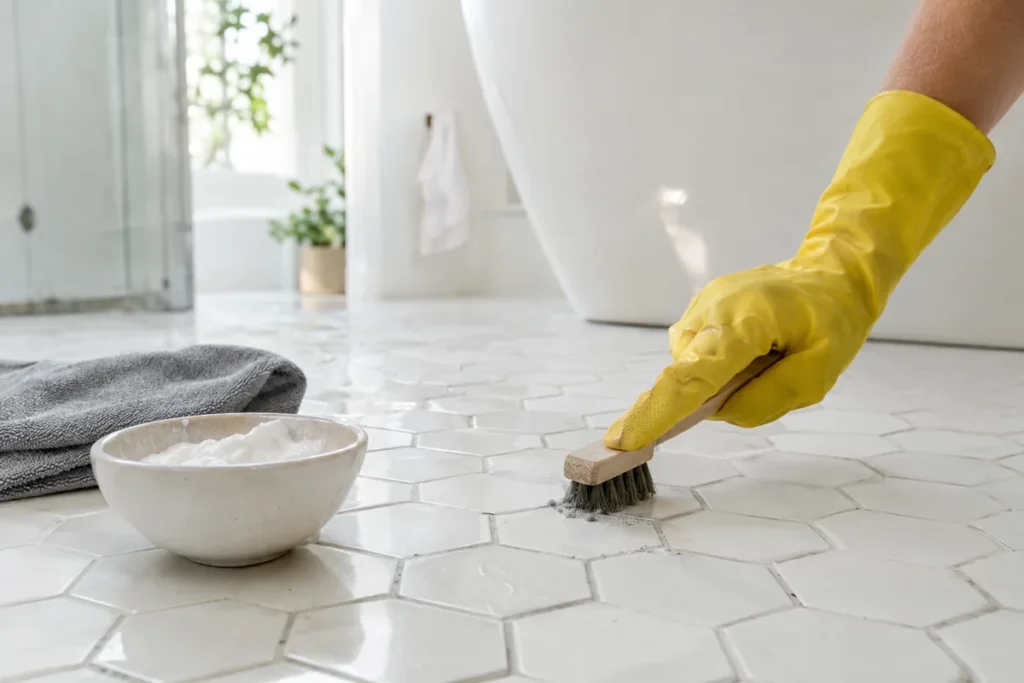
This is the place to start. It is gentle, cheap and works on most everyday grime.
- Sweep or vacuum the floor so you are not grinding grit into the grout.
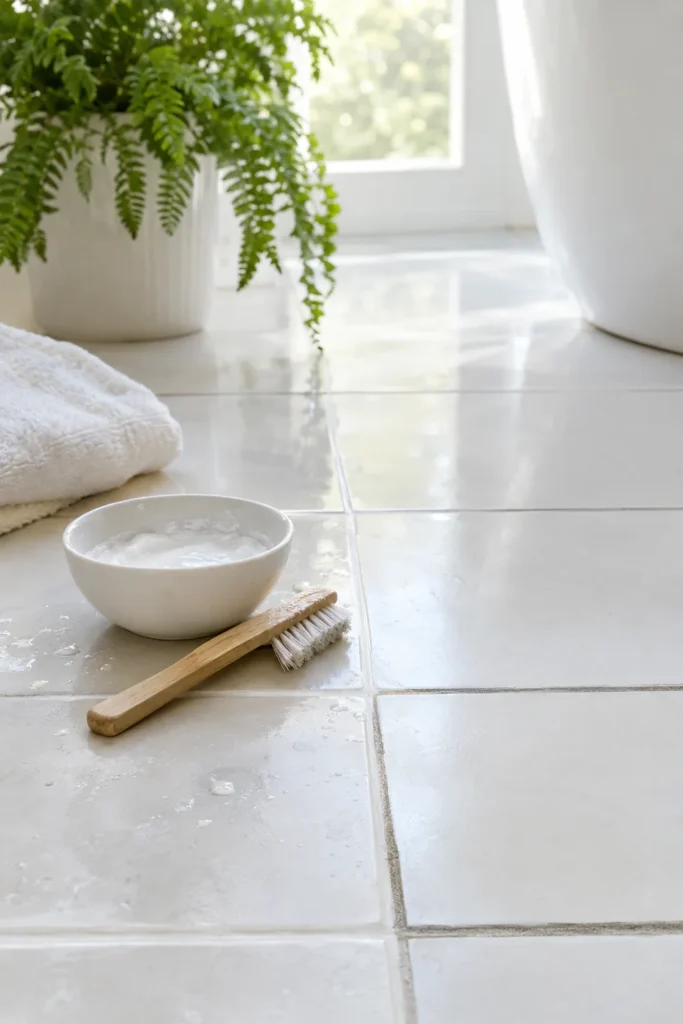
- Mix 3 parts baking soda with 1 part warm water to make a thick paste.
- Spread the paste along the grout lines with your finger (gloved) or the brush.
- Let it sit for about 10 minutes.
- Scrub along each line with the stiff brush using small, firm strokes.
- Wipe up the paste with a damp cloth, rinsing the cloth often.
- Mop the area with clean water and let it dry.
Work in sections of about 3 by 3 feet so the paste does not dry out before you scrub.
Method 2: Oxygen Bleach for Tougher Stains
If the grout is still grey after Method 1, oxygen bleach is the next step. It lifts deep stains and is gentler on colors than chlorine bleach.
- Dissolve oxygen bleach in warm water following the package directions. A typical ratio is a few tablespoons per gallon.
- Pour or sponge the solution over the grout lines, keeping them wet.
- Let it sit for 10 to 15 minutes. You may see it bubble slightly as it works.
- Scrub with the grout brush.
- Rinse thoroughly with clean water and dry with a towel.
Mix only what you need and use it within a few hours, since the solution loses strength once dissolved.
Method 3: Steam for Sealed Floors
A handheld steam cleaner with a narrow nozzle can blast dirt out of grout lines without any product. It is especially useful on large floors. Move slowly along each line, then wipe up the loosened dirt right away.
Skip steam on unsealed natural stone, cracked grout or older tile that might loosen with heat and moisture. Check the flooring manufacturer’s guidance if you are unsure.
How to Clean Shower Grout

Shower grout has its own problems: soap scum, hard water and mildew. Here is a routine that works well:
- Run a hot shower for a few minutes to loosen residue, then turn it off.
- Apply the baking soda paste or oxygen bleach solution to the grout lines.
- Let it sit for 10 to 15 minutes.
- Scrub with a grout brush. A long handled brush saves your back on high tiles.
- Rinse well with the shower head.
- Dry the walls with a squeegee or towel.
For dark spots of mildew, oxygen bleach usually works. If you choose to use a diluted chlorine bleach product instead, use it on its own, rinse it away completely, ventilate well, and never follow it with vinegar or an ammonia based cleaner.
Seal the Grout Once It Is Clean
Sealing is the step most people skip, and it is the one that keeps grout clean the longest. A penetrating grout sealer soaks into the grout and makes it resist stains and water.
- Make sure the grout is completely clean and dry. Wait at least 24 hours after cleaning.
- Apply the sealer with the small applicator brush or bottle tip, following just the grout lines.
- Wipe any sealer off the tile surface within a few minutes.
- Let it cure for the time listed on the package, often 24 to 48 hours, before mopping or showering.
Most grout should be resealed about once a year. Shower grout may need it a bit more often.
How to Keep Grout Clean Longer
- Mop with clean water. A dirty mop pushes grime straight into the grout lines. Change the water when it turns cloudy.
- Use a pH neutral floor cleaner for regular mopping. Harsh acids and strong alkalines wear grout down over time.
- Squeegee the shower after each use. It takes 30 seconds and prevents most soap scum and mildew.
- Run the bathroom fan during showers and for 20 minutes afterward.
- Place mats at entry doors so less grit reaches tiled floors.
- Spot clean spills right away, especially coffee, wine and sauces in the kitchen.
When It Is Time to Regrout
Cleaning cannot fix grout that is cracked, crumbling or missing. If you see gaps, loose tiles or grout that stays wet and dark long after the shower is off, the grout may need to be repaired or replaced. Small areas are a manageable weekend project. Large areas or showers with signs of water damage are worth an opinion from a tile professional.
Wrapping Up
Clean grout makes tile look new again. Start with a simple baking soda paste, move to oxygen bleach for stubborn stains, and finish by sealing so your hard work lasts. Keep the safety rules in mind, especially never mixing bleach with ammonia or vinegar, and give the room good air flow while you work.
Is your grout trouble mostly on the floors or in the shower, and which method are you going to try first? Tell us in the comments.
Quick Questions
Can I use vinegar to clean grout?
Diluted vinegar can help with soap scum on ceramic tile, but repeated use can wear down cement based grout, and it will etch natural stone. Baking soda and oxygen bleach are safer everyday choices.
How often should grout be cleaned?
A quick scrub of problem areas every month or two is enough for most homes, with a deeper clean twice a year.
What is the best brush for grout?
A narrow brush with stiff nylon bristles works best. Avoid wire brushes, which can scratch tile and damage grout.
Why did my grout turn dark again so quickly?
It is usually unsealed or being mopped with dirty water. Seal it after the next deep clean and change mop water often.