Every season the same thing happens. The boxes come down, the lights are tangled, a favorite ornament is broken and half of the decor you remember buying is nowhere to be found.
A good storage system fixes all of that. It takes a little time once, but every season after that is faster, calmer and more fun. You open the right bin, everything is in good shape, and you know exactly what you have.
Here is how to store seasonal decor step by step, from sorting to labeling, for every holiday and season of the year.
Step 1: Sort and Declutter First
Before buying any bins, gather all your seasonal decor in one place and sort it into piles by season or holiday: fall, Halloween, Thanksgiving, Christmas, winter, spring, Easter and summer.
Then go through each pile:
- Keep what you used and loved last season.
- Donate anything in good condition that you skipped for two years.
- Toss broken lights, crushed ornaments and faded faux stems.
Most people find they can let go of a quarter or more. Less decor means fewer bins and easier decorating.
Step 2: Choose the Right Containers
Supplies:
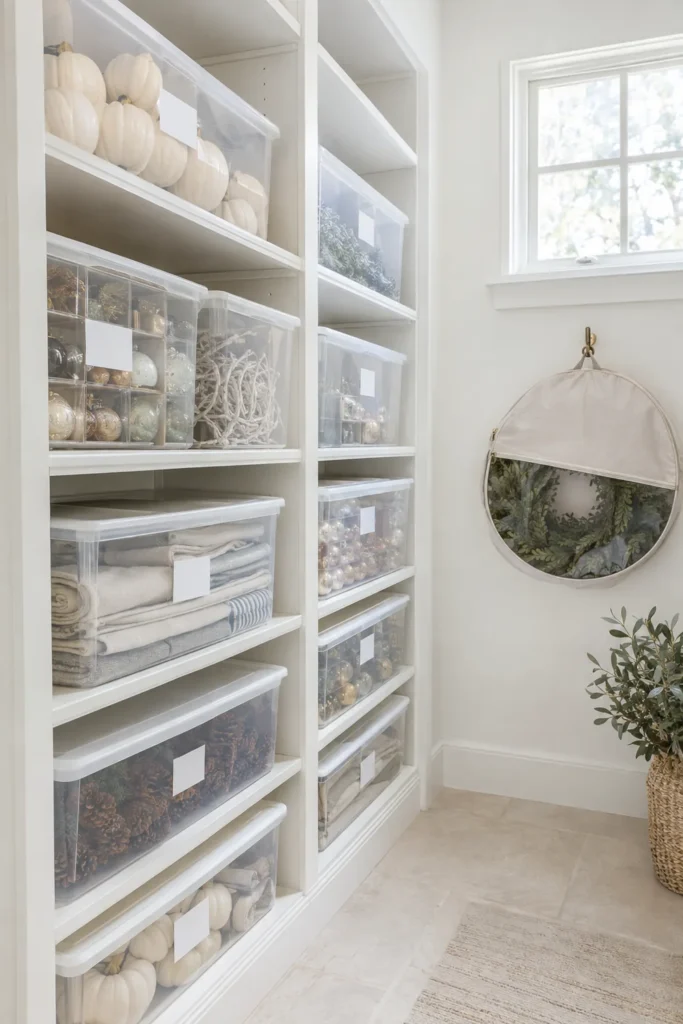
- Clear plastic bins with secure lids, in one or two sizes
- Ornament storage boxes with dividers
- Round wreath storage bags or boxes
- Zip-top bags in several sizes
- Tissue paper (acid free for delicate items)
- Sturdy cardboard for lights
- Label maker, or labels and a marker
- Vacuum or compression bags for fabric items
Clear bins are worth the extra few dollars. You can see what is inside at a glance. Choosing matching sizes makes them stack neatly on a shelf. Avoid cardboard boxes for long term storage, as they attract pests and absorb moisture.
Step 3: Use One Bin Color or Label System
Pick a simple system to tell seasons apart:
- Color coded lids (for example, orange for fall, red for Christmas, green for spring)
- Colored labels on matching clear bins
- A numbered bin system with a matching list on your phone
Label at least two sides of each bin, including the side facing out on the shelf.
How to Protect Ornaments
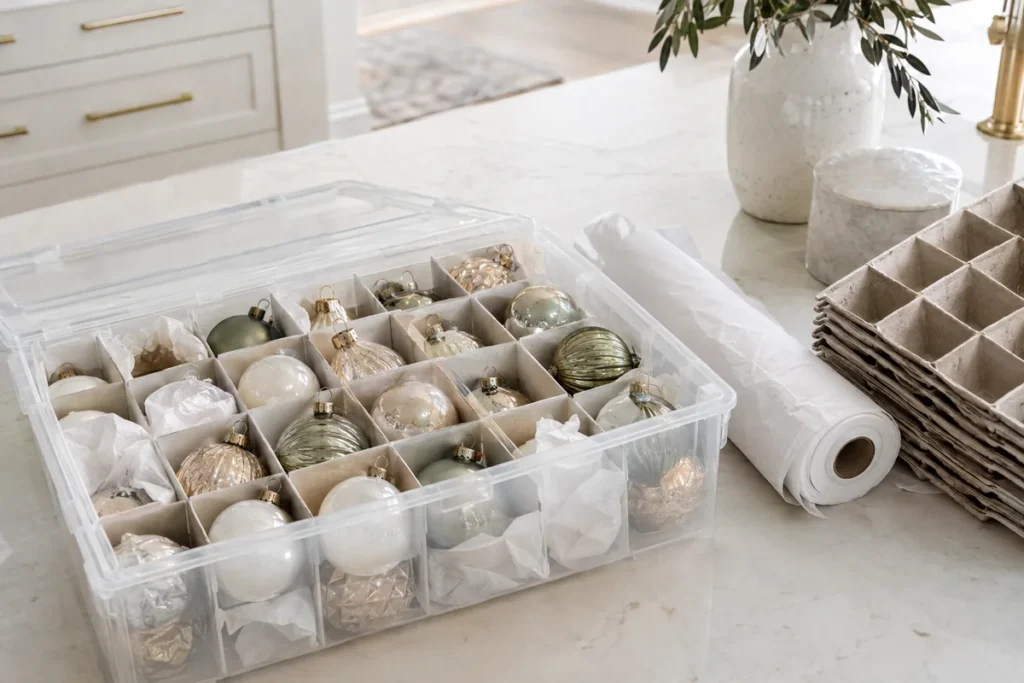
Fragile ornaments need the most care:
- Use divided ornament boxes, or place ornaments in egg cartons or plastic cups glued into a shallow box.
- Wrap glass and sentimental ornaments individually in tissue.
- Put the heaviest ornaments at the bottom, lightest on top.
- Remove metal hooks and store them in a small zip bag inside the box so they do not scratch.
How to Store Christmas Lights Without Tangles
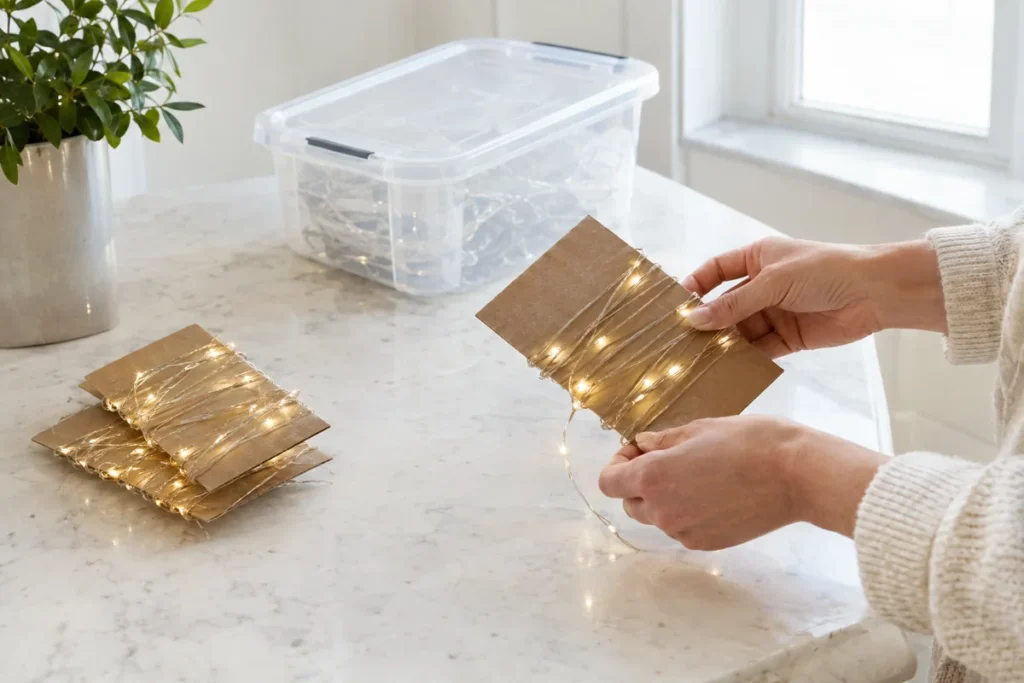
Tangled lights are one of the biggest holiday frustrations. Try this:
- Cut a rectangle of sturdy cardboard about 6 by 12 inches.
- Cut a small slit at one end and tuck the plug into it.
- Wrap the strand around the cardboard, not too tightly.
- Tuck the other end into a second slit.
- Write the length and color on the cardboard.
Test each strand before you pack it, and toss any that do not work. Store wrapped lights flat in a bin.
How to Store Wreaths and Garlands
- Wreaths: keep them in round wreath bags or boxes and hang them on a hook in a closet or garage wall so nothing crushes them.
- Garlands: coil loosely in large bins, or wrap them around a pool noodle or a cardboard tube to keep them from flattening.
- Faux stems: store upright in a tall bin or bundle them loosely in tissue.
How to Store Textiles and Pillow Covers
Wash or clean table linens, pillow covers, stockings and tree skirts before storing them. Fold them neatly in bins or vacuum bags with a cedar block or lavender sachet to keep them fresh. Keep pillow inserts separate from the covers so the covers take up less space.
Where to Store Seasonal Decor
The best spot is cool, dry and dark. A closet, under the bed, a basement shelf or a garage shelf all work if they are dry.
Avoid:
- Hot attics: heat can melt candles, warp plastic and weaken glue on ornaments.
- Damp basements: moisture can cause mildew on fabrics.
- Direct sunlight: colors fade over time.
Store bins on shelves rather than on the floor, and put the current or next season in the easiest spot to reach.
Make a Simple Inventory
Keep a quick note on your phone with each bin’s number, label and contents. Take a photo of the inside of each bin before closing it. Next year, you will know at a glance what you have and what you do not need to buy.
A Seasonal Rotation Calendar
Storage works best when it follows a rhythm. A simple yearly rotation looks like this:
- Early September: bring out fall bins, put summer decor away.
- Late October: swap Halloween pieces for Thanksgiving and harvest decor.
- Late November: pack fall, bring out Christmas and winter bins.
- Early January: pack Christmas, leave winter neutrals out.
- March: pack winter, bring out spring and Easter.
- June: swap to summer.
Each swap is a good moment to wipe down the bins, replace worn tissue and toss anything broken.
Pack Up in Reverse
When the season ends, set aside an hour or two to pack properly instead of throwing everything into one box. Pack by room, so all living room decor goes in one bin and all entryway decor in another. This makes decorating next year much faster.
A good storage system takes one afternoon to set up and saves time every single season afterward. Start with one holiday, usually Christmas since it has the most pieces, and build from there.
What is the hardest seasonal decoration to store in your home? Tell us in the comments.
Quick Questions
What is the best way to store holiday decorations?
Clear, lidded plastic bins in matching sizes, labeled by season, stored on shelves in a cool, dry place.
How do I store Christmas ornaments so they do not break?
Use divided ornament boxes, wrap glass pieces in tissue and keep the heaviest ornaments at the bottom.
Where should I store decor if I do not have an attic or basement?
Under beds, top shelves of closets, behind doors with over-the-door racks and inside ottomans or storage benches all work well in small homes.