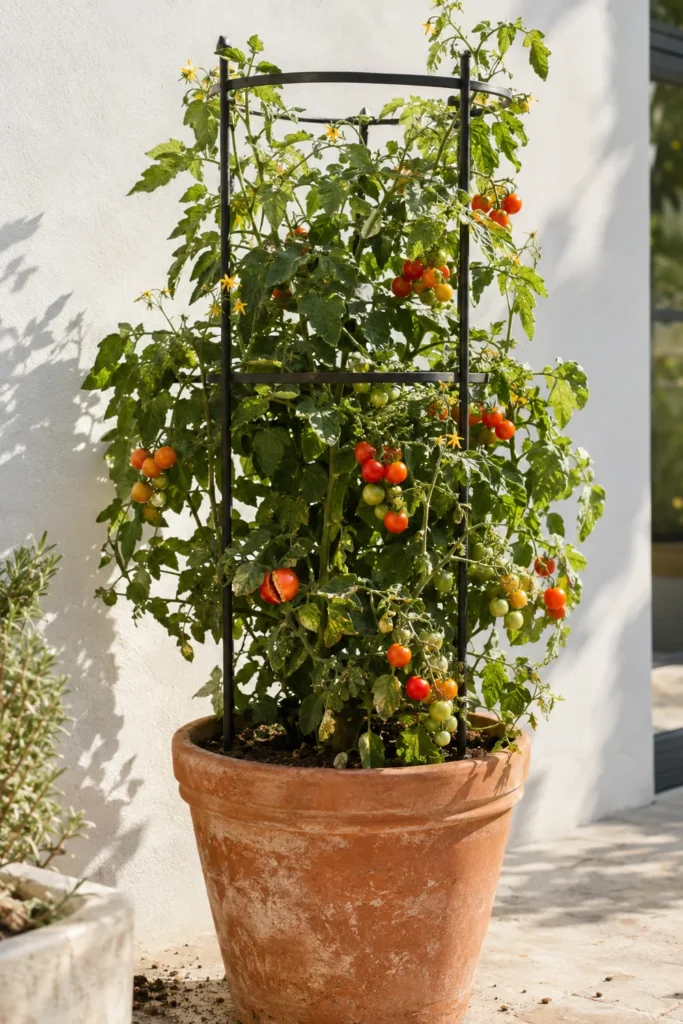
Fresh tomatoes are one of the best reasons to garden, and you do not need a big plot to grow them. A sunny patio, balcony or front step is enough.
Tomatoes in pots do have a few needs that differ from tomatoes in the ground. They need a bigger container than most people expect, more consistent watering and regular feeding. Get those three right and container tomatoes can be just as productive.
Here is how to grow tomatoes in pots, from choosing a variety to harvest.
Choose a Container Friendly Variety
Tomatoes come in two main growth habits.
- Determinate (bush) tomatoes grow to a set height, usually 2 to 4 feet, and ripen most of their fruit over a few weeks. They are the easiest choice for pots.
- Indeterminate (vining) tomatoes keep growing and fruiting until frost, often reaching 6 feet or more. They can grow in pots but need large containers and tall, sturdy support.
Good choices for containers:
- Compact patio or dwarf varieties bred for pots, which stay under 3 feet
- Cherry and grape tomatoes, which are very productive and quick to ripen
- Determinate paste tomatoes like Roma types for sauce
- Small to medium slicing tomatoes rather than giant beefsteaks
Look for labels that mention disease resistance (often shown as letters such as V, F or N), which helps plants stay healthy.
Pick the Right Pot Size
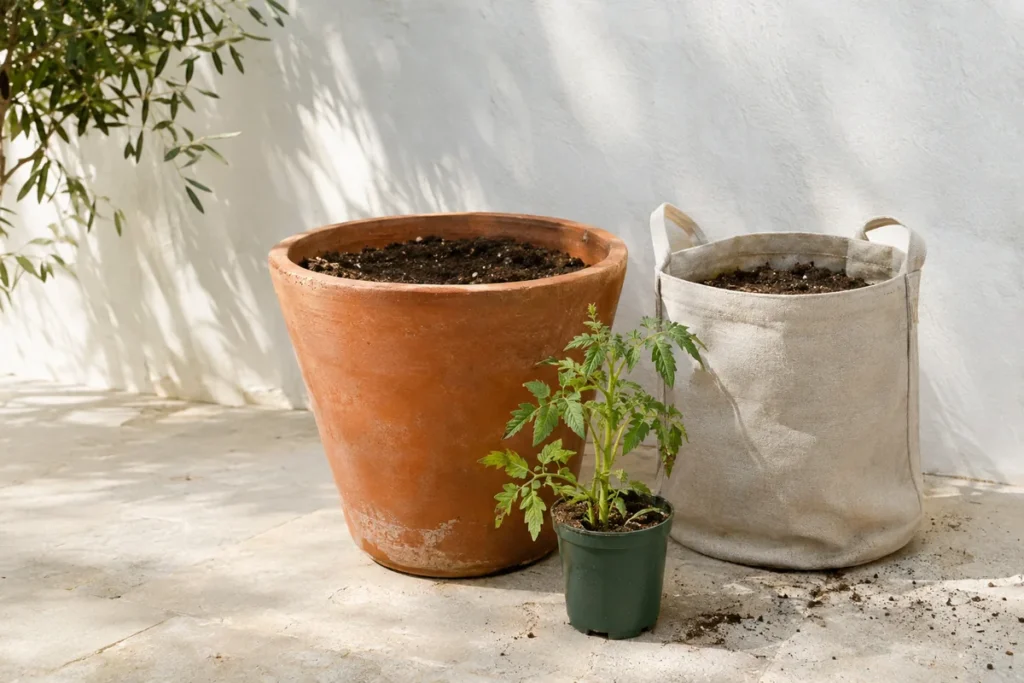
This is where many container tomatoes go wrong. Small pots dry out in hours and stunt the plant.
- Dwarf or patio tomatoes: at least 5 gallons (about 12 inches wide and deep).
- Determinate tomatoes: 10 gallons or more.
- Indeterminate tomatoes: 15 to 20 gallons, ideally 18 to 24 inches wide.
Plastic, fabric grow bags, glazed ceramic and terracotta all work. Terracotta dries faster in summer heat, so check it more often. Fabric grow bags breathe well and keep roots cooler. Dark plastic pots can overheat in full sun, so choose light colored pots or shade their sides.
Every pot needs drainage holes.
Soil, Sun and Timing
Soil: fill pots with a quality potting mix, never garden soil. Mixing in a few handfuls of compost adds nutrients and helps hold moisture.
Sun: tomatoes need at least 6 to 8 hours of direct sun a day. More sun means more fruit and better flavor. A south or west facing patio is ideal.
Timing: plant outside after the last frost, when nights stay above 50°F and daytime temperatures reach the 70s. In most US gardens (roughly zones 5 to 7), that is mid to late spring. In warm zones like 9 and 10, plant in late winter or early spring, and often again in late summer for a fall crop, since fruit set slows above about 90°F.
How to Plant Tomatoes in Pots
- Fill the pot with moist potting mix to about 3 inches below the rim.
- Remove the lowest leaves from your seedling, leaving the top few sets.
- Plant deep. Tomatoes grow new roots along buried stems, so bury the stem up to the remaining leaves. Deeper planting makes stronger plants.
- Add support now, before roots spread, so you do not damage them later.
- Water thoroughly until water drains out the bottom.
- Add a slow release fertilizer labeled for tomatoes or vegetables, following package directions.
One tomato plant per pot is best. Planting two in one container usually means two smaller, struggling plants.
Staking and Supporting Container Tomatoes
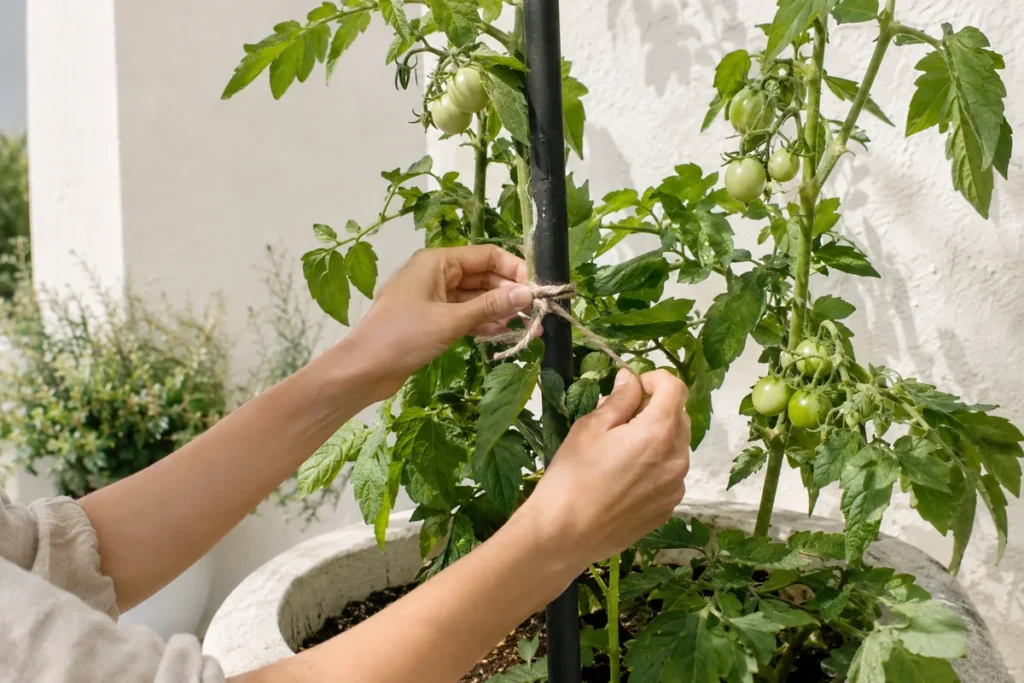
Tomato plants get heavy as fruit develops, and pots tip over in wind.
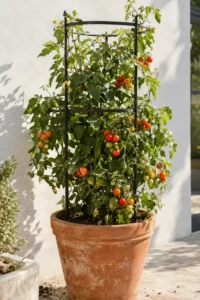
- Tomato cages work for determinate and patio varieties. Choose sturdy ones at least 4 feet tall.
- Tall stakes (6 feet or more) suit indeterminate types. Tie the main stem every 8 to 12 inches with soft twine or plant ties.
- Spiral supports look tidy and work well on patios.
Place heavy pots in a sheltered spot, or set them against a wall to help in windy areas.
Watering: The Key to Container Tomatoes
Inconsistent watering is behind most container tomato problems, including cracked fruit and blossom end rot.
- Check daily. Push a finger into the soil. Water when the top inch is dry.
- Water deeply until it runs from the drainage hole.
- In hot summer weather, large pots often need water once a day and smaller pots twice a day.
- Water at the soil, not over the leaves, and preferably in the morning.
- Mulch the soil surface with a layer of straw or shredded leaves to slow evaporation.
Self watering containers with a built in reservoir help a lot if you are often away.
Feeding Through the Season
Potting mix runs out of nutrients quickly, and frequent watering washes them away. After the slow release fertilizer from planting, start feeding with a liquid tomato fertilizer every 1 to 2 weeks once the first flowers appear. Choose one lower in nitrogen and higher in potassium. Too much nitrogen gives lush leaves but few tomatoes.
Pruning and Care
- Indeterminate tomatoes: pinch off suckers (small shoots growing in the angle between the main stem and a branch) to keep plants manageable in pots.
- Determinate tomatoes: need little pruning. Removing suckers reduces their harvest.
- Lower leaves: remove any that touch the soil to reduce disease spread.
Common Problems and Fixes
- Blossom end rot (dark, sunken patches on the bottom of fruit): caused by uneven watering, which affects calcium uptake. Water consistently.
- Cracked fruit: a sudden heavy watering after a dry spell. Keep moisture steady.
- Yellowing lower leaves: often nitrogen deficiency or early blight. Remove affected leaves and keep feeding.
- Flowers but no fruit: temperatures above 90°F or below 55°F can prevent fruit setting. Gently shaking plants helps pollination on still days.
- Hornworms: large green caterpillars. Pick them off by hand.
Harvesting
Pick tomatoes when they are fully colored and give slightly when pressed. If a heat wave or frost is on the way, harvest fruit at the first blush of color and let it finish ripening on the counter, stem side down and out of direct sun. Never refrigerate tomatoes you want to ripen; cold dulls their flavor.
Pet safety: tomato leaves and stems contain compounds that are toxic to cats and dogs, and green fruit can cause stomach upset. Ripe red tomatoes are generally fine in small amounts, but keep plants out of reach of pets that like to chew.
What tomato variety are you planning to grow in a pot this year? Tell us in the comments.
Quick Questions
What is the smallest pot I can grow tomatoes in?
A 5 gallon pot is the practical minimum for a dwarf or patio tomato. Larger is always better, since bigger pots hold more water and give bigger harvests.
How often should I water tomatoes in pots?
Check daily. In midsummer, most container tomatoes need water every day, and small pots in full sun may need it twice. Water when the top inch of soil is dry.
Can I reuse potting soil for tomatoes next year?
It is best not to. Tomato diseases can linger in old soil. Use fresh potting mix, or reuse the old mix for flowers after refreshing it with compost.
Why are my container tomatoes not turning red?
Heat above about 85 to 90°F slows the pigment that turns tomatoes red. Fruit will ripen once temperatures ease, or you can pick at first blush and ripen indoors.