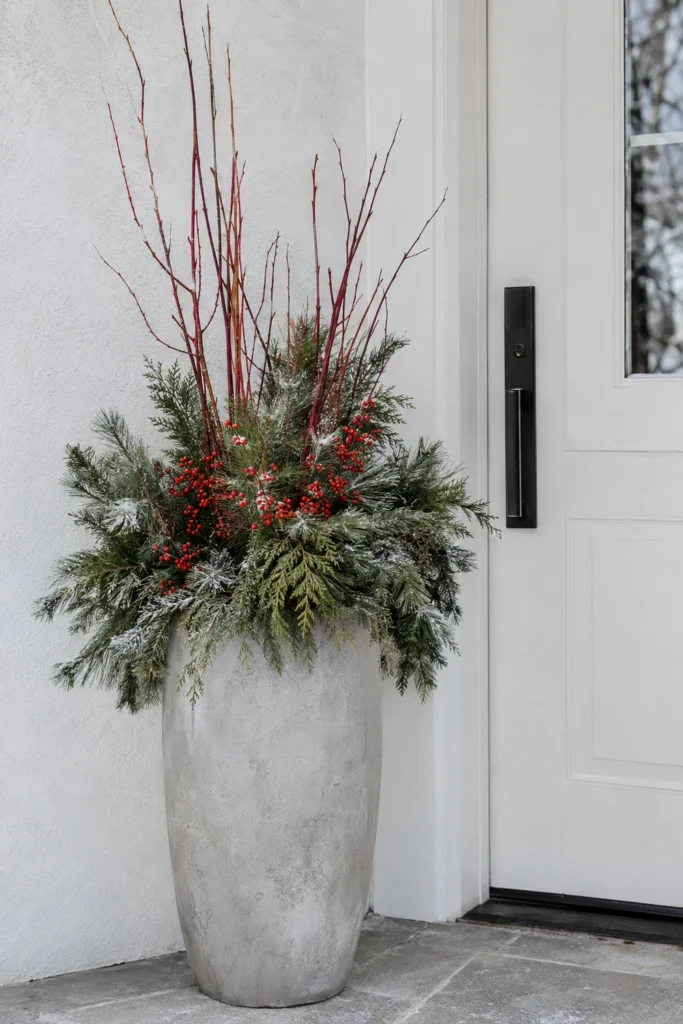
When the summer flowers fade, it is tempting to empty the pots and forget about them until spring. But bare containers by the front door or on the patio can make the colder months feel a little bleak.
Winter containers bring back life and color with very little upkeep. Many of the best winter pots are not even growing; they are simple arrangements of evergreen cuttings, colorful branches and berries tucked into soil that stays fresh for months in the cold.
Here are winter container ideas that look beautiful from late fall to early spring.
Start With the Right Container
Cold weather is tough on pots. Water in the soil freezes and expands, which can crack fragile containers.
- Frost proof choices: fiberglass, resin, concrete, high fired stoneware, metal and thick plastic.
- Use caution with: standard terracotta and thin glazed ceramic, which often crack in freezing temperatures.
- Drainage matters: make sure the drainage hole is clear. Raise pots on small pot feet so water can escape.
In very cold regions, a large pot (at least 16 to 20 inches wide) gives roots more protection, since more soil means more insulation.
Two Approaches to Winter Pots
- Living winter containers use cold hardy plants that keep growing or holding their shape through winter.
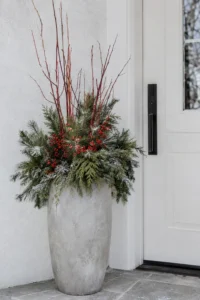
- Arranged winter containers use cut evergreens, branches and berries pushed into soil, like a floral arrangement that lasts for months.
Many of the best pots combine both.
Cold Hardy Plants for Living Winter Pots
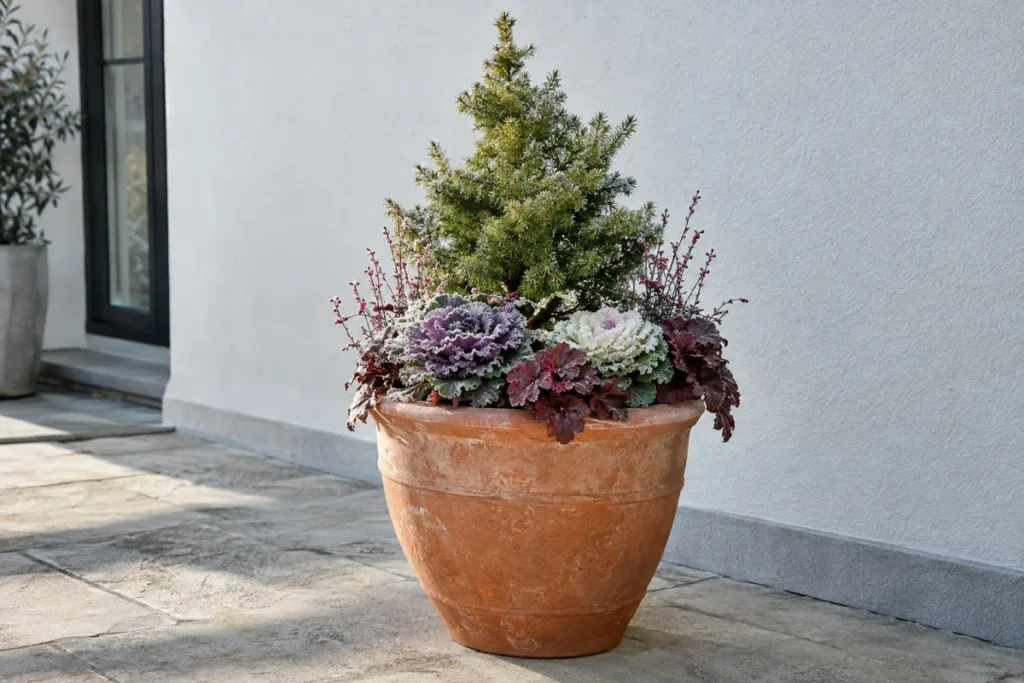
A good rule is to choose plants rated at least two USDA zones colder than your own. Roots in pots are more exposed than roots in the ground. If you live in zone 6, look for plants hardy to zone 4.
Evergreen structure:
- Dwarf conifers such as dwarf Alberta spruce, dwarf mugo pine and dwarf false cypress
- Boxwood for neat, rounded shapes
- Hardy ivy or wintercreeper for trailing edges
Color and texture:
- Ornamental kale and cabbage: purple, white and pink rosettes that deepen in color in cold weather. Hardy to around 5 to 10°F.
- Heuchera: colorful leaves from lime to deep plum, evergreen in milder climates.
- Winter heath (Erica carnea): small pink or white flowers in late winter, hardy to about zone 5.
- Hellebores: nodding winter and early spring flowers, hardy to about zone 4 or 5.
- Pansies and violas: bloom through mild winters and come back strong in early spring, especially in zones 6 to 9.
Building a Winter Arrangement From Cuttings
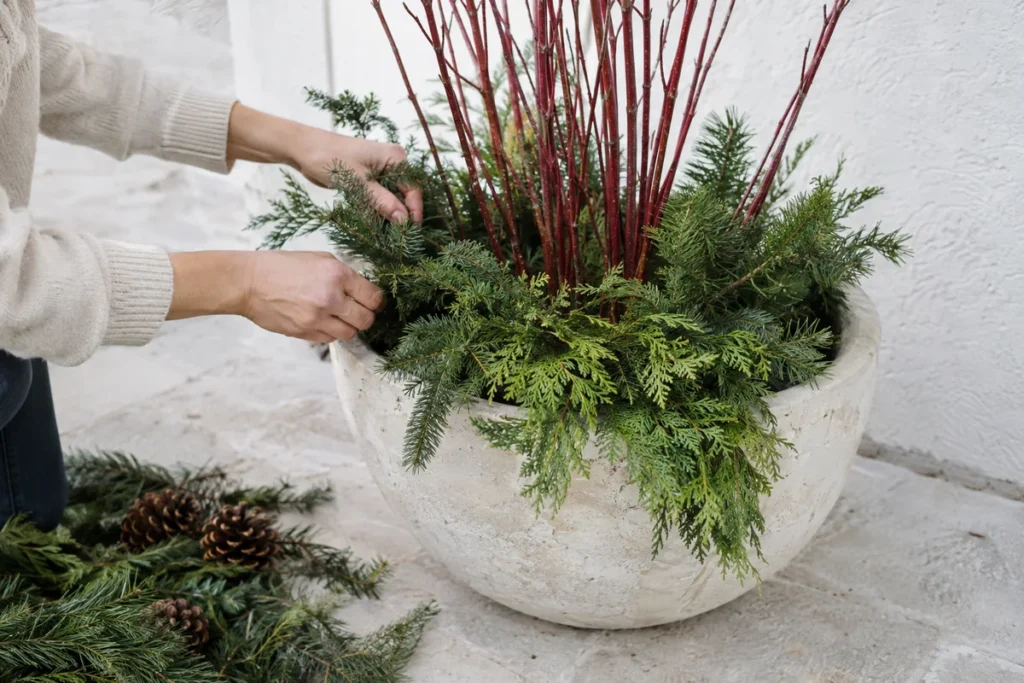
This approach works anywhere, even in very cold climates, and takes about an hour.
Supplies:
- A frost proof container
- Potting mix or the old soil left from summer
- Fresh evergreen cuttings: fir, pine, cedar, juniper, cypress or boxwood (about $15 to $40 in bundles, or trimmed from your own shrubs)
- Upright branches: red twig dogwood, yellow twig dogwood, birch or curly willow
- Berries or accents: winterberry, faux berries, pine cones or magnolia leaves
- Pruners and gloves
Steps:
- Fill the pot with soil to about 2 inches below the rim. Water it so it is moist but not soggy, since moist soil freezes solid and holds stems in place.
- Add the tall center. Push 5 to 9 upright branches into the center or back, clustered for impact. Aim for a height of about 1.5 to 2 times the pot height.
- Create a full base. Insert longer evergreen cuttings around the edges at an angle, so they drape over the rim.
- Fill the gaps. Add shorter cuttings of different textures in between: soft cedar, spiky pine, blue juniper.
- Add accents. Tuck in berry stems, pine cones on wire picks or a few large leaves for contrast.
- Step back and adjust. Turn the pot and check it from every angle.
Cut stems at a sharp angle so they push easily into the soil. A quick spray with an anti transpirant (sold at garden centers) helps cuttings hold moisture in dry, windy areas.
Easy Winter Color Combinations
- Classic holiday: dark green fir, red twig dogwood and red winterberry.
- Modern and calm: blue spruce, white birch branches, silver eucalyptus and cream ornamental kale.
- Woodland: cedar, pine cones, magnolia leaves and curly willow.
- Bright winter: yellow twig dogwood, green and gold cypress and white pansies.
Caring for Winter Containers
Watering
Evergreen plants still lose moisture through their leaves in winter, especially in wind and sun. Water living containers whenever the soil is dry and not frozen, roughly every 1 to 2 weeks during dry spells. Arranged pots of cuttings rarely need water once the soil freezes.
Protection
- Group pots together near a wall or doorway to reduce wind exposure.
- Wrap pots with burlap or bubble wrap in very cold zones to insulate roots.
- Move tender plants to an unheated garage or porch during extreme cold snaps.
Snow and Ice
Gently brush heavy snow off evergreens to prevent bent branches. Avoid de icing salts near pots, as salt damages roots and leaves.
Transitioning to Spring
In late winter, pull out tired cuttings and replace them with early spring plants like pansies, violas, primroses and small bulbs such as crocus, mini daffodils or grape hyacinths. Keep the conifers and heuchera as anchors.
Pet Safety Notes
Some classic winter plants are toxic to cats and dogs. According to veterinary toxic plant lists, holly, ivy, boxwood, yew, hellebores and winterberry can all cause problems if eaten. Yew is especially dangerous. If pets often sniff around your porch, choose safer options like ornamental kale, pansies, fir and spruce cuttings, and keep berries out of reach.
A well planned winter container brings color and life to the coldest weeks and makes coming home a little brighter.
Do you keep your outdoor pots planted in winter, or let them rest until spring? Tell us in the comments.
Quick Questions
Can I leave summer soil in pots for winter arrangements?
Yes. Old potting soil works perfectly for arranged winter pots. Just remove the summer plants, loosen the soil and water it before inserting cuttings.
How long do evergreen cuttings last in winter containers?
In cold weather, fresh cuttings often look good for 2 to 3 months. In mild climates they may last 4 to 6 weeks before fading.
What plants survive winter in pots?
Plants rated two zones colder than your area have the best chance. Dwarf conifers, boxwood, heuchera, hellebores and ornamental kale are reliable choices in many regions.
Do winter containers need water?
Living plants do, whenever the soil is dry and not frozen. Arranged containers of cuttings need watering only at setup and occasionally during mild spells.