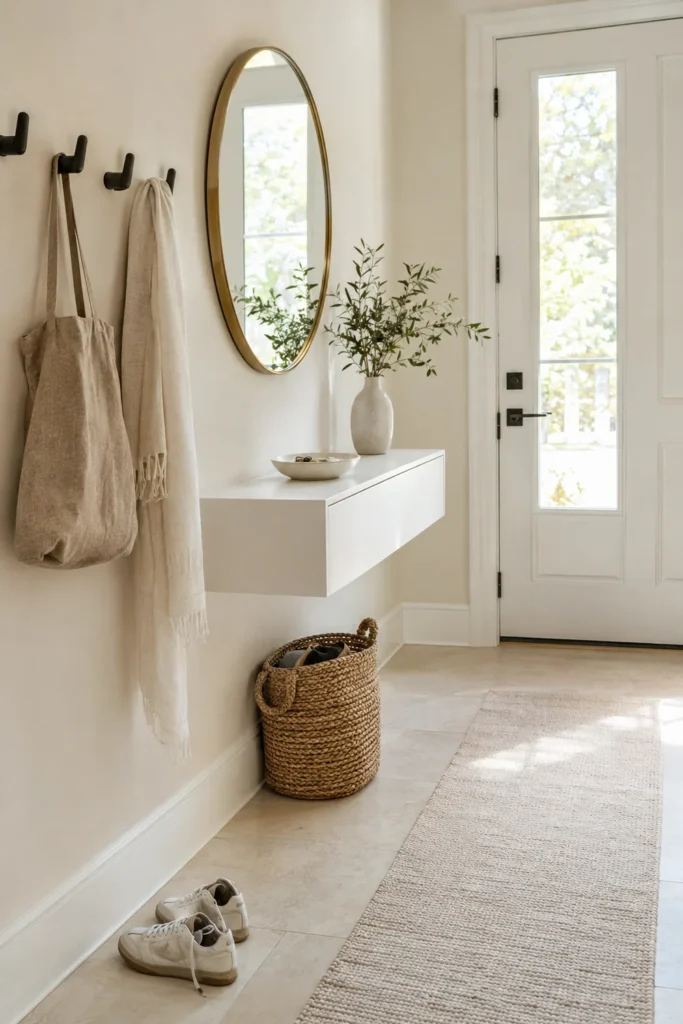
In a lot of homes, the “entryway” is really just the two feet of floor inside the front door. Shoes pile up, bags land on the nearest chair and keys vanish the moment you put them down.
You do not need a grand foyer to fix that. A small entryway only needs three things: a place to drop, a place to hang and a place to hide. Get those right and the first thing you see when you walk in feels calm instead of chaotic.
Here are twelve small entryway ideas that work in apartments, hallways and homes where the front door opens straight into the living room.
1. Start With a Simple Drop Zone
Before buying anything, notice what lands by your door every day. Keys, wallet, sunglasses, mail, bags, dog leash? Your entryway should have one clear spot for each.
A simple drop zone usually includes:
- A tray or small bowl for keys
- A spot for bags
- A container for shoes
- A place to sort mail
Everything else can live somewhere else.
2. Add a Slim Console or Floating Shelf
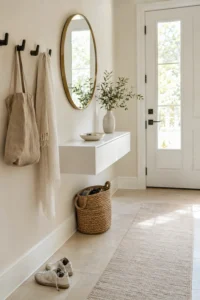
A narrow console table, 10 to 12 inches deep, fits even tight hallways. If floor space is too small, a floating shelf at about 32 to 36 inches high gives you a surface for keys and a lamp without taking up floor space.
Choose white, light stone or slim metal finishes to keep it visually light.
3. Install a Row of Wall Hooks
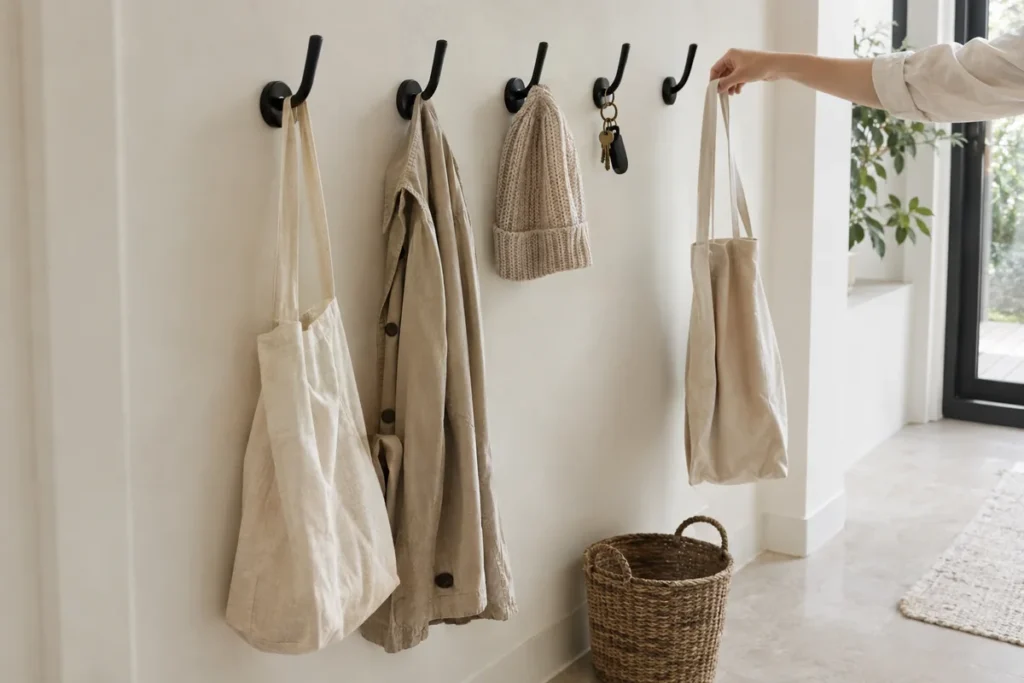
Hooks are faster to use than closets, which is why they actually get used. Mount a row of four to six hooks about 60 to 66 inches from the floor for adults, and add a lower row around 40 inches for kids.
Screw hooks into studs or use proper wall anchors, since coats and loaded bags get heavy. Leave about 6 to 8 inches between hooks so items do not pile on top of each other.
4. Hang a Mirror
A mirror by the door is useful for a last check before you leave, and it bounces light around a dark entryway. Round and arched mirrors soften a narrow space, while a tall rectangle can make a short hallway feel taller. Hang it centered above the console or shelf, with the middle at about eye level.
5. Choose a Slim Shoe Cabinet
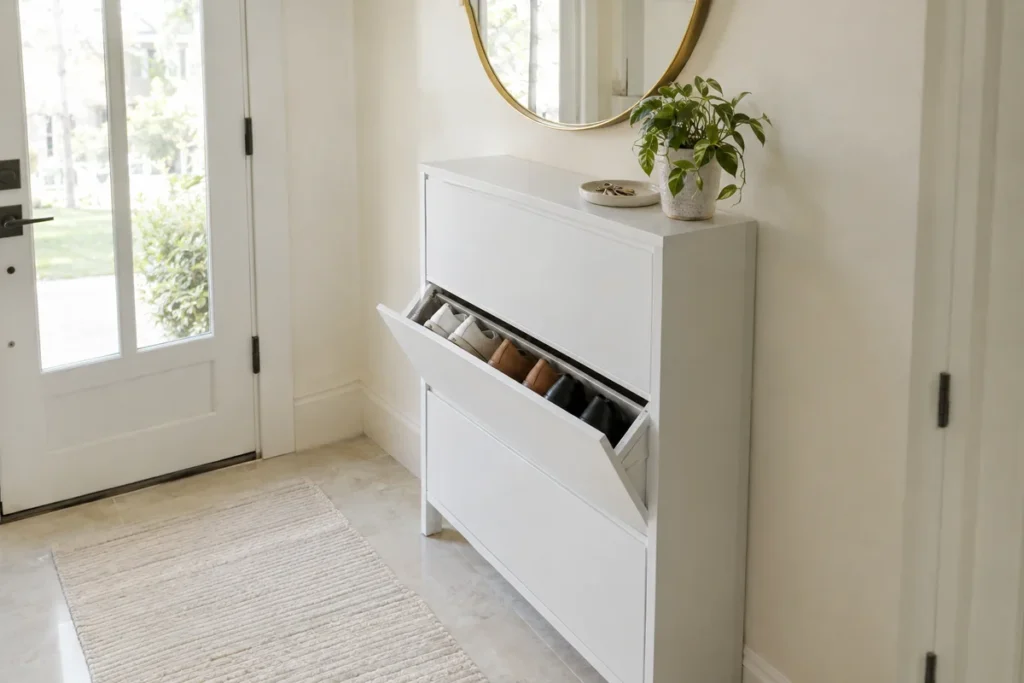
Shoe piles are the biggest entryway clutter problem. A slim tilt-out shoe cabinet, often only 7 to 9 inches deep, holds several pairs and gives you a top surface for keys. Anchor it to the wall, since these tall, shallow cabinets can tip when drawers are open.
Other good options:
- A low two-tier shoe rack tucked under a console
- A lidded basket for each family member
- A boot tray with a few smooth stones for wet shoes in winter
6. Use Baskets Under the Console
Two or three woven baskets under a console hide shoes, dog supplies, reusable shopping bags or kids’ sports gear. Lidded baskets look tidiest. Label the inside of the lid if several people share them.
7. Add a Small Bench (If It Fits)
A bench makes putting on shoes much easier. Look for one under 14 inches deep with storage underneath, like a cubby or shoe shelf. If space is tight, a small round stool that tucks under the console works too.
8. Lay a Washable Runner
A rug catches dirt before it reaches the rest of the home. A washable runner is ideal for small entryways because it can go in the washing machine every week or two. Add a non-slip rug pad underneath, since smooth floors and a sliding rug by the door are a fall risk.
A doormat outside plus a washable runner inside traps most of the dirt.
9. Brighten It Up
Entryways are often the darkest spot in the home. Swap in a brighter overhead bulb, add a small lamp on the console or install a plug-in wall sconce. Battery-powered puck lights under a shelf work in rentals where wiring is not an option.
Warm white bulbs around 2700K to 3000K feel welcoming.
10. Create a Mail Station
Paper builds up fast. A wall-mounted file or a small two-slot organizer near the door gives incoming mail one home. Keep a small recycling bin nearby so junk mail goes straight out. Sorting mail as soon as it comes in takes less than a minute and prevents piles.
11. Use the Back of the Door
If your entryway has no wall space, look at the door itself. Over-the-door hooks hold bags and jackets, and an over-the-door organizer with clear pockets stores gloves, hats, sunscreen and dog bags. Check that the door still closes smoothly before you commit.
12. Add a Little Personality
An entryway is the first thing people see. One small decorative touch makes it feel like a home and not just a storage zone:
- A small plant or a bud vase with a fresh stem
- A piece of art above the hooks
- A scented diffuser
- A pretty catchall dish for keys
Keep it to one or two pieces so the space still feels clear.
A Simple Daily Routine
The best entryway setup still needs a habit. Try a two-minute reset each evening: shoes back into the cabinet or baskets, bags on hooks, keys in the dish and mail sorted. Over time, that tiny habit keeps the front door feeling calm.
What ends up piled by your front door most often, shoes, bags or mail? Tell us in the comments.
Quick Questions
How do I make a small entryway look bigger?
Use a mirror, keep furniture slim and light colored, mount storage on the wall, and keep the floor as clear as possible. Good lighting makes a narrow space feel larger too.
What can I do with no entryway at all?
Create one with a row of wall hooks, a floating shelf and a basket by the door. Even a small rug can visually mark the entry zone in an open room.
How deep should an entryway console be?
Between 10 and 14 inches is ideal for small spaces. Measure to make sure the front door still opens fully and there is room to walk past.
How do I keep shoes from piling up by the door?
Give each person a set spot, like a basket or a section of a slim shoe cabinet, and limit how many pairs live by the door. Store off-season shoes elsewhere.