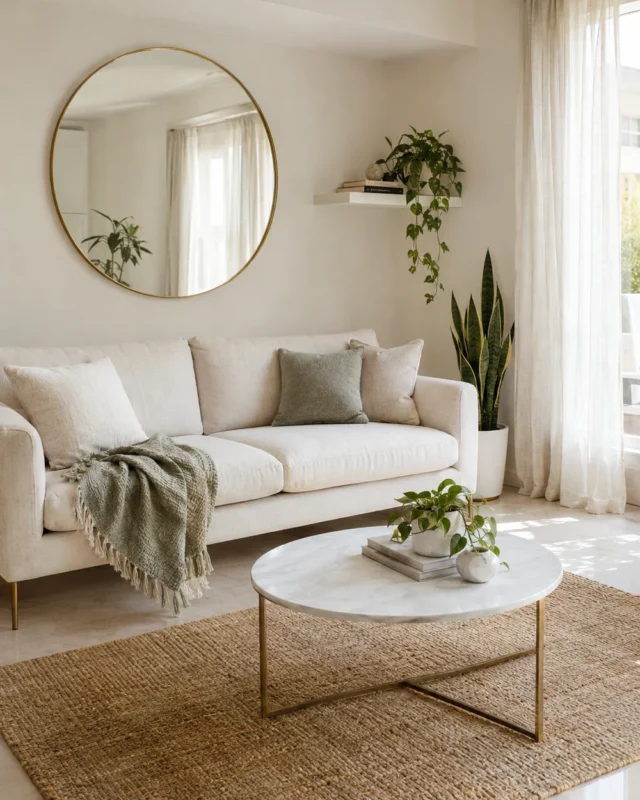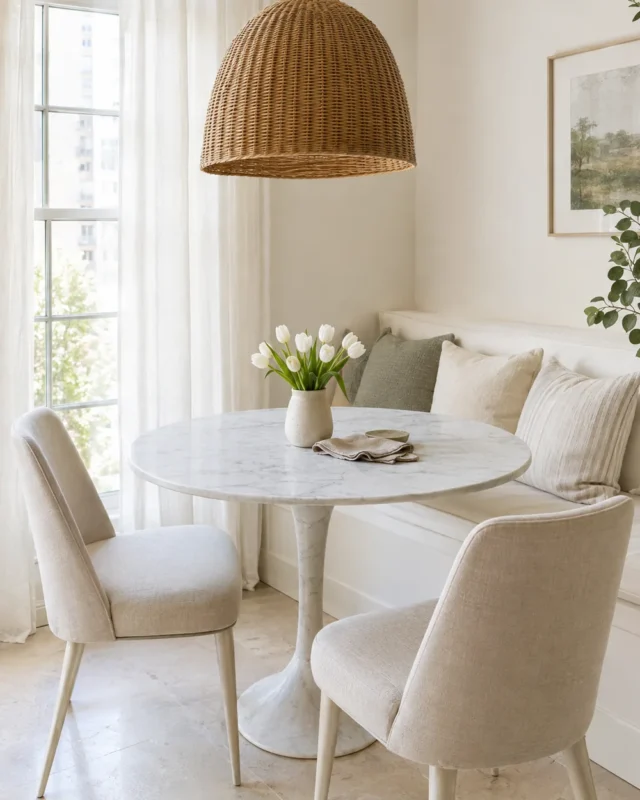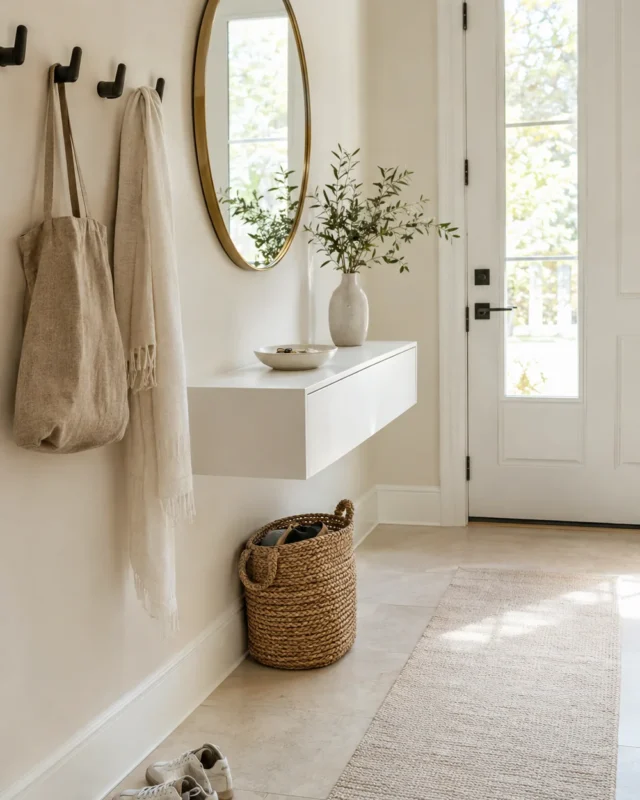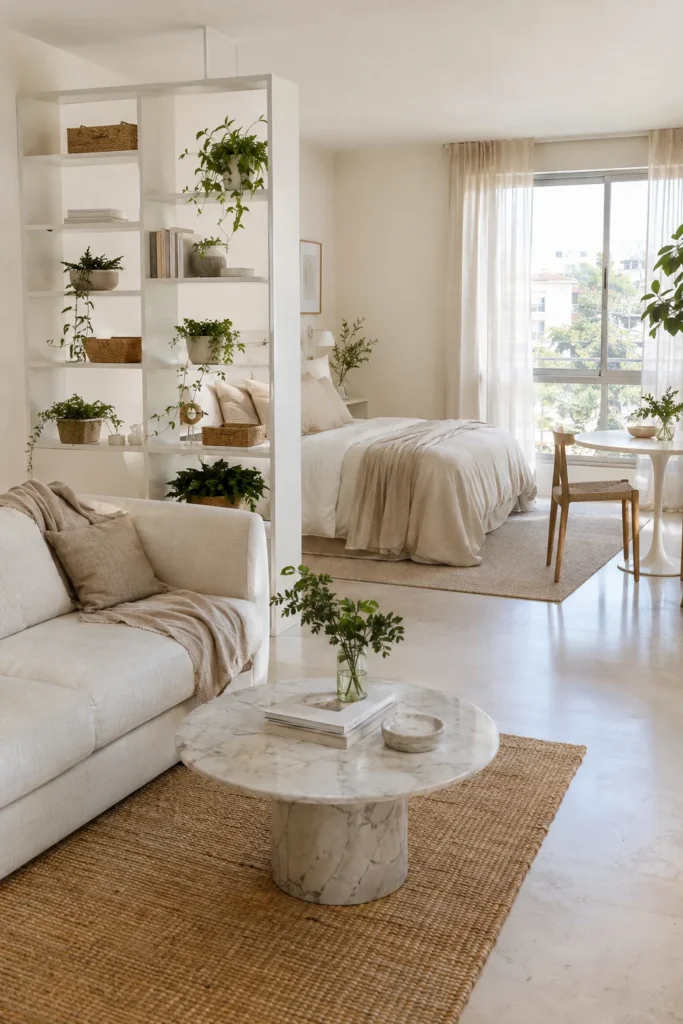
Living in a studio means your bed, sofa, desk and dinner table all share the same four walls. Without a plan, it can feel like you are living, working and sleeping in one big bedroom.
A good layout fixes that. By creating clear zones, you give each activity its own spot, and the whole room starts to feel larger and more organized.
These studio apartment layout ideas walk through how to plan the space and which tricks work best for separating zones without blocking light.
Start With a Simple Floor Plan
Before moving anything, sketch the room on graph paper with each square equal to 6 inches, or use a free online room planner. Mark windows, doors, radiators, outlets and the kitchen area.
Then decide where each zone will go:
- Sleep zone: ideally away from the front door and kitchen.
- Living zone: near the window for the best light.
- Work zone: near an outlet, ideally with side light.
- Dining zone: close to the kitchen.
Most studios work best with the bed in the farthest corner from the entrance, which gives it a little privacy.
1. Anchor Each Zone With a Rug
Rugs are the easiest way to define zones in an open room. A rug under the sofa and coffee table marks the living area. A separate rug beside or under the bed marks the sleep zone. Even a small round rug under a dining table helps.
Keep rugs in the same color family so the room still feels connected, but vary the size and shape.
2. Use an Open Shelf as a Divider
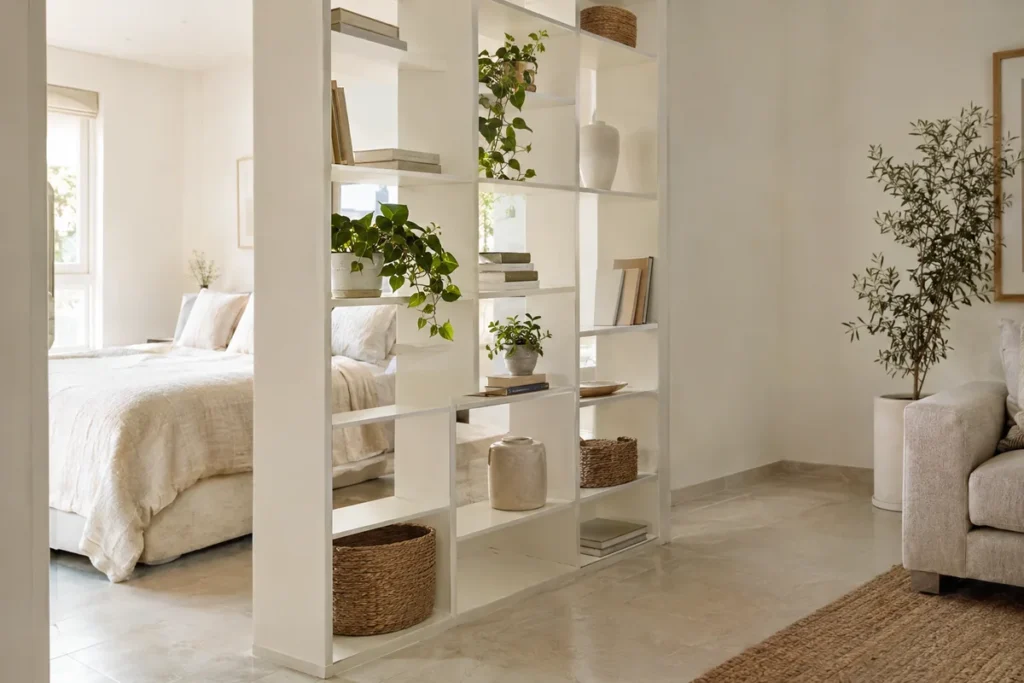
An open shelving unit between the bed and living area creates separation without blocking light. It also adds storage on both sides.
- Choose a unit at least 5 to 6 feet tall for real separation.
- Place heavier items on lower shelves.
- Anchor it to the floor or ceiling with a tension or bracket kit, since freestanding dividers can tip.
- Leave some gaps so light can pass through.
3. Hang a Ceiling Curtain
A curtain on a ceiling track is one of the most rental-friendly ways to separate the bed. Linen or cotton panels let in soft light during the day and close off the sleep zone at night. Ceiling tracks install with a few screws, and tension rods work in alcoves.
4. Turn the Sofa Into a Wall
Placing the back of the sofa toward the bed creates a natural visual barrier. Add a slim console behind the sofa with a lamp and a few books, and the bed area instantly feels separate.
Keep at least 30 inches between the console and the bed for a comfortable walkway.
5. Choose a Bed That Works Harder
The bed takes up the most space in a studio, so make it pull its weight:
- Storage bed: drawers or a lift-up base hold linens and off-season clothes.
- Daybed: works as a sofa during the day and a bed at night.
- Murphy bed: folds into the wall for maximum floor space.
- Loft bed: frees the space underneath for a desk or sofa in rooms with high ceilings.
If you use a wall bed or loft bed, have it professionally installed or follow the anchoring instructions exactly.
6. Tuck a Workspace Into a Corner
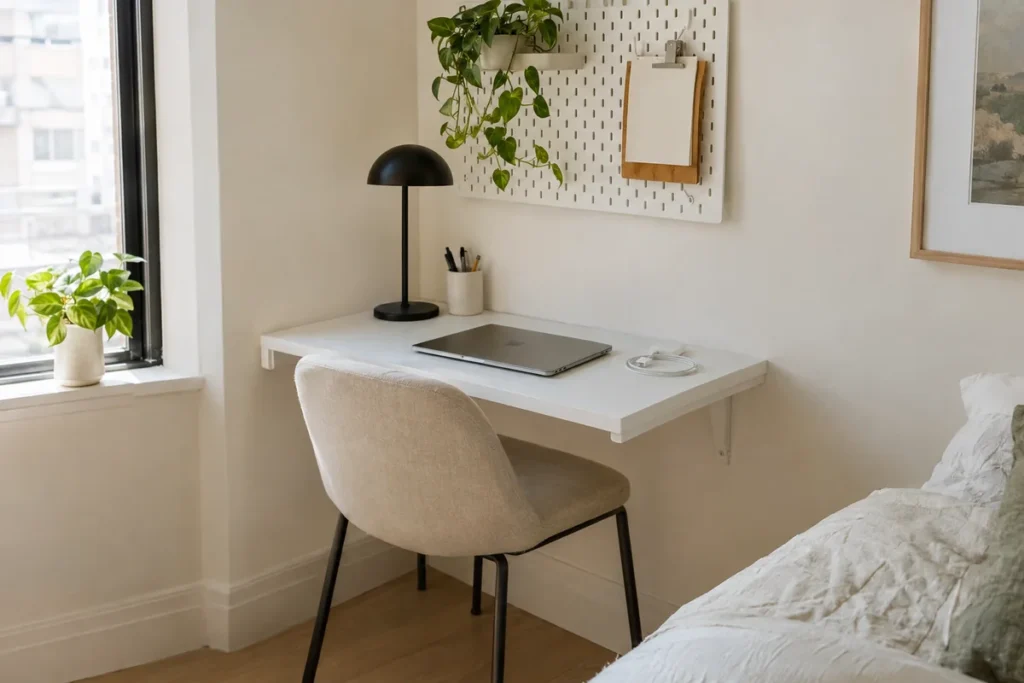
A full desk can overwhelm a studio. A wall-mounted fold-down desk or a narrow desk, about 18 to 24 inches deep, is often enough for a laptop.
Add a pegboard or floating shelf above for supplies, and a lamp for evenings. When work is done, closing the laptop and clearing the desk helps separate work time from home time.
7. Make the Dining Zone Flexible
A small round table, 30 to 36 inches across, seats two comfortably and is easy to walk around. Other options:
- A drop-leaf table that folds flat against the wall
- A counter-height table that doubles as kitchen prep space
- Two stools at a kitchen peninsula
- A console table that pulls out for guests
8. Use Lighting to Separate Zones
Give each zone its own light source. A pendant or plug-in pendant over the dining table, a floor lamp in the living area, a desk lamp at the workspace and bedside lamps at the bed. When you switch from one activity to another, you change the lighting too, which helps each area feel distinct.
9. Keep a Consistent Color Palette
In one open room, too many colors can feel chaotic. Use one main palette across all zones and shift slightly in each, for example warmer textiles near the bed and a crisper look at the desk. Light walls and light floors help the whole space feel larger.
10. Go Up the Walls
Floor space is precious in a studio. Use vertical space for storage:
- Tall bookcases anchored to the wall
- Floating shelves above the desk and sofa
- Hooks and rails near the kitchen and door
- Over-the-door organizers on the bathroom and closet doors
11. Pick Multi-Purpose Furniture
Every piece should do at least two jobs. A storage ottoman is seating, a footrest and blanket storage. A nesting coffee table becomes extra side tables. A bench at the foot of the bed holds shoes and serves as dining seating when friends visit.
12. Leave Clear Pathways
It is tempting to fill every corner, but clear walkways make a studio feel bigger. Keep main paths at least 30 inches wide, and make sure you can walk from the door to the bed and kitchen without moving anything.
Common Studio Layout Mistakes
- Putting the bed right by the front door. It feels exposed and makes the room look like a bedroom first.
- Too many small pieces. A few right-sized pieces look calmer than lots of little ones.
- Blocking the window. Tall dividers and bookcases in front of windows darken the whole room.
- One rug for everything. Separate rugs help define zones.
Where does the bed sit in your studio, and is it working for you? Tell us in the comments.
Quick Questions
Where should the bed go in a studio apartment?
In most studios, the bed works best in the corner farthest from the front door and away from the kitchen. That gives it privacy and lets the living area sit near the entry and window.
How do I separate my bed from the living room in a studio?
Use an open bookshelf, a ceiling curtain, a folding screen or the back of the sofa to create a visual divide. Separate rugs and lighting help too.
How can I make a studio apartment feel bigger?
Keep walkways clear, use light colors, choose furniture on legs, add mirrors and use vertical storage so the floor stays open.
Is a daybed a good idea for a studio?
Yes, especially in very small studios. It works as a sofa during the day and a bed at night, and many have storage drawers underneath.