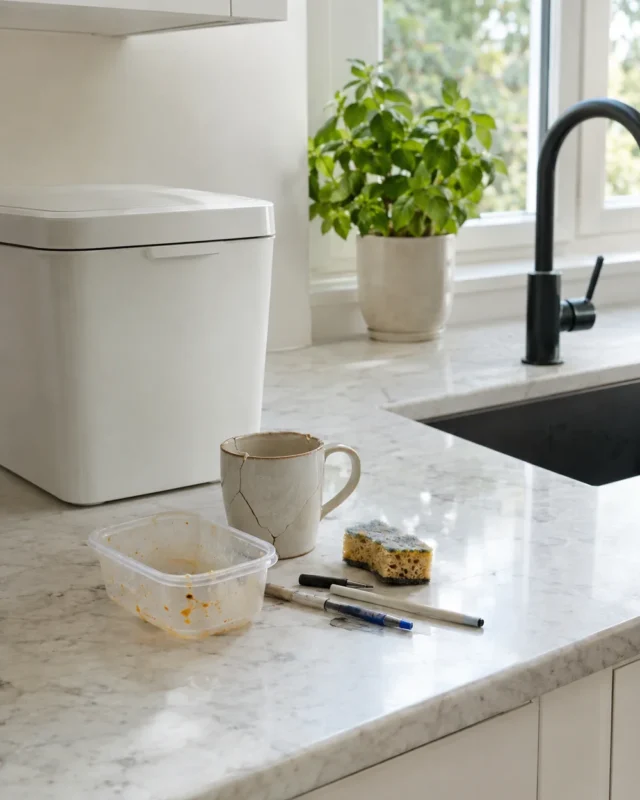
Clutter rarely shows up all at once. It builds a drawer at a time, a chair at a time, until the whole house feels heavy and you do not know where to start.
The good news is that you do not need a free weekend or a dumpster. A 30-day declutter challenge breaks the job into one small task a day. Each task takes about 15 to 20 minutes, and by the end of the month you will have touched every room without wearing yourself out.
Here is the full plan, plus a few simple rules that keep it from stalling around day nine.
Before You Start: Three Simple Rules
A little setup makes the daily tasks go much faster.
- Set up three bags or bins. One for donate, one for trash, one for “belongs somewhere else.” Keep them in one spot all month so you are not hunting for a bag each day.
- Use a timer. Twenty minutes is the sweet spot. When it rings, you are allowed to stop, even if the space is not perfect.
- Get the bags out of the house weekly. Pick one day, such as every Saturday, to drop off donations and take out the trash bag. Clutter that sits in a donate bag for a month tends to sneak back into drawers.
What you need: a few large bags or bins, a small trash bag, a damp cloth for wiping shelves as you go, and a pen to note anything you want to replace or repair.
Week One: Quick Wins in Small Spaces
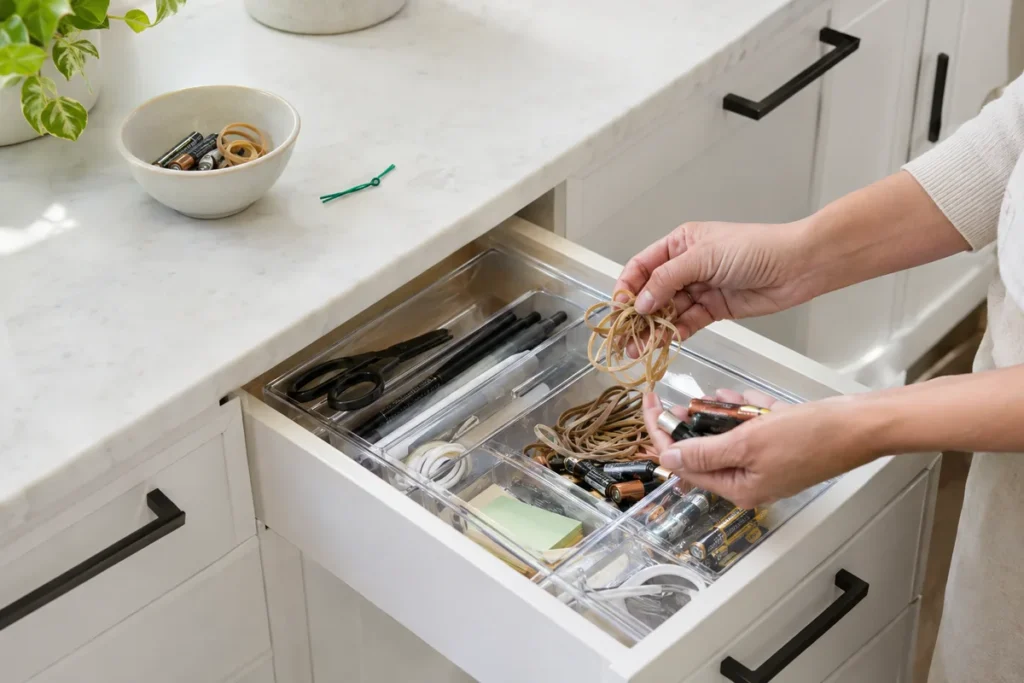
The first week is about momentum. These spaces are small, so you will see a real difference in minutes.
- Day 1: The junk drawer. Empty it completely, toss dead pens and mystery keys, and put back only what you use.
- Day 2: Kitchen counters. Clear everything off, wipe down, and return only daily items.
- Day 3: The fridge door and condiments. Check dates and toss anything expired or crusted over.
- Day 4: Bathroom cabinet. Old samples, expired sunscreen and dried up nail polish can go. Take expired medicine to a pharmacy take-back point rather than the trash.
- Day 5: Your handbag or work bag. Receipts, wrappers and loose change out.
- Day 6: Food storage containers. Match every lid to a base. Anything without a partner goes.
- Day 7: Entryway. Shoes, mail, keys and bags. Keep only the shoes you wear this season by the door.
Week Two: Kitchen, Bath and Linens
Now that you have a rhythm, move into areas that hold a bit more.
- Day 8: Spice drawer or cabinet. Ground spices lose flavor after a year or two. Smell them; if there is no scent, replace them.
- Day 9: Mugs and glasses. Keep the number you use in a normal week, plus a few for guests.
- Day 10: Under the kitchen sink. Group cleaners by job, toss empty bottles, and check that caps close tightly.
- Day 11: Towels. Keep two or three sets per person. Thin or stained towels can become cleaning rags or go to an animal shelter.
- Day 12: Sheets. Two sets per bed is plenty for most homes.
- Day 13: Bathroom drawers. Hair ties, old makeup, and tools you never use.
- Day 14: Kitchen gadgets. If it has not been used in a year and it is not seasonal, let it go.
Safety note: when you sort cleaning products under the sink, never combine leftover bottles into one container. Bleach mixed with ammonia or with acidic cleaners like vinegar can release dangerous fumes. Keep products in their original labeled bottles, and store them up high if there are kids or pets in the house.
Week Three: The Bigger Spaces
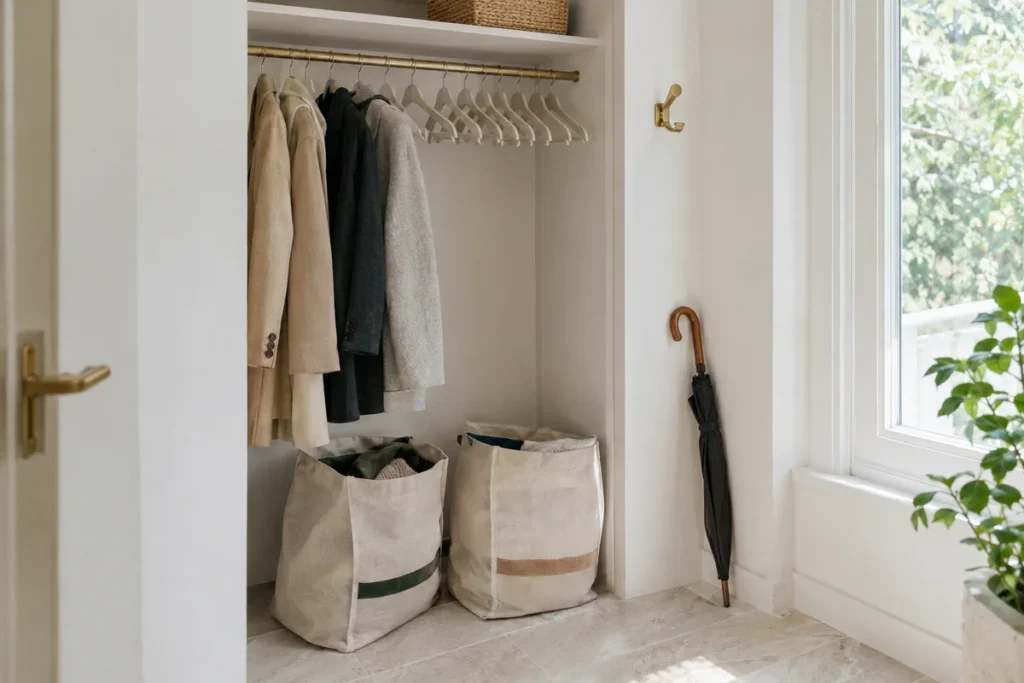
These tasks may run a little longer. It is fine to split a day across two sessions.
- Day 15: Your closet, part one. Pull out anything that does not fit right now.
- Day 16: Your closet, part two. Remove anything you have not worn in a year.
- Day 17: Shoes. Donate pairs that pinch, and repair or toss worn out ones.
- Day 18: Coat closet. One or two coats per person per season.
- Day 19: Books and magazines. Keep the ones you love or will reread.
- Day 20: Living room surfaces. Coffee table, side tables and shelves. Leave some empty space on each.
- Day 21: Kids’ toys or a hobby corner. Rotate toys into a bin in the closet instead of keeping everything out.
Week Four: Paper, Digital and Storage
The last stretch tackles the stuff that hides behind doors.
- Day 22: Paper pile. Sort into act, file and shred. Shred anything with account numbers before recycling.
- Day 23: Manuals and warranties. Most manuals are available online. Keep only warranties for items still covered.
- Day 24: Cords and chargers. Match each cord to a device you still own.
- Day 25: Linen closet shelves. Wipe them and put back only what passed days 11 and 12.
- Day 26: Under the bed. Pull everything out, vacuum, and store only what you need in lidded bins.
- Day 27: Garage or storage shelf. One shelf only. Do not try the whole garage in a day.
- Day 28: Your phone. Delete apps you do not use and clear out old screenshots.
- Day 29: Car. Trash, receipts, and the random items rolling under the seats.
- Day 30: Walk through and reward. Do a slow lap of the house, return anything that has wandered, and enjoy the space.
How to Stay on Track All Month
Most challenges stall in week two, when the novelty wears off. A few habits help.
Keep a simple checklist where you see it
Tape a printed list inside a cabinet door or keep a note on your phone. Crossing off a day is surprisingly motivating.
Do not make up missed days twice over
If you skip a day, just pick up the next one. Doubling up is how people burn out.
Choose the same time each day
Right after dinner or while coffee brews in the morning both work well. Tying the task to something you already do makes it automatic.
Ask “Would I buy this again today?”
When you are stuck on an item, this question cuts through guilt quickly. If the answer is no, it can probably go.
What to Do With Everything You Remove
Sorting is only half the job. Have a plan for each pile:
- Donate: clean, working items in good shape. Many charity shops list what they accept, so check before you load the car.
- Sell: larger items like furniture or small appliances can go on local marketplace listings. Set a two-week limit; if it does not sell, donate it.
- Recycle: paper, glass and many plastics. Batteries and old electronics usually need a special drop-off point.
- Trash: broken, stained or expired items.
By the end of thirty days, you will not have a magazine-perfect house, but you will have one that is easier to clean, easier to tidy and far more pleasant to live in. Keep your three bins set up after the challenge ends, and the next round of clutter will have somewhere to go.
Which day of the challenge are you most excited to check off first? Tell us in the comments.
Quick Questions
How long should each day of a declutter challenge take?
Plan on 15 to 20 minutes for most days. Bigger spaces like closets or the garage may take 30 to 45 minutes, so it is fine to split those across two sessions.
What if I fall behind?
Simply start again with today’s task. The goal is progress over the month, not a perfect streak, and skipped areas can be picked up at the end.
Can I do the challenge with my family?
Yes. Give each person their own space for the same day, like their own drawers or toy bins, and keep the donate bag in one shared place.
Should I buy organizing bins before I start?
Wait until the end. Once you have removed what you do not need, you will know exactly what size and how many containers you actually need.