When you start decluttering, the hardest question is often the simplest one: what can actually go?
The answer is more than you think. Every home collects items that are expired, broken, duplicated or simply forgotten. They take up space, make cleaning harder and hide the things you do use.
This room by room list covers what to throw away, what to recycle and what to donate. You do not need to do it all at once. Pick one room, grab a trash bag and a donate bag, and give yourself about 30 minutes.
A Simple Rule Before You Start
Ask three quick questions about every item:
- Is it expired, broken or missing parts?
- Have I used it in the last year?
- Do I have another one that does the same job?
If it fails any of these, it is a strong candidate to go. Items in good condition should be donated rather than tossed whenever possible.
In the Kitchen
The kitchen collects more extras than any other room. Look for:
- Expired pantry food and spices. Ground spices lose most of their flavor after one to two years.
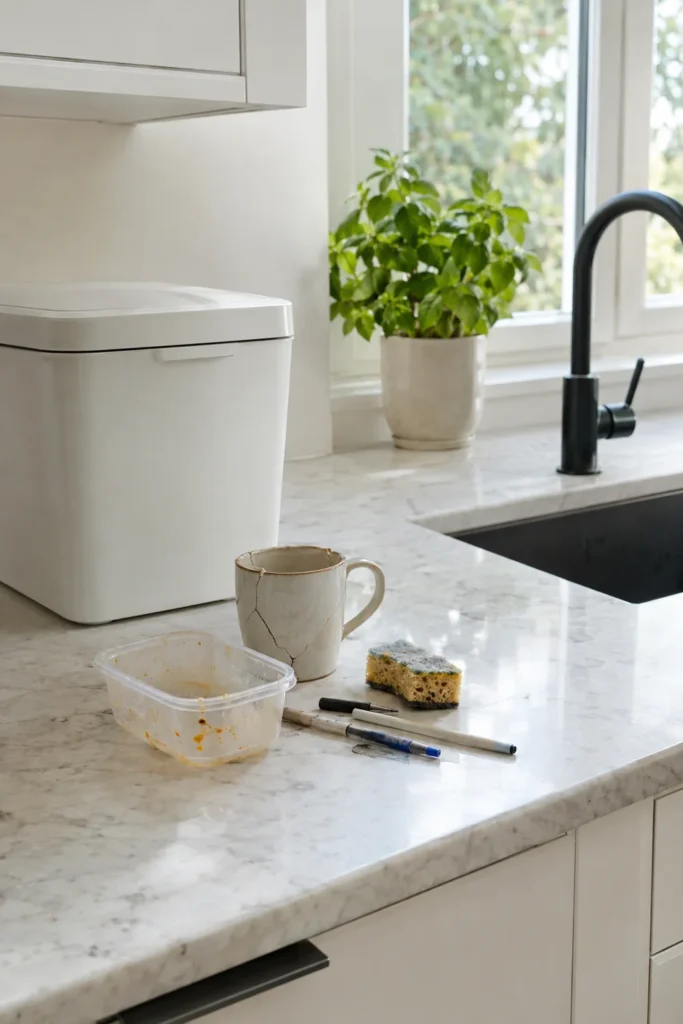
- Food storage containers without lids (or lids without containers).
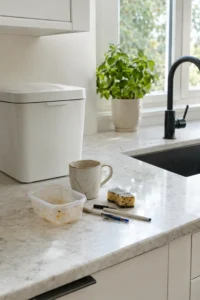
- Chipped or cracked dishes and mugs. Cracks can hold bacteria and may break with hot liquids.
- Old sponges. Swap sponges every week or two.
- Duplicate utensils. Most kitchens need one or two spatulas, not six.
- Takeout menus, extra chopsticks and sauce packets.
- Scratched nonstick pans with peeling coating.
- Appliances you have not used in a year, unless they are truly seasonal.
In the Bathroom
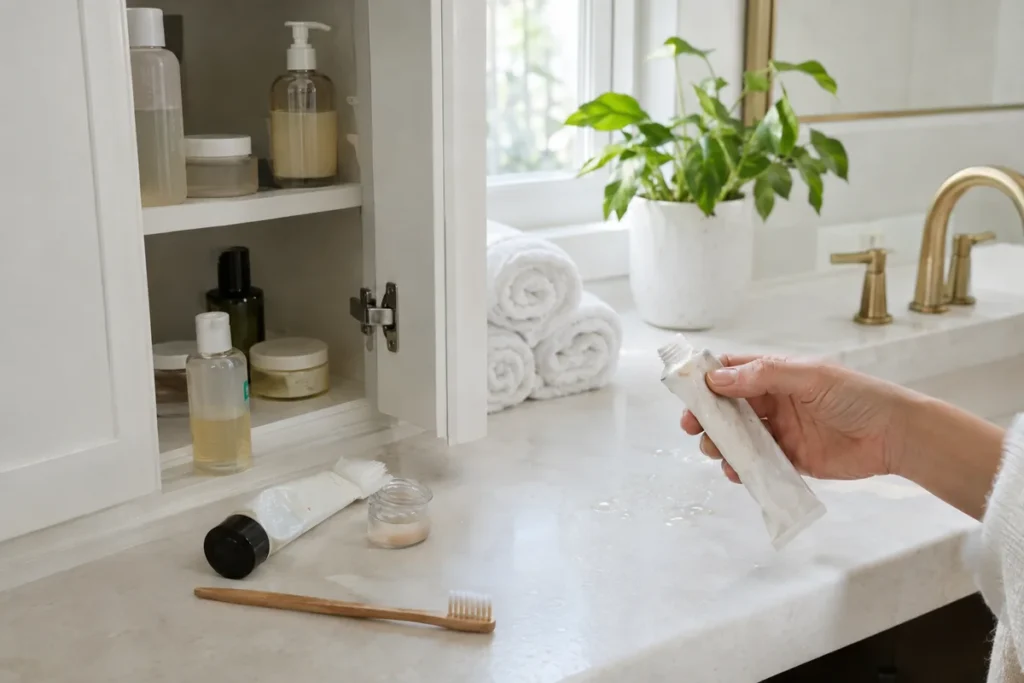
Bathrooms hide a lot of small, expired items in drawers and cabinets.
- Expired medicine. Do not flush it. Take it to a pharmacy or community take-back point.
- Old makeup. Mascara is best replaced about every three months, and liquid products after six to twelve months.
- Dried out nail polish and empty bottles.
- Hotel samples you have been saving for years.
- Worn toothbrushes, which should be replaced every three to four months.
- Stretched hair ties and broken clips.
- Thin, frayed towels. Cut them into cleaning rags or donate them to an animal shelter.
In the Bedroom
Bedrooms should feel restful, so clearing surfaces makes a big difference.
- Clothes that do not fit or that you have not worn in a year.
- Socks without partners and stretched out underwear.
- Old pillows. Most pillows lose their support after one to two years.
- Jewelry you never wear or that is broken beyond repair.
- Stacks of books you will not reread.
- Shopping bags and boxes stashed under the bed or in the closet.
In the Living Room
Shared spaces gather other people’s clutter too.
- Old magazines and catalogs. Recycle them.
- Remote controls for devices you no longer own.
- Faded throw pillows and pilled blankets.
- Dead candles with only a centimeter of wax left.
- Decor items you do not love. If it sits in a drawer, it is not really decor.
- Board games with missing pieces.
At the Entry and in the Coat Closet
- Shoes that hurt or are worn through.
- Extra umbrellas, especially broken ones.
- Single gloves without a match.
- Reusable shopping bags. Keep five or six, not thirty.
- Expired coupons and loose receipts.
In the Home Office and Paper Piles
- Old bills and statements. Many can be accessed online. Shred anything with account numbers before recycling.
- Dried pens and markers.
- Manuals for items you no longer own.
- Expired warranties.
- Greeting cards. Keep a few that truly mean something in a single box.
- Cords and chargers that do not match any device in the house.
Under the Sink and in the Laundry Area
- Empty or nearly empty cleaning bottles.
- Cleaners you tried once and did not like.
- Old rags with holes, dried brushes and stiff sponges.
- Mismatched hangers from stores and dry cleaners.
Safe Disposal for Tricky Items
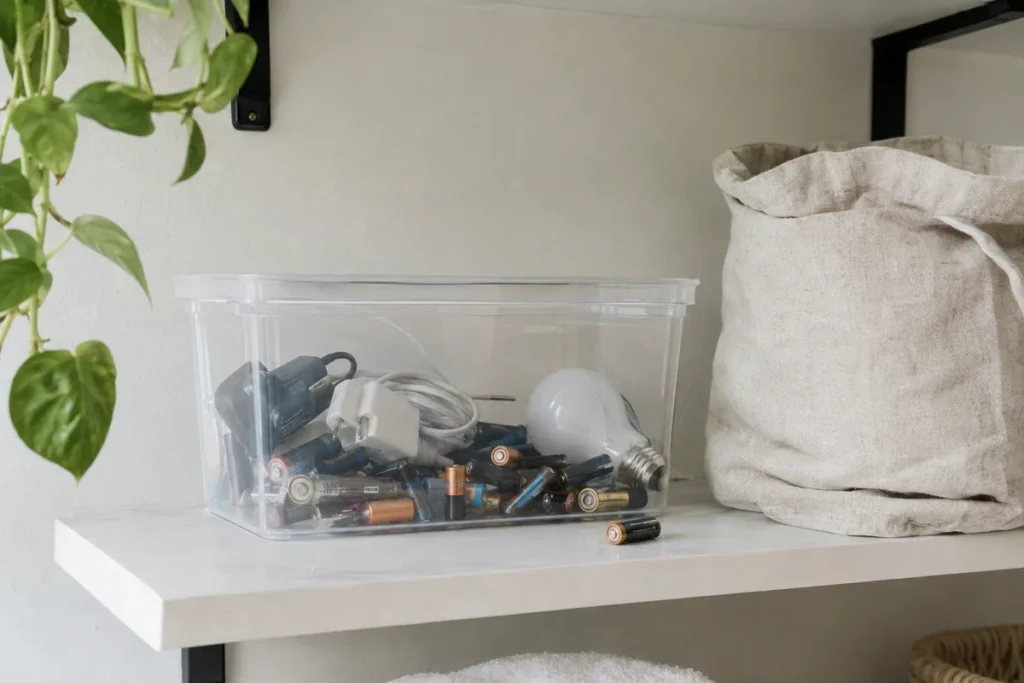
Some things should never go straight into the trash. Check your local waste website for drop-off days and locations.
- Batteries: many hardware and electronics stores collect them. Tape the ends of lithium batteries before storing to prevent sparks.
- Electronics and cords: take them to an e-waste collection point.
- Light bulbs: fluorescent bulbs contain a small amount of mercury and need special recycling.
- Paint: dried latex paint can often go in household trash once fully hardened, but oil based paint is usually hazardous waste.
- Medicine: use a take-back program.
Safety note on cleaning products: never pour old cleaners together to “use them up,” and never mix bleach with ammonia, vinegar or other acids. These combinations can release toxic gases. Empty bottles fully, rinse when the label allows, and follow your local rules for anything marked hazardous. Open a window or run a fan while handling strong products.
What Not to Throw Away
Before you toss, set aside a few things that are worth keeping or giving away properly:
- Important documents such as birth certificates, passports, tax records and property papers.
- Items in good condition that someone else could use. Donate them.
- Family photos and keepsakes. Scan them if space is tight, but keep the originals of the most important ones.
Decluttering does not have to be dramatic. Clearing out the obvious, expired and broken items alone can free a surprising amount of space. Pick one room this week, use the list above, and enjoy how much lighter it feels.
Which room on this list has the most hidden clutter in your home? Tell us in the comments.
Quick Questions
Should I throw away or donate?
Donate anything clean, working and complete. Throw away items that are broken, stained, expired or unsafe.
How do I get rid of old cleaning products safely?
Use them up as directed if possible. Otherwise, check your local hazardous waste program. Never combine products or pour strong chemicals down a storm drain.
What if I feel guilty throwing things away?
Remind yourself that keeping something unused does not honor it. Donating or recycling gives it a second life instead of letting it sit in a drawer.
How often should I go through this list?
Once or twice a year is enough for most homes, with quick checks of the bathroom and pantry every few months.