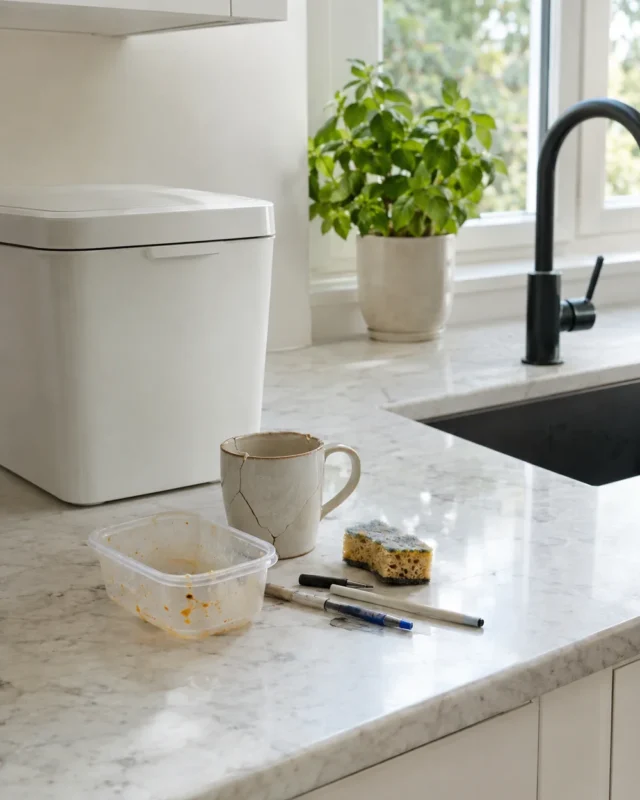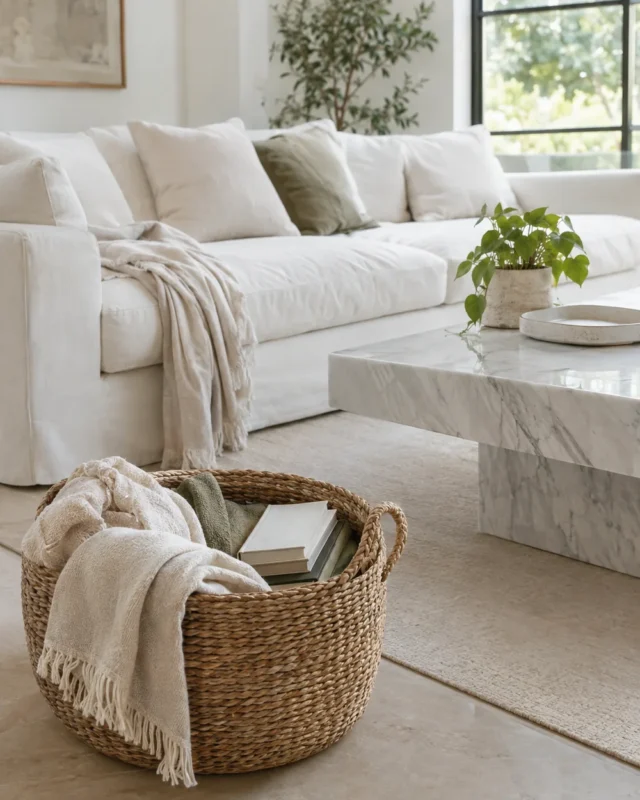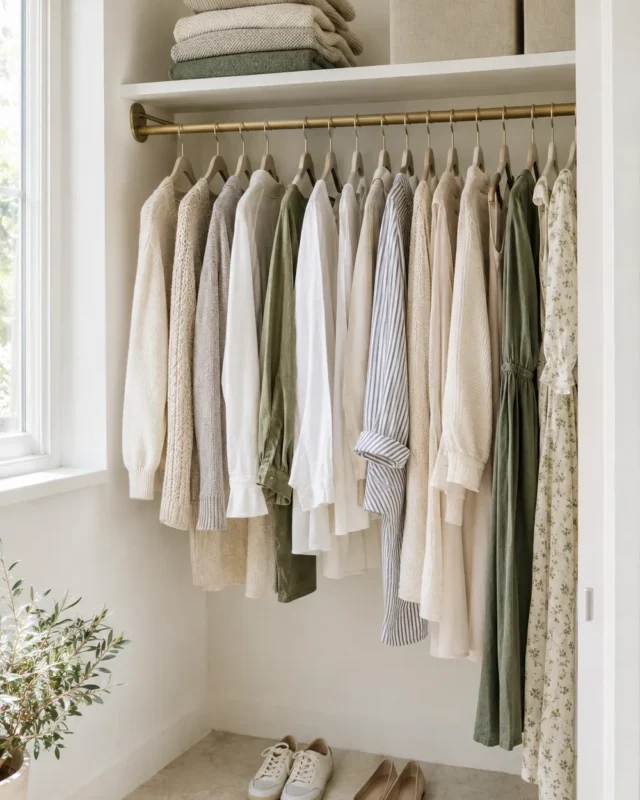
There is a special kind of disappointment in decluttering a room and then watching it fill back up within a few weeks.
That is not a sign you failed. It usually means the house needs systems, not more willpower. A clutter-free home is mostly the result of small habits done often, and a few spots designed to catch the things that always end up on the counter.
Here are the habits and simple setups that help mess stay away for good.
Why Clutter Comes Back
Before the habits, it helps to know where clutter comes from. In most homes it is one of these:
- Things without a home. If an item has no set spot, it lands on the nearest flat surface.
- More coming in than going out. Shopping, gifts, mail and freebies add up quickly.
- Delayed decisions. “I will deal with it later” is how paper piles start.
- Hard to use storage. If putting something away takes three steps, it will not happen.
Every habit below targets one of these causes.
1. Give Everything a Home
Walk through each room and notice what lands on surfaces. Then give each of those things a specific spot.
- Keys go in one dish by the door.
- Chargers live in one drawer or one basket.
- Mail goes to one tray.
- Kids’ school bags hang on one hook each.
A good rule is that a home should be within a few steps of where the item is used. If the scissors live in the office but are always used in the kitchen, give them a home in the kitchen.
2. Create a Drop Zone by the Door
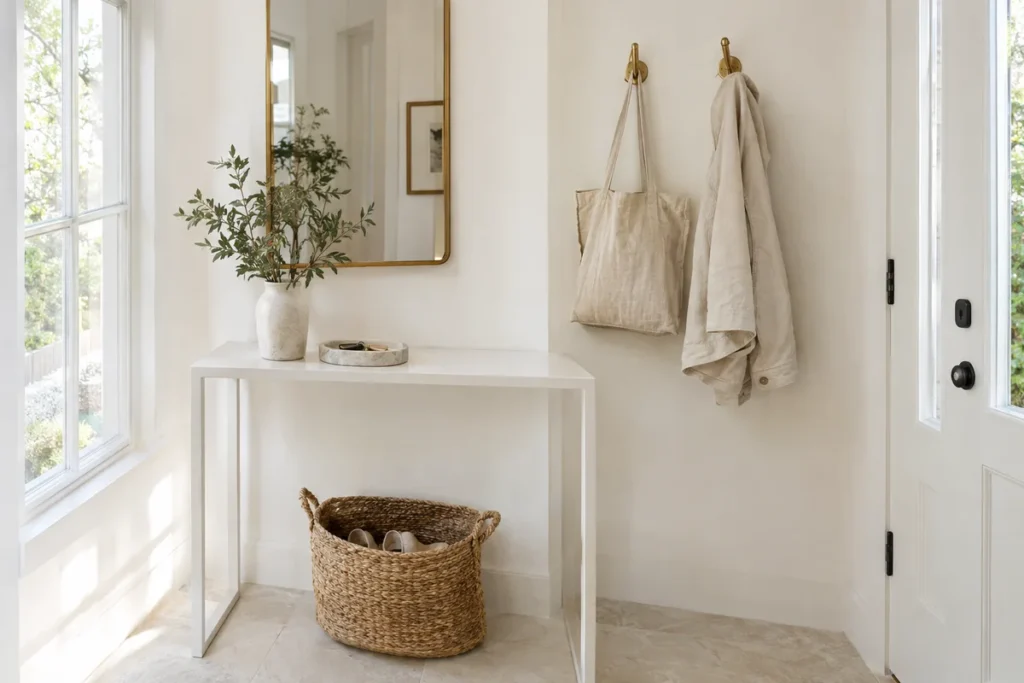
Most clutter enters through the front door. A small drop zone catches it before it spreads.
What you need:
- A slim console, shelf or wall mounted ledge
- A small tray or bowl for keys and sunglasses
- Two to four wall hooks for bags and jackets
- A basket or low rack for shoes
- A mail sorter or wall pocket
You can set this up for under $50 with simple pieces. The key is to keep it small so it does not become a new clutter magnet.
3. Do a Ten Minute Evening Reset
This is the single most useful habit for a clutter-free home. Every evening, set a timer for ten minutes and:
- Clear and wipe the kitchen counters.
- Return anything left out to its home.
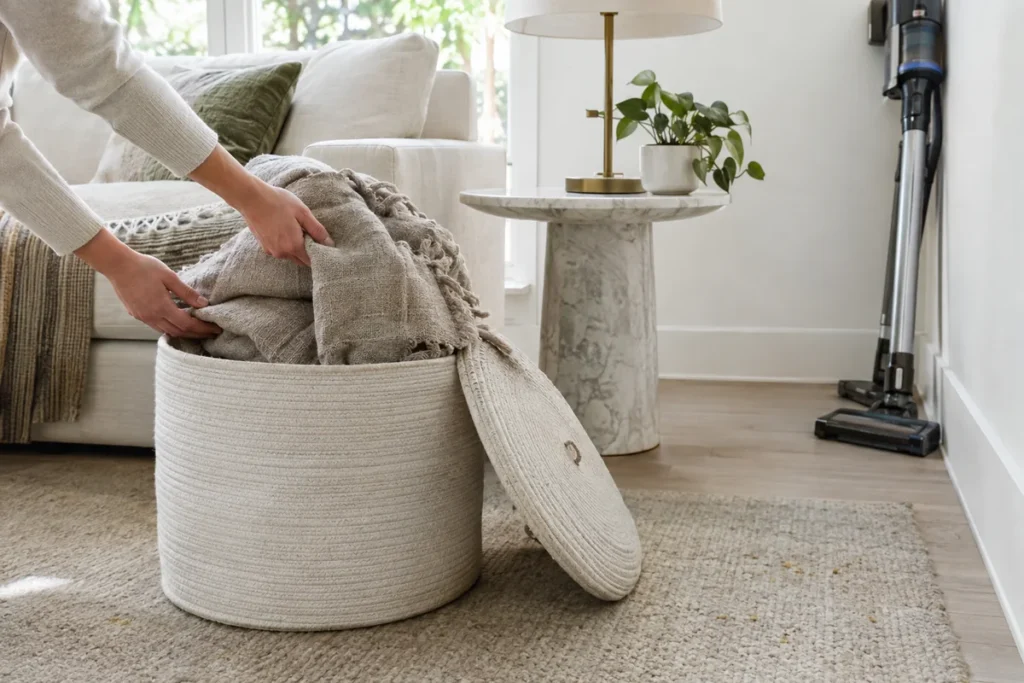
- Fold throws and fluff cushions.
- Put shoes and bags back in the drop zone.
- Start the dishwasher or wash the last dishes.
When everyone in the house helps, ten minutes covers a lot of ground. Waking up to clear counters makes mornings noticeably calmer.
4. Handle Mail the Day It Arrives
Paper is one of the biggest sources of clutter. Open mail standing next to the recycling bin.
- Junk mail goes straight into recycling.
- Bills and forms go into one action tray.
- Anything to keep gets filed once a week.
Shred anything with account details before recycling it.
5. Use the One In, One Out Rule
Every time something new comes home, something similar leaves. A new sweater means an old one goes in the donate bag. A new mug means one leaves the cabinet.
It feels strict at first, but it keeps your storage from overflowing and makes you think twice before buying duplicates.
6. Keep a Donate Bag Always Open
Put a bag or bin in a closet or laundry area just for donations. When you come across something you no longer want, it goes straight in. When the bag is full, drop it off that week.
This removes the “I will deal with it later” problem completely.
7. Clear Flat Surfaces First
Counters, tables and dressers attract clutter. Try keeping them mostly empty, with just one or two decor items grouped on a tray. When surfaces are clear, the whole room looks tidy even if a closet is messy.
The Weekly Reset Routine
Once a week, give your home a slightly bigger reset. It usually takes 30 to 45 minutes.
- Empty the drop zone tray and mail sorter.
- Go through the fridge and toss leftovers.
- Return items to other rooms using a basket you carry from room to room.
- Empty the donate bag if it is full.
- Vacuum or sweep high traffic areas.
- Reset the kids’ toy bins or rotate a few toys out.
Many households like Sunday afternoons for this, so the week starts fresh.
Make Storage Easy to Use
If a system is fussy, nobody will use it. Keep storage simple:
- Choose open baskets for things used every day, like throws and toys.
- Use lids only for things you access rarely.
- Label shelves and bins so everyone knows where things belong.
- Store items at the height of the person who uses them, especially for kids.
Get the Whole Household On Board
A clutter-free home is hard to keep alone. A few ideas that help:
- Give each person their own drop zone hook or basket.
- Make the ten minute reset a shared family habit with music.
- Keep expectations realistic. Rooms will get messy during the day, and that is fine.
Keeping a clutter-free home is not about perfection. It is about small habits that keep mess from building into a weekend project. Start with one habit this week, such as the evening reset, and add another once it feels automatic.
Which of these habits do you think would make the biggest difference in your home? Tell us in the comments.
Quick Questions
How long does it take to build a clutter-free habit?
Most people find a new habit starts to feel natural after a few weeks of doing it daily. Start with one habit at a time.
What is the best habit to start with?
The ten minute evening reset. It has the most visible effect and only takes a short burst of time.
How do I keep kids’ clutter under control?
Use low open bins, limit the number of toys out at once, and rotate the rest from a closet every few weeks.
Do I need to buy organizers to stay clutter free?
Not usually. Start with baskets and containers you already own. Buy new organizers only after you know exactly what needs storing.