You open the closet, it is full, and somehow there is still nothing to wear. That feeling usually means the closet is holding too much, not too little.
Learning how to declutter your closet is less about strict rules and more about a clear method. Set aside about three to four hours, put on something you like listening to, and work through these steps in order.
What You Need
- Three large bags or boxes labeled keep, donate and trash (a sticky note on each works)
- A full length mirror
- A damp microfiber cloth and a vacuum
- Matching slim hangers if you plan to swap (optional, usually under $20 for a pack of 50)
- A small box for “maybe” items
Step 1: Take Everything Out
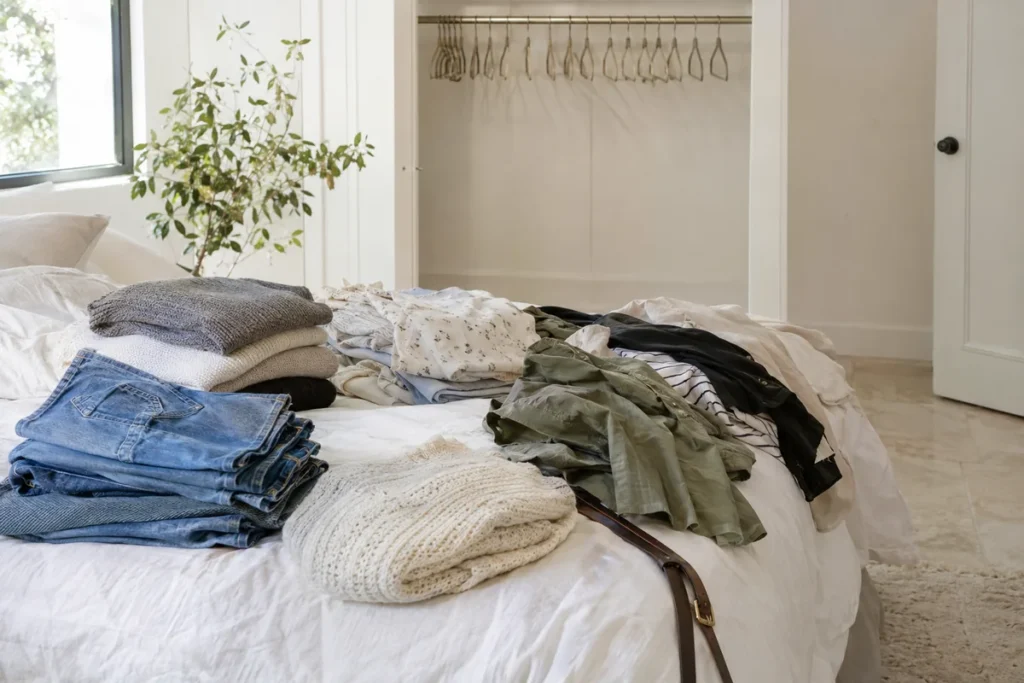
It feels like more work, but emptying the whole closet is the fastest way to see what you own. Lay everything on the bed, grouped by type: tops, pants, dresses, outerwear, shoes, bags.
Seeing twelve black T-shirts in one pile makes decisions much easier than spotting them one at a time on the rod.
While the closet is empty, vacuum the floor, wipe the shelves and rod, and check for any signs of moths (small holes in wool or silky webbing in corners).
Step 2: Sort With Honest Questions
Pick up each item and ask a few quick questions. If the answer to any of these is no, it probably should not go back in.
- Does it fit right now? Not “after a few more workouts,” but today.
- Have I worn it in the last year? A full year covers every season.
- Do I feel good wearing it? If you always take it off before leaving the house, that is your answer.
- Is it in good shape? Pilling, stains, stretched collars and broken zippers count.
- Would I buy it again today? This one is the tie-breaker.
Try on anything you are unsure about in front of the mirror. It takes a little longer, but it saves second-guessing later.
Step 3: Deal With the “Maybe” Pile
Everyone ends up with a few pieces they cannot decide on. Put them in the maybe box, tape it shut, and write the date in pen on the side. Store it out of sight.
If you have not opened the box in three months, donate it without looking inside. Most people find they do not remember half of what is in there.
Step 4: Handle Sentimental Pieces Kindly
A wedding dress, a parent’s sweater, a favorite concert shirt. These are not really clothes anymore, they are memories.
- Keep a small number in a dedicated memory box, outside your everyday closet.
- Take a photo of pieces you are ready to part with so you keep the memory without the space.
- Consider turning a favorite worn out shirt into a pillow cover or a quilt square.
Step 5: Put Back Only What You Love
Now return items to the closet in an order that makes sense for how you get dressed.
Group by type, then by color
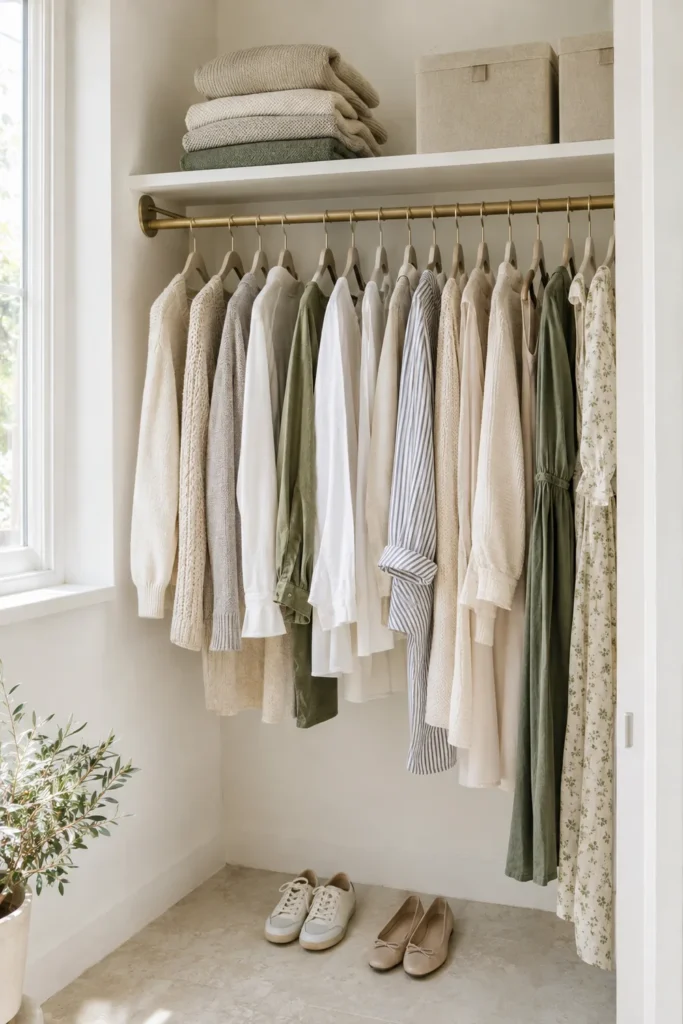
Hang all tops together, then all pants, then dresses, then outerwear. Within each group, run from light to dark. It looks calm and makes it easy to spot what you have.
Keep everyday items at eye level
Work clothes and daily basics belong in the easiest spot to reach. Formal wear and off season pieces go higher or to the far ends.
Fold knits instead of hanging them
Sweaters stretch at the shoulders on hangers. Fold them and stack them on a shelf, no more than four or five high.
Simple Storage That Keeps It Tidy

Good storage does not need to be expensive. A few small upgrades make a real difference:
- Matching slim hangers. Velvet or thin metal hangers save a surprising amount of rod space and make the closet look instantly calmer.
- Shelf dividers. Clear dividers that clip onto a shelf stop sweater stacks from sliding over. They usually cost a few dollars each.
- Lidded boxes for off season clothes. Fabric or clear boxes on a top shelf keep summer or winter clothes dust free.
- Hooks on the inside of the door. Great for the bag you use every day or tomorrow’s outfit.
- A small basket for accessories. Belts, scarves and hats stay together instead of drifting into piles.
Safety note: if you use a step stool to reach a high closet shelf, keep both feet on the stool and do not stretch or lean far to the side. Store heavy boxes on lower shelves.
How to Keep Your Closet Decluttered
The hard part is done. These habits keep it that way.
- Use the one in, one out rule. When something new comes home, one similar item leaves.
- Turn your hangers. Hang everything with the hook facing backward. After you wear an item, hang it the normal way. In six months, the backward hangers show what you are not wearing.
- Keep a donate bag in the closet. When something stops fitting, it goes straight in the bag.
- Do a quick edit each season. When you swap summer and winter clothes, take 20 minutes to reassess.
What to Do With Clothes You Remove
- Donate clean items in good condition to a local charity shop or shelter.
- Sell higher quality pieces through a consignment shop or online listing.
- Recycle worn out or stained textiles. Many towns have textile bins, and some clothing stores accept old fabric for recycling.
- Repurpose old cotton T-shirts as cleaning rags.
A decluttered closet is not about owning as little as possible. It is about being able to see, reach and wear what you have. Give yourself one afternoon, and tomorrow morning will feel noticeably easier.
What is the one piece of clothing you keep but never actually wear? Tell us in the comments.
Quick Questions
How many hangers should a closet have?
There is no perfect number, but leaving about 10 percent of hangers empty gives you room to put clean laundry away without cramming.
How often should I declutter my closet?
A full declutter once a year plus a short edit at each season change is enough for most people.
Should I keep clothes that might fit again?
Keep a small selection in one box if it truly motivates you. If the box makes you feel bad each time you see it, it is fine to let those pieces go.
What is the fastest way to start if I only have 30 minutes?
Start with shoes or with one category like T-shirts. A small, finished area builds momentum for the rest.