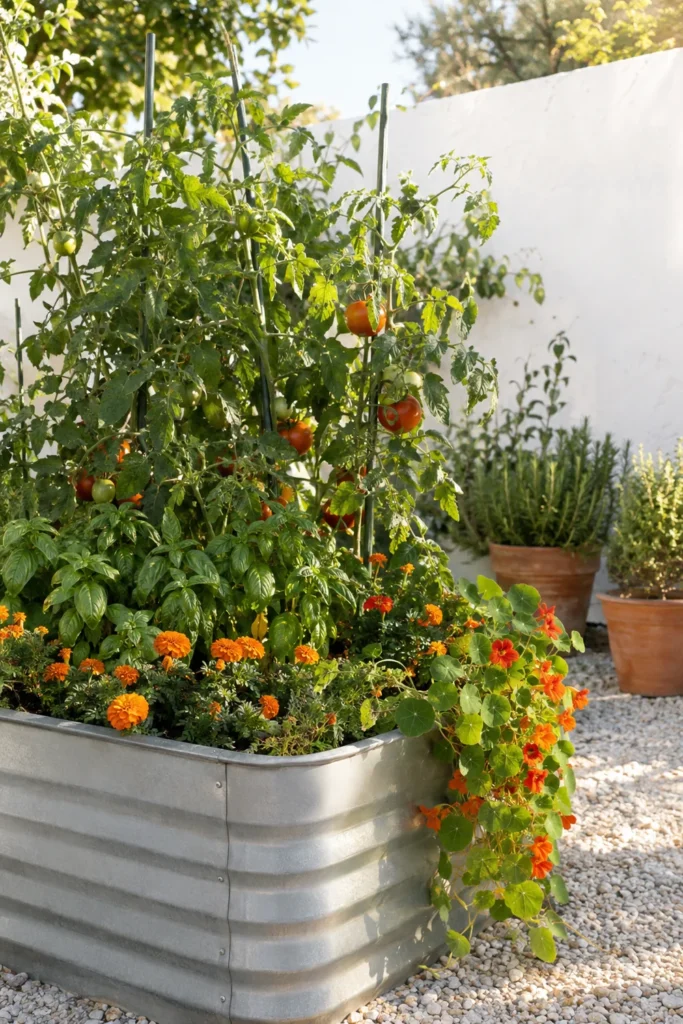
Walk through almost any vegetable garden and you will see marigolds tucked between tomatoes or basil growing at their feet. That is companion planting: grouping plants that seem to help each other grow.
Some companion planting advice is solid and backed by how plants and insects really work. Some of it is more garden tradition than proven fact. Either way, mixing plants rather than growing big blocks of one crop tends to make a garden healthier and more productive.
Here is a practical, beginner friendly look at companion planting, with pairings to try and a few to avoid.
How Companion Planting Works
Plants can help each other in a handful of real, practical ways:
- Attracting helpful insects. Flowers feed pollinators and predators like ladybugs, lacewings, hoverflies and tiny parasitic wasps, which eat aphids and caterpillars.
- Trap cropping. Some plants lure pests away from your main crop.
- Physical support and shade. Tall plants support climbers or shade heat sensitive greens.
- Using space well. Fast crops grow between slow ones and are harvested before the slow crop needs the room.
- Confusing pests. A mix of scents and shapes can make it harder for some insects to find their favorite plants.
- Feeding the soil. Beans and peas host bacteria on their roots that capture nitrogen from the air, which benefits the soil over time.
Classic Companion Pairs to Try
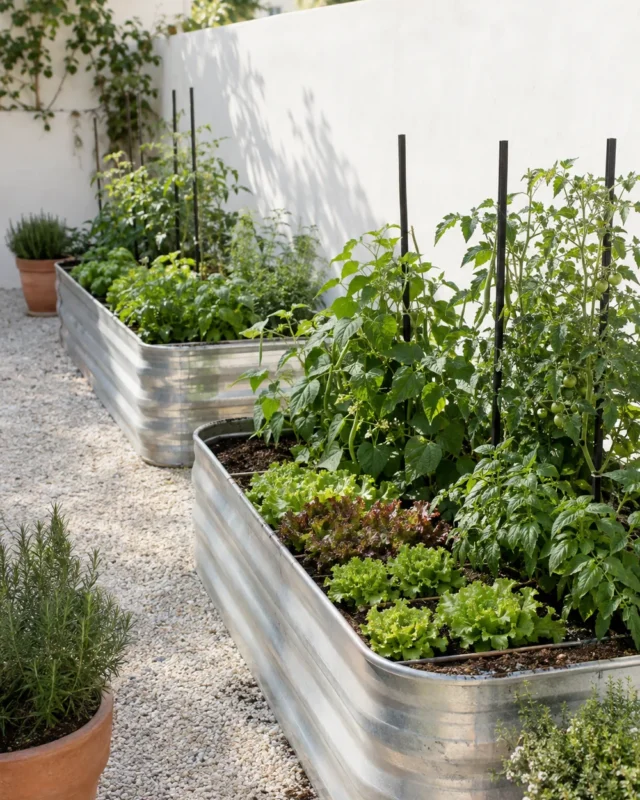
Tomatoes and Basil
The most famous pairing. Basil enjoys the same sun, warmth and watering as tomatoes, fills empty space at their base, and its flowers attract pollinators if you let a few bloom. Plant basil about 10 to 12 inches from each tomato.
Carrots and Onions
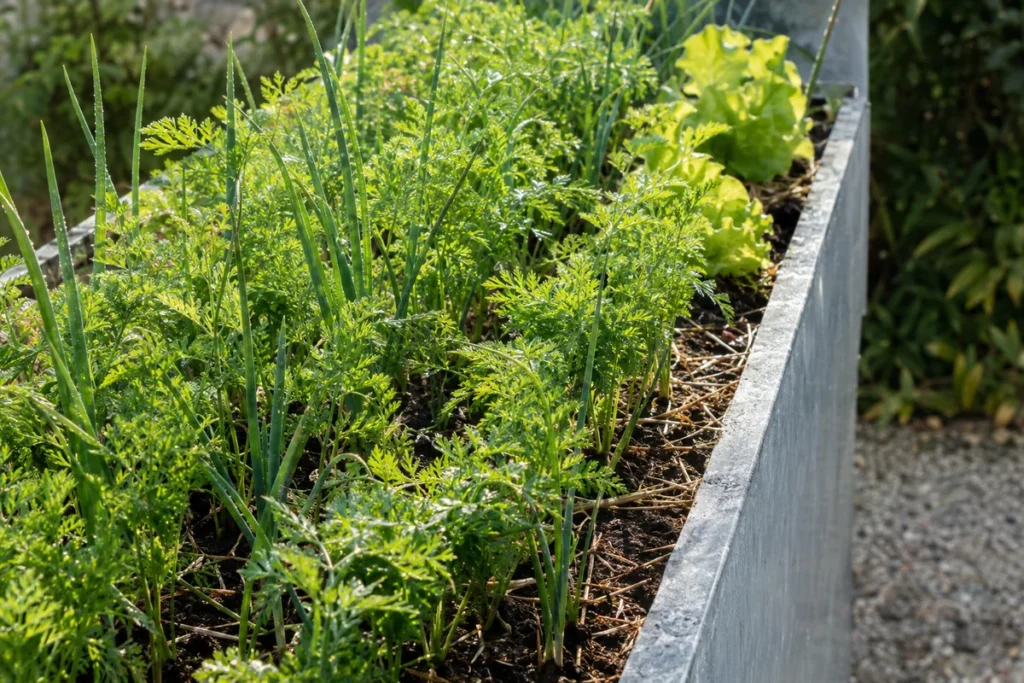
Alternate rows of carrots and onions (or leeks, chives or green onions). The strong onion scent is thought to help mask carrots from carrot rust fly, and the two crops root at different depths, so they do not compete much.
Radishes and Carrots
Carrot seeds are slow to sprout. Sow a few quick radish seeds in the same row. The radishes come up in days, mark the row, loosen the soil, and are pulled in about four weeks, just as carrots need the room.
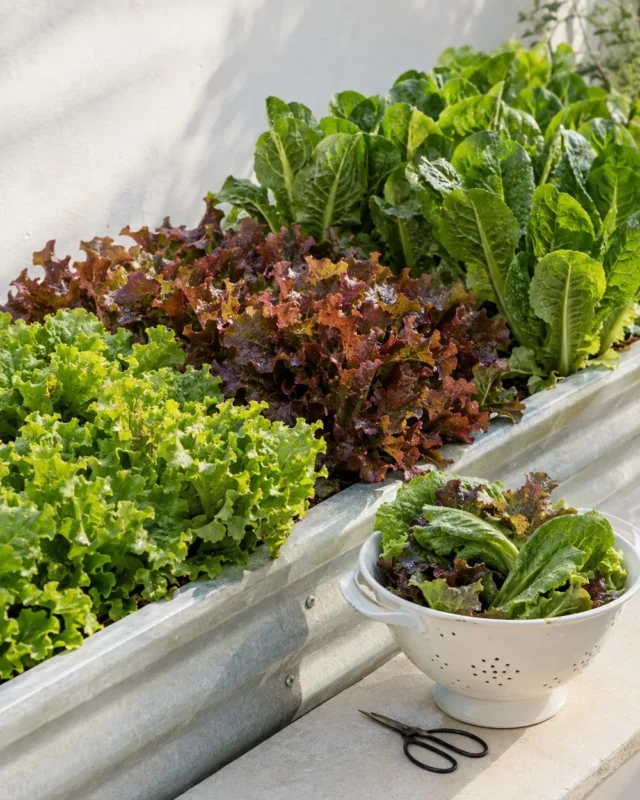
Lettuce Under Tall Crops
Plant lettuce, spinach or arugula on the shady side of tomatoes, pole beans or trellised cucumbers. The afternoon shade keeps greens cool and slows bolting in summer heat.
The Three Sisters: Corn, Beans and Squash
A traditional Indigenous planting method. Corn provides a tall stalk for pole beans to climb, beans add nitrogen to the soil over time, and large squash leaves shade the ground, keeping it moist and holding back weeds. It works best in a block of at least 10 by 10 feet so the corn pollinates well.
Cucumbers and Dill
Dill flowers attract hoverflies and parasitic wasps that prey on aphids and other cucumber pests. Let some dill go to flower near the cucumber trellis.
Brassicas and Aromatic Herbs
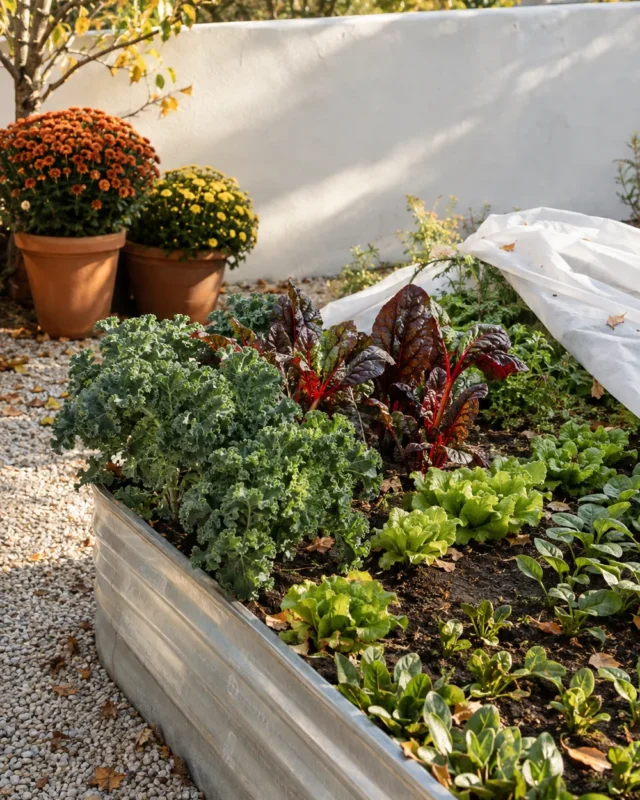
Cabbage, broccoli and kale often get cabbage worms. Planting thyme, sage, rosemary or dill nearby may help confuse the white butterflies that lay the eggs, and herb flowers draw in the wasps that hunt caterpillars. A row cover remains the most reliable protection.
Flowers That Help the Vegetable Garden
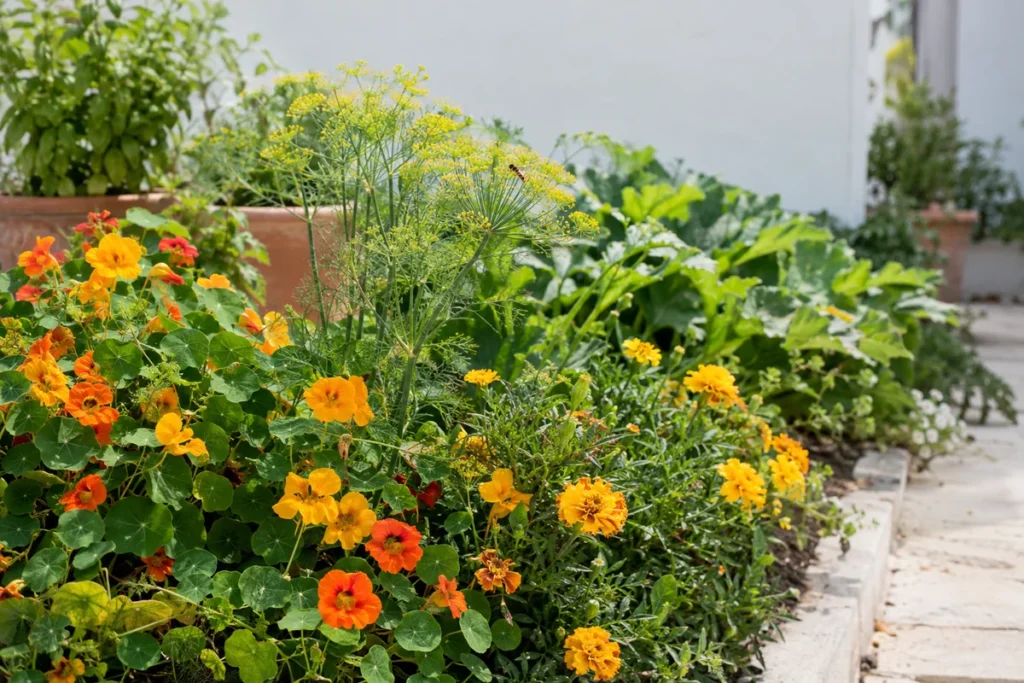
A few flowers in the vegetable bed are one of the simplest and most effective companion planting habits.
- French marigolds: cheerful, easy and long blooming. Their roots can suppress certain soil nematodes when grown densely for a full season, and the flowers draw pollinators.
- Nasturtiums: a classic trap crop. Aphids often head for nasturtiums first, so check and pinch off infested stems. The leaves and flowers are also edible.
- Sweet alyssum: low, honey scented flowers that are a magnet for hoverflies, whose larvae eat aphids. Lovely along the edge of a bed.
- Calendula: easy from seed and attracts a wide range of beneficial insects.
- Zinnias and cosmos: bring in pollinators for squash, cucumbers and melons.
- Borage: blue flowers that bees love. It self seeds freely, so pull extras.
Aim to have something blooming in or near the vegetable garden from spring through fall.
Plants to Keep Apart
A few combinations are best avoided, either because they compete, share diseases, or slow each other down.
- Tomatoes and potatoes: both are in the nightshade family and share diseases like early and late blight. Keep them in separate beds and rotate each year.
- Fennel and most vegetables: fennel is a poor neighbor for many crops. Give it its own pot or corner.
- Onions, garlic and beans or peas: commonly said to stunt the growth of beans and peas. Keep them in different sections of the bed.
- Squash and potatoes: both are heavy feeders and can compete for space and nutrients.
- Tall crops on the south side: not a pairing problem exactly, but corn or trellised crops on the south edge (in the Northern Hemisphere) will shade everything behind them.
How to Use Companion Planting in a Small Bed
- Start with your main crops. Decide on your tomatoes, peppers, beans and greens first.
- Add an herb next to each one. Basil by tomatoes, dill by cucumbers, chives by carrots.
- Edge the bed with flowers. Marigolds and sweet alyssum along the front, nasturtiums at a corner where they can spill over.
- Tuck quick crops into gaps. Radishes and lettuce fill space between young plants and are harvested before things get crowded.
- Rotate each year. Do not plant the same family in the same spot two years in a row.
Companion planting is not a magic fix for every pest, but a varied, flowering garden attracts more beneficial insects and makes better use of every square foot. Start with two or three pairings, watch what happens, and build from there.
Do you have a favorite plant pairing in your garden? Tell us in the comments.
Quick Questions
Do marigolds really keep pests away?
Marigolds attract helpful insects and certain types can reduce root knot nematodes when grown densely. They will not repel every pest on their own, but they are a worthwhile addition to any vegetable bed.
What should not be planted next to tomatoes?
Keep tomatoes away from potatoes, which share blight, and from fennel. Corn can attract the same worm that damages tomato fruit, so it is best grown in a separate area.
Can I companion plant in containers?
Yes. A large pot with one tomato, a basil plant and a few marigolds around the edge works well. Make sure the container is at least 15 to 20 gallons for a full size tomato.