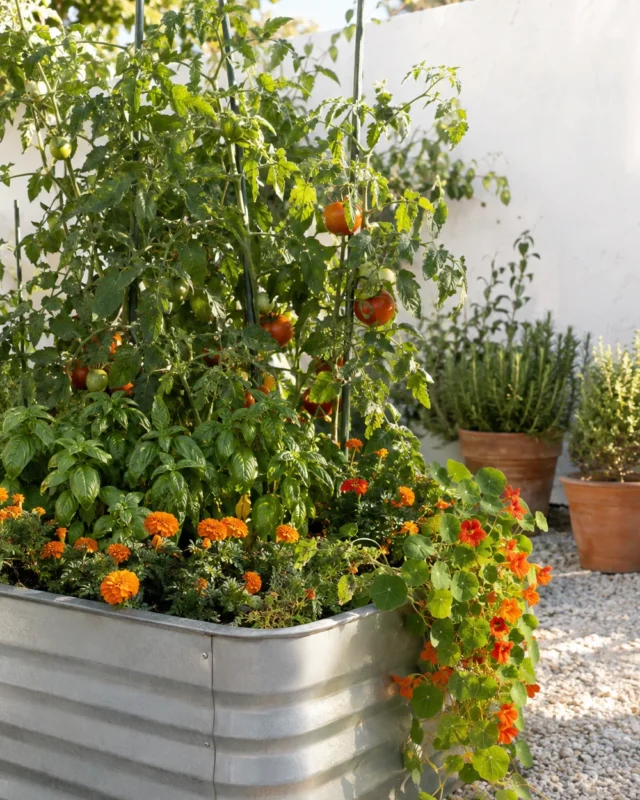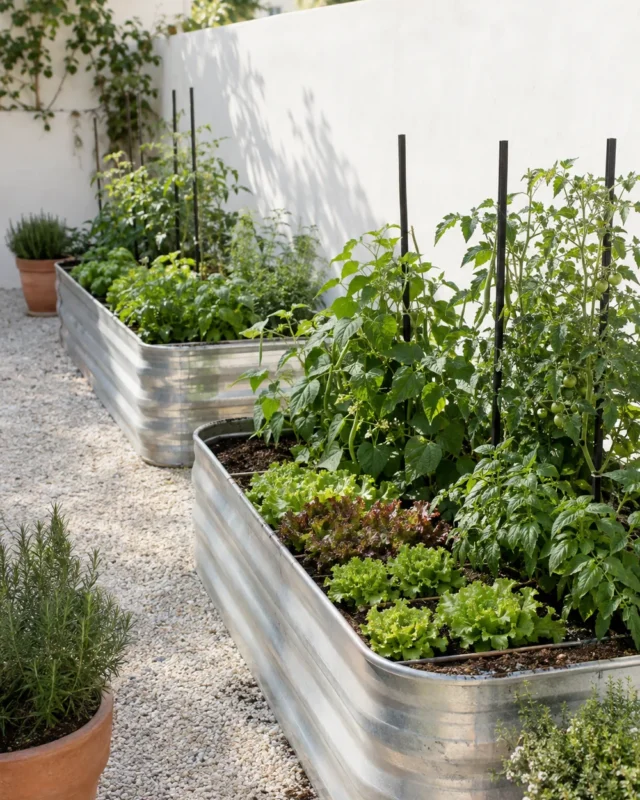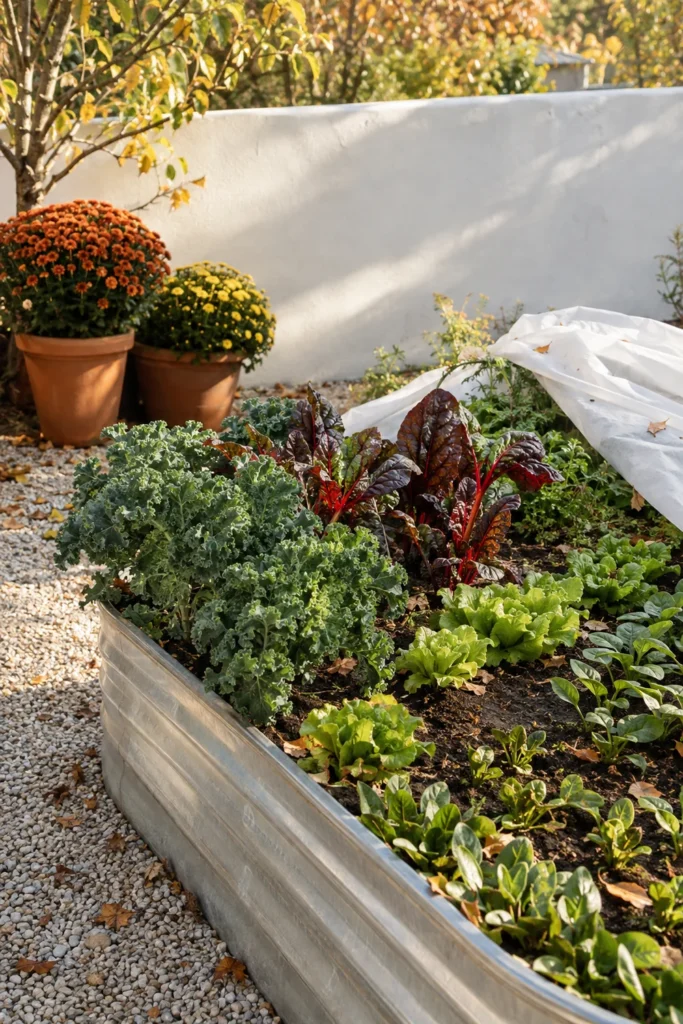
When summer crops start to fade, many people pull out the tomato plants and call it a season. That leaves weeks, sometimes months, of excellent growing weather unused.
Cool season vegetables actually prefer the shorter days and crisp nights of fall. Many taste sweeter after a light frost, pests are fewer, and you water much less.
Here is what to plant in fall, how to time it for your area, and how to keep picking greens even as the first frosts arrive.
How to Time Fall Planting
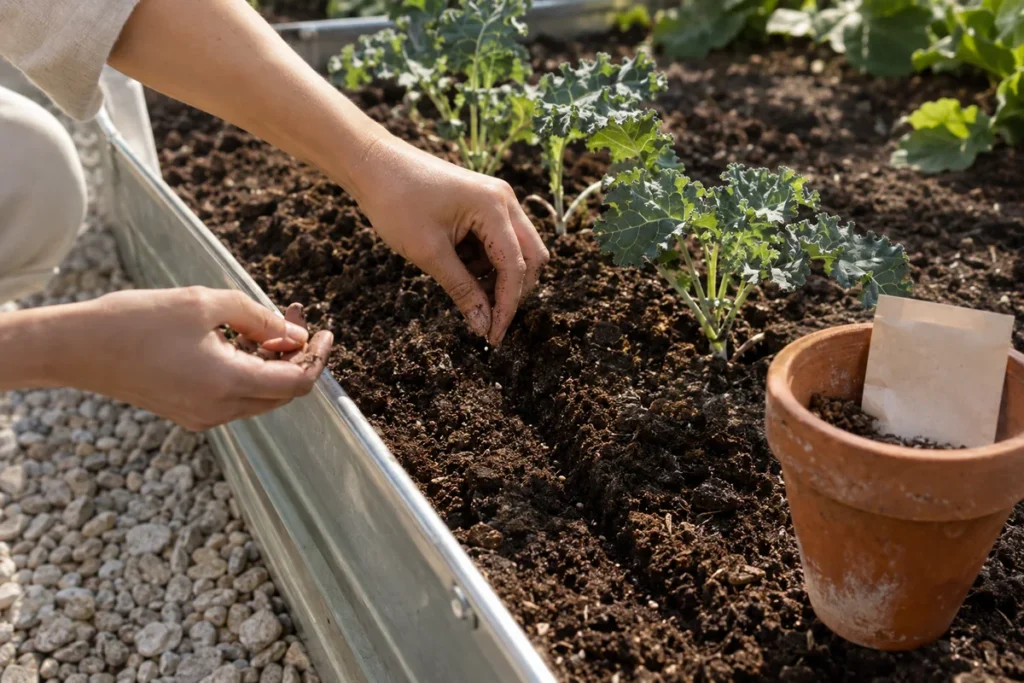
The key date is your average first fall frost. You can find it by searching your zip code with “first frost date,” or by asking a local garden center.
To figure out when to sow:
- Look up the crop’s days to maturity on the seed packet.
- Add about two weeks, because plants grow more slowly as days shorten (gardeners call this the fall factor).
- Count that many days back from your first frost date.
Example: lettuce that matures in 50 days, plus 14 days, means sowing about 64 days (roughly 9 weeks) before your first frost.
For most of the country this means a lot of fall planting actually happens in mid to late summer. In warmer areas (roughly USDA zones 8 to 10), fall and winter are the main cool season, and you can keep planting through October and November.
Best Vegetables to Plant in Fall
Leafy Greens
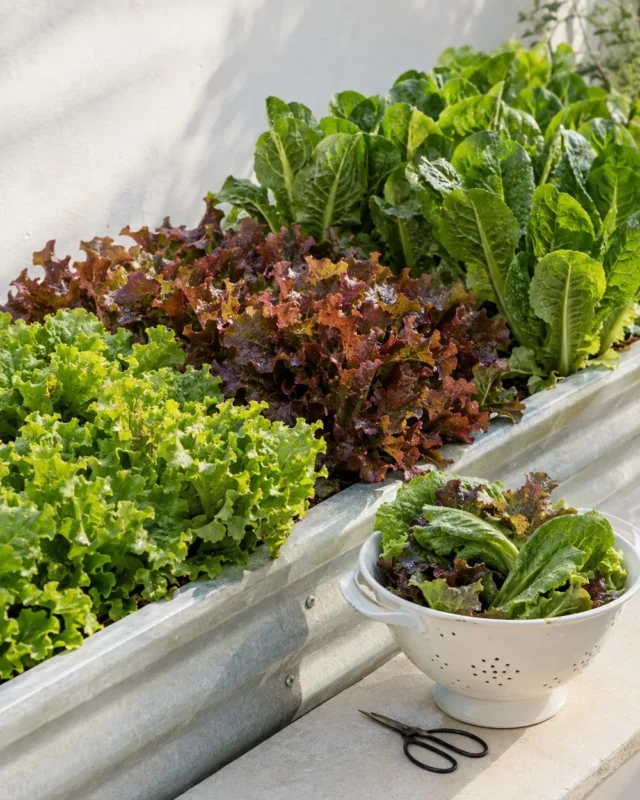
- Lettuce: loose leaf types are fastest, ready in 30 to 45 days. Tolerates light frost.
- Spinach: one of the hardiest greens, surviving temperatures in the low 20s°F. Sow 6 to 8 weeks before first frost. In many areas it overwinters and regrows in spring.
- Arugula: ready in about 30 days, with a peppery flavor that mellows in cool weather.
- Kale: extremely cold hardy and sweeter after frost. Plant transplants 6 to 8 weeks before first frost and harvest into winter.
- Swiss chard: handles light frost and keeps producing until a hard freeze.
- Bok choy and other Asian greens: quick, 30 to 50 days, and much less likely to bolt in fall than in spring.
Root Vegetables
- Radishes: the quickest crop of all, 25 to 30 days. Sow every week or two until about 4 weeks before frost.
- Carrots: sow 10 to 12 weeks before first frost. Cold weather converts starches to sugar, so fall carrots are especially sweet. They can stay in the ground under mulch well into winter in many areas.
- Beets: sow 8 to 10 weeks before frost. The greens are edible too.
- Turnips: fast, cold tolerant and good for both roots and greens.
Brassicas
Broccoli, cabbage, cauliflower and Brussels sprouts need a long season, so plant transplants rather than seeds, usually 10 to 12 weeks before first frost. They handle light frost well and fall heads are often tighter and sweeter than spring ones.
Peas
Snap and snow peas can be sown about 10 to 12 weeks before frost. They do best where late summer is not too hot, as the seeds struggle to germinate in very warm soil.
Planting Garlic in Fall
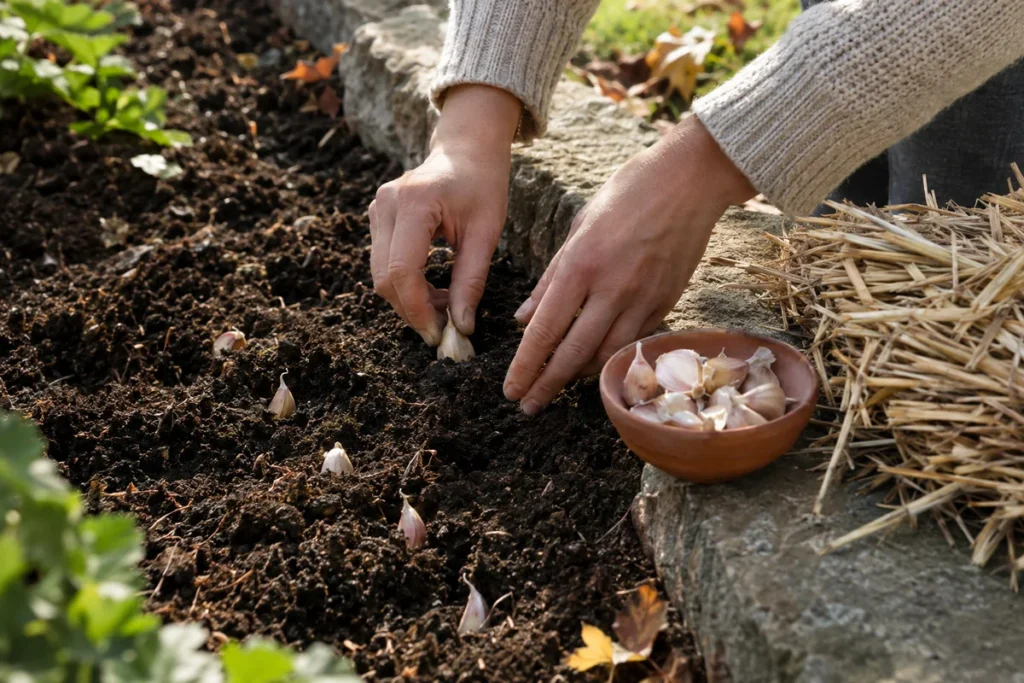
Garlic is the classic fall planted crop for a summer harvest the next year.
- When: about 3 to 6 weeks before the ground freezes. In many areas (zones 5 to 7) that is mid October to early November. In warm zones, plant in November or December.
- How: break a bulb into cloves just before planting. Plant each clove pointed end up, 2 inches deep and 6 inches apart, in rows about 12 inches apart.
- Soil: loose, well drained soil with compost worked in.
- Mulch: after the ground cools, cover with 4 to 6 inches of straw or shredded leaves.
- Harvest: early to mid summer, when the lower third of the leaves have turned brown.
Use bulbs from a garden center or seed supplier rather than grocery store garlic, which may be treated to prevent sprouting or be a variety not suited to your climate.
Shallots and, in mild climates, onion sets can be planted the same way.
Protecting Fall Crops From Frost
A little protection can add weeks to your harvest.
- Floating row cover: a lightweight white fabric laid over plants or hoops adds roughly 2 to 6°F of frost protection while letting light and rain through. A 10 foot length costs around $10 to $20.
- Low tunnels: bend wire or PVC hoops over a bed and cover with row cover or clear greenhouse plastic. Open the ends on sunny days so plants do not overheat.
- Cold frames: a bottomless box with a clear lid set over a bed. Great for lettuce and spinach well into winter.
- Mulch root crops: a thick layer of straw over carrots and beets keeps the ground from freezing so you can keep digging.
Getting the Garden Ready
- Pull spent summer plants. Compost healthy ones and throw away diseased foliage.
- Add 1 to 2 inches of compost and work it lightly into the top few inches of soil.
- Water seedbeds daily until seeds sprout. Late summer soil dries quickly.
- Shade new seedlings with a piece of shade cloth during hot spells.
Not planting anything? Sow a cover crop like crimson clover or winter rye on empty beds. It protects soil from erosion, adds organic matter, and can be cut down and turned in a few weeks before spring planting.
Fall gardening is quieter, cooler and often more productive than people expect. Pick a few greens and a root crop, find your frost date, and enjoy salads from your own garden well past the first cold snap.
What are you planting in your garden this fall? Tell us in the comments.
Quick Questions
Is it too late to plant vegetables in October?
It depends on your zone. In warm areas (zones 8 to 10) October is prime time for greens, roots and brassicas. In colder areas, plant garlic, spinach for overwintering, or a cover crop.
What vegetables survive frost?
Kale, collards, spinach, Brussels sprouts, cabbage, carrots, parsnips and turnips handle frost well. Lettuce, chard and beets handle light frost but need protection from hard freezes.
Can I plant fall vegetables in containers?
Yes. Lettuce, spinach, arugula, radishes and kale all grow well in containers at least 8 to 10 inches deep. Pots can also be moved to a sheltered spot on frosty nights.