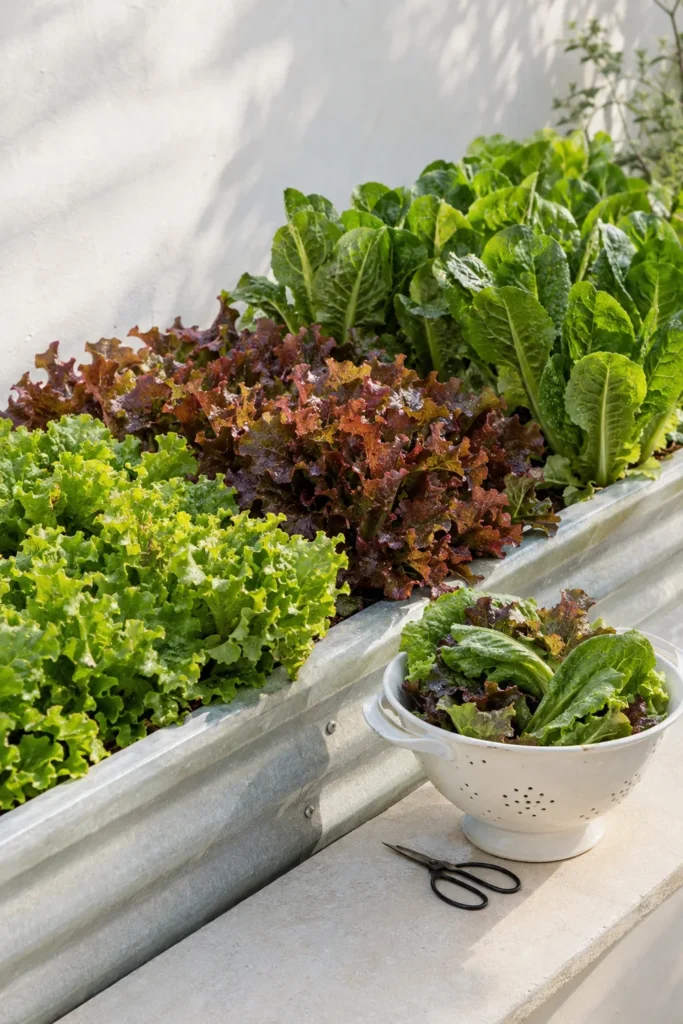
There is nothing quite like a salad you picked ten minutes ago. Homegrown lettuce is crisp, tender and far more varied than anything in a plastic clamshell.
It is also one of the easiest vegetables for beginners. Lettuce grows quickly, fits in small spaces and containers, and some types are ready to pick in under a month.
The main secret is timing. Lettuce loves cool weather and struggles in summer heat. Here is how to grow lettuce well, from choosing a type to harvesting for weeks.
Types of Lettuce
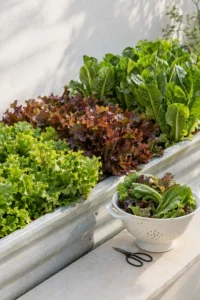
- Loose leaf: no head, just a rosette of leaves you can pick a few at a time. The fastest and easiest, ready in about 40 to 50 days, with baby leaves in 25 to 30.
- Romaine (cos): tall, upright heads with a crisp center rib. About 60 to 75 days. Fairly heat tolerant.
- Butterhead (Bibb, Boston): soft, loose heads with buttery leaves. About 50 to 65 days.
- Batavian (summer crisp): crunchy, semi open heads that resist bolting better than most. Great for warmer areas.
- Iceberg (crisphead): dense heads that need a long, cool season. The hardest for beginners.
For a first try, loose leaf varieties or a mixed lettuce seed blend are the most forgiving.
When to Plant Lettuce
Lettuce grows best when air temperatures are between about 45°F and 75°F. Above that, it tends to bolt (send up a flower stalk) and turn bitter.
- Spring: sow seeds outdoors 2 to 4 weeks before your last frost date, as soon as the soil can be worked. Lettuce seedlings handle light frost.
- Fall: sow 6 to 8 weeks before your first fall frost. Fall lettuce often grows best of all.
- Mild winter areas (roughly zones 8 to 10): plant from fall through early spring.
- Summer: possible with heat tolerant varieties and afternoon shade, but expect faster bolting.
Lettuce seeds germinate best in soil between 40°F and 75°F. Many varieties sprout poorly once soil goes above 80°F, so in late summer, sow in the evening and keep the soil cool and damp, or start seeds indoors.
How to Plant Lettuce Seeds
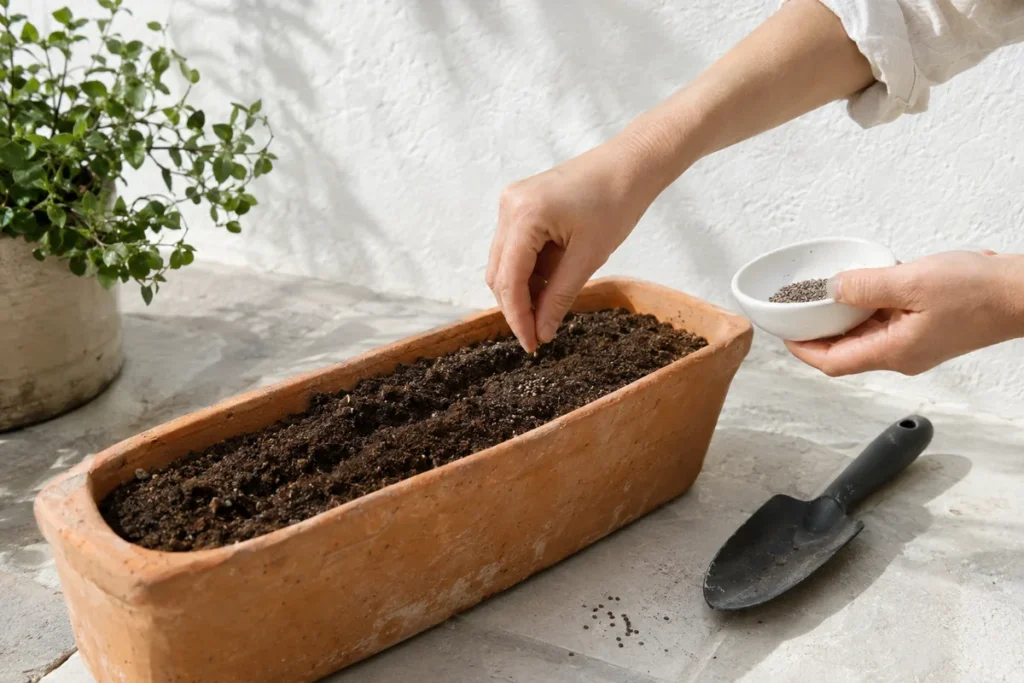
Supplies:
- Lettuce seeds
- Compost
- A rake or hand trowel
- A watering can or hose with a gentle shower setting
Steps:
- Prepare the soil. Lettuce likes loose, fertile soil that holds moisture but drains well. Mix 1 to 2 inches of compost into the top few inches.
- Make shallow furrows about a quarter inch deep, or simply scatter seeds over a smoothed bed.
- Sow thinly. Aim for a few seeds per inch.
- Barely cover the seeds. Lettuce needs some light to germinate, so cover with no more than about 1/8 to 1/4 inch of fine soil or compost.
- Water gently so the seeds do not wash away. Keep the surface moist until sprouts appear, usually within 4 to 10 days.
You can also buy transplants or start seeds indoors 3 to 4 weeks before planting out. Transplants give you a head start and are easier to space.
Spacing for Each Type
Thin seedlings once they have two or three true leaves. Eat the thinnings as baby greens.
- Loose leaf: 4 to 6 inches apart (closer if harvesting as baby leaves)
- Butterhead: 6 to 10 inches apart
- Romaine and Batavian: 8 to 12 inches apart
- Iceberg: 12 to 16 inches apart
Leave 12 to 18 inches between rows, or plant in blocks with plants spaced evenly in all directions.
Sun, Water and Feeding
Sun: full sun in spring and fall. In warmer weather, 4 to 6 hours of morning sun with afternoon shade is ideal.
Water: lettuce has shallow roots and is mostly water, so steady moisture matters. Give about 1 inch of water per week, more in warm weather. Water at the base in the morning. Dry spells make leaves bitter and tough.
Mulch: a thin layer of straw or fine compost keeps the soil cool and moist and keeps splashing soil off the leaves.
Feeding: rich, compost amended soil is often enough. If leaves look pale, a liquid fertilizer every two to three weeks helps.
Keeping Lettuce From Bolting
Bolting is triggered by long days and heat. Once the center starts to stretch upward, the leaves turn bitter quickly.
- Grow bolt resistant varieties for late spring and summer.
- Plant where taller crops will give afternoon shade.
- Cover with 30 to 40 percent shade cloth during heat waves.
- Keep the soil evenly moist.
- Sow small amounts every two weeks so a new batch is always coming along as older plants fade.
How to Harvest Lettuce
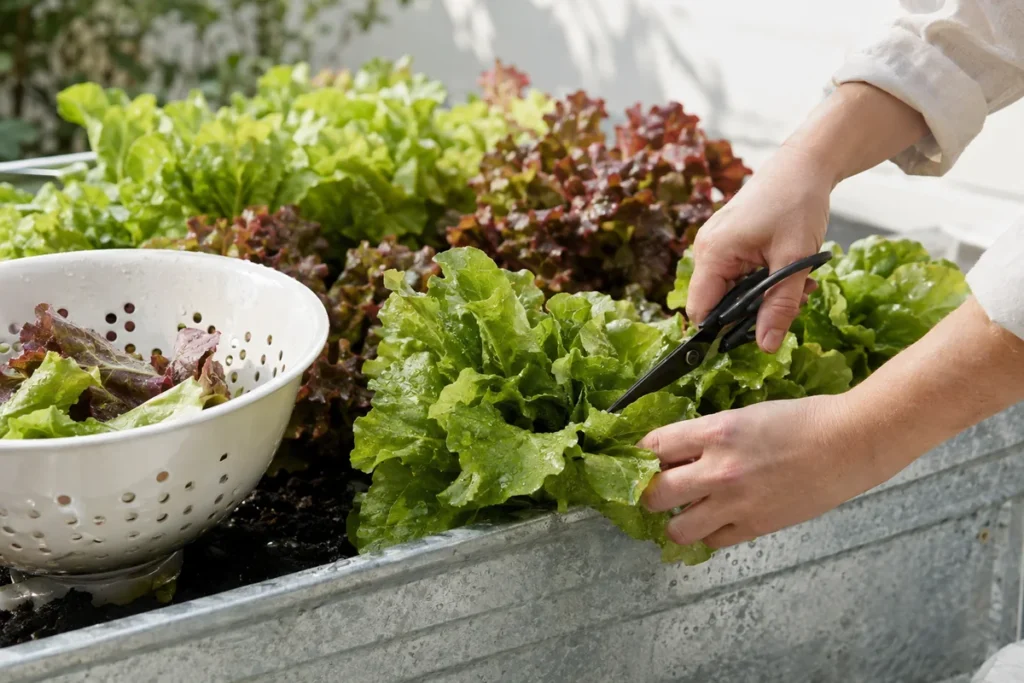
Harvest in the early morning when leaves are crisp and full of water.
Cut and come again (loose leaf and romaine): pick the outer leaves a few at a time, leaving the center to keep growing. Or cut the whole plant about an inch above the soil, and it will often regrow for a second and even third harvest.
Whole heads (butterhead, romaine, iceberg): cut at the base once the head feels full and firm.
Rinse leaves in cold water, spin or pat dry, and store in a container lined with a paper towel in the fridge. Homegrown lettuce usually keeps for about a week.
Common Lettuce Problems
- Slugs and snails: ragged holes, often overnight. Hand pick in the evening, use shallow traps, or set out copper tape around containers.
- Aphids: clusters under leaves. Rinse them off with a strong spray of water.
- Tip burn: brown leaf edges from uneven watering or heat. Water consistently.
- Bitter leaves: heat, drought or bolting. Harvest earlier and plant in cooler weather.
Lettuce rewards a little planning with weeks of fresh salads. Sow a short row, sow another two weeks later, and enjoy picking dinner straight from the garden.
Which type of lettuce are you most excited to grow? Tell us in the comments.
Quick Questions
Can I grow lettuce in containers?
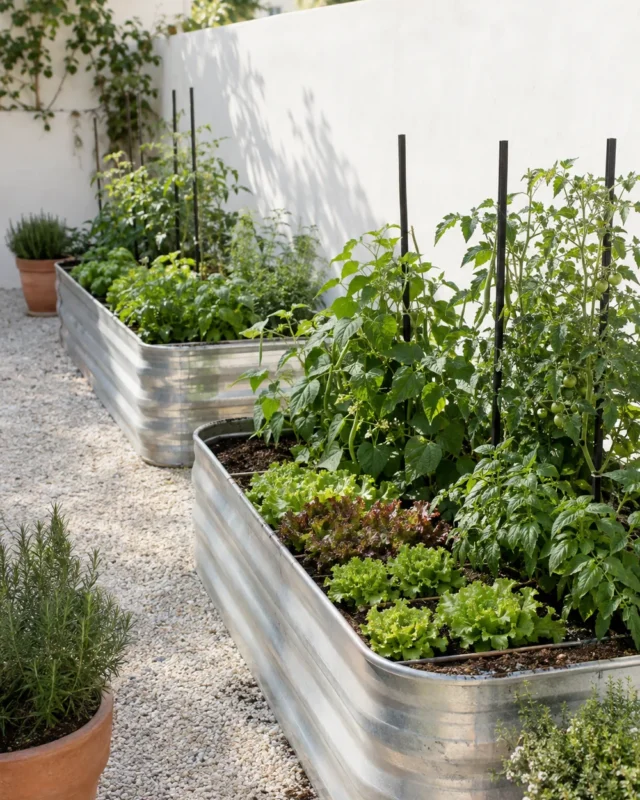
Yes. Any container at least 6 to 8 inches deep with drainage holes works. Window boxes and shallow troughs are perfect for loose leaf types. Containers dry out quickly, so check the soil daily in warm weather.
Why is my lettuce bitter?
Bitterness comes from heat, dry soil or the plant starting to bolt. Keep lettuce well watered, give it afternoon shade in warm weather, and pick it before the center starts to stretch.
How long does lettuce take to grow?
Baby leaves are ready in about 25 to 30 days. Full size loose leaf lettuce takes 40 to 50 days, and heading types take 55 to 75 days depending on the variety.