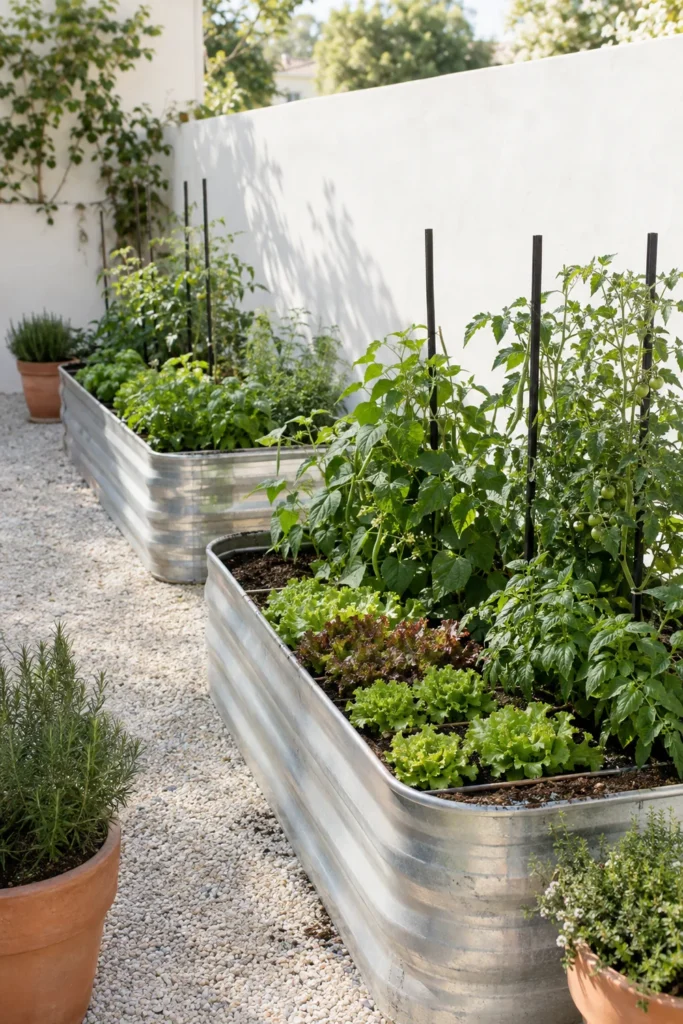
Starting a vegetable garden can feel like a lot. How big should the bed be? What goes where? How many tomato plants is too many?
A raised bed solves many of the hardest parts at once. You control the soil, weeds are easier to manage, the soil warms up sooner in spring, and you never have to step on (and compact) the area where roots grow.
This guide walks you through choosing a spot, sizing and filling a bed, and a simple 4×8 raised bed layout you can copy for your first season.
Picking the Right Spot
Sun matters more than anything else. Most fruiting vegetables (tomatoes, peppers, squash, cucumbers, beans) need at least 6 to 8 hours of direct sun a day. Leafy greens and herbs can manage with 4 to 6 hours.
Watch your yard for a full day before you build. Note where shadows from the house, fences and trees fall in the morning and afternoon.
Also look for:
- Level ground, or ground you can level easily
- A water source nearby. If the hose does not reach, you will water less often than you should.
- Easy access from the house. A bed you walk past every day gets checked, picked and weeded.
- Distance from big trees, whose roots will grow up into rich bed soil
Choosing the Size and Depth
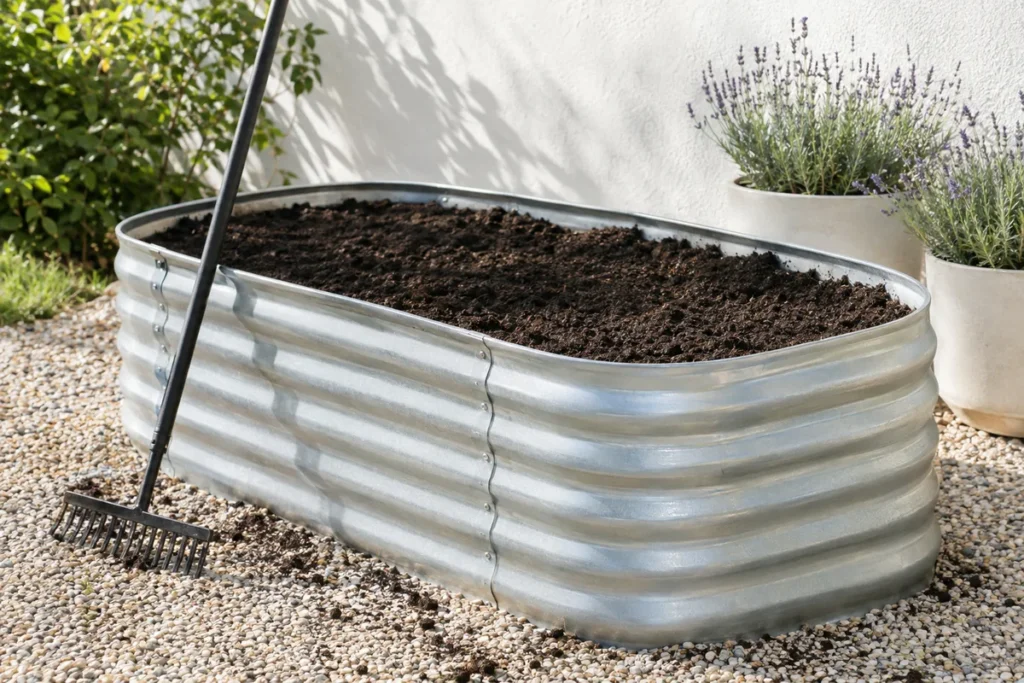
Width: no more than 4 feet. You should be able to reach the center from either side without stepping into the bed. If the bed backs onto a wall or fence, keep it to 2 to 3 feet wide.
Length: 6 to 8 feet is easy to manage. A 4×8 bed gives you 32 square feet of growing space, which is plenty to keep a small household in salads, herbs and tomatoes through summer.
Depth: 10 to 12 inches minimum. Most vegetables root well in that depth. If you want long carrots or parsnips, or your native soil is very poor, go 16 to 18 inches.
Paths: 2 to 3 feet wide between beds, enough for a wheelbarrow or garden cart.
Galvanized steel, stone, brick and naturally rot resistant timber all work as bed sides. Kits run from around $60 to $200 depending on size and material.
Filling the Bed: A Simple Soil Mix
Raised beds hold a surprising amount of soil. A 4×8 bed that is 12 inches deep needs 32 cubic feet, or a little over one cubic yard.
A reliable beginner mix:
- About 60 percent screened topsoil or raised bed soil
- About 30 to 40 percent finished compost
- A few handfuls of perlite or fine bark if the soil feels heavy
Buying in bulk by the cubic yard from a local landscape supplier is usually much cheaper than bagged soil for anything larger than one small bed.
Save money on deep beds: fill the bottom third with untreated branches, leaves and grass clippings, then add your soil mix on top. Expect it to settle a few inches the first year and top it up with compost.
Lay a sheet of plain cardboard on the ground under the bed first to smother grass and weeds.
Planning Your Layout
Two simple rules make any raised bed layout work.
1. Put tall plants on the north side. In the Northern Hemisphere the sun moves across the southern sky, so tomatoes, pole beans, trellised cucumbers and corn should go along the north edge. That way they do not shade shorter crops.
2. Plant in blocks, not rows. Divide the bed into a grid of 1 foot squares and plant each square with a set number of plants. This gives you more harvest in less space than traditional rows.
Square Foot Spacing Guide
- 1 per square: tomato (staked or caged), pepper, eggplant, broccoli, cabbage
- 2 to 3 squares per plant: zucchini and summer squash
- 2 per square: cucumbers grown up a trellis
- 4 per square: lettuce heads, Swiss chard, basil, parsley, marigolds
- 9 per square: bush beans, spinach, beets, garlic
- 16 per square: carrots, radishes, green onions
A Simple 4×8 Raised Bed Layout
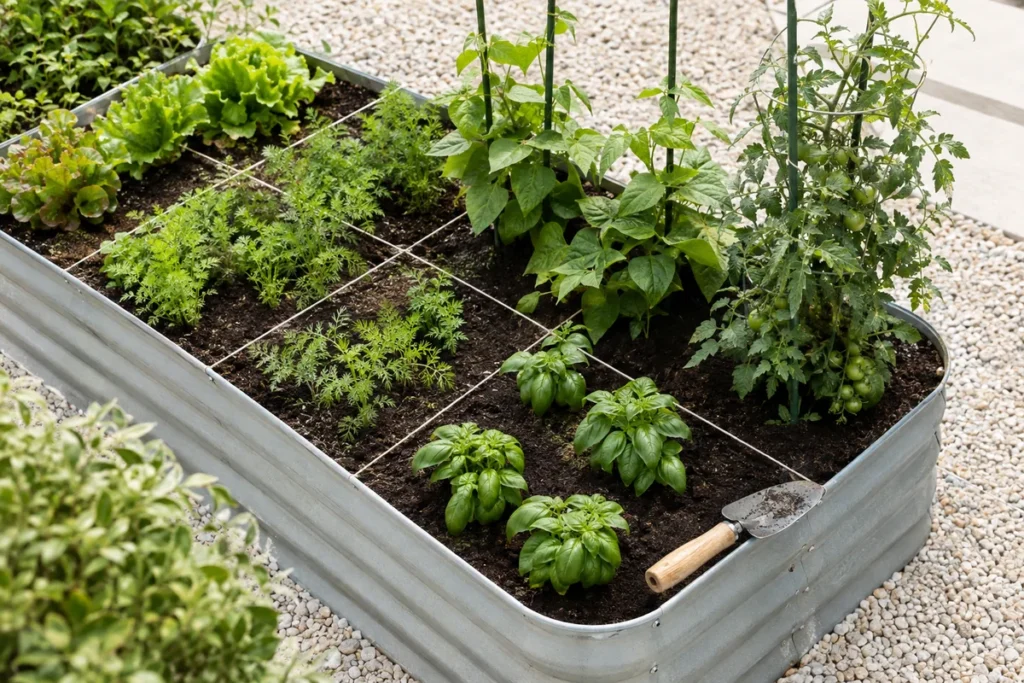
Here is a balanced first season plan for a summer bed, read from the north edge (back) to the south edge (front). The bed is four squares deep and eight squares long.
Row 1 (north edge, tallest):
- 3 squares of tomatoes, 1 plant each, on stakes or in cages
- 2 squares of cucumbers on a trellis, 2 plants each
- 3 squares of pole beans on a trellis, 8 seeds each
Row 2:
- 2 squares of peppers, 1 plant each
- 2 squares of basil, 4 plants each
- 2 squares of bush beans, 9 plants each
- 2 squares of Swiss chard, 4 plants each
Row 3:
- 3 squares of lettuce, 4 plants each
- 3 squares of carrots, 16 seeds each
- 2 squares of beets, 9 seeds each
Row 4 (south edge, shortest):
- 2 squares of radishes, 16 seeds each
- 2 squares of green onions, 16 each
- 2 squares of parsley, 4 plants each
- 2 squares of marigolds or nasturtiums, 4 each, to bring in pollinators
Lettuce in row 3 gets a little afternoon shade from the taller crops behind it later in summer, which helps it last longer before bolting.
Planting and Timing
- Cool season crops first. Lettuce, radishes, peas, spinach and carrots can go in 2 to 4 weeks before your last spring frost.
- Warm season crops after frost. Tomatoes, peppers, basil, beans and cucumbers go in once nights stay above 50°F, usually 1 to 2 weeks after your last frost date.
- Replant as you harvest. When radishes come out, sow more radishes or lettuce in that same square.
Watering and Upkeep
Raised beds drain well, which also means they dry out faster than the ground.
- Aim for about 1 inch of water per week, more in hot, windy weather.
- Water at the base of plants in the morning, not over the leaves.
- A soaker hose or drip line snaked through the bed saves a lot of time.
- Mulch with 2 inches of straw or shredded leaves to hold moisture and block weeds.
- Add an inch or two of compost to the top of the bed every spring.
A single well planned 4×8 bed can feed you more than you would expect. Start with one, learn how your yard and your plants behave, and add a second bed next year if you love it.
What is the first vegetable you want to grow in your raised bed? Tell us in the comments.
Quick Questions
How deep should a raised bed be for vegetables?
Ten to twelve inches works for most vegetables. Go 16 to 18 inches for long root crops, or if the ground underneath is rocky or heavy clay.
Which direction should a raised bed face?
If possible, run the long side east to west and put tall plants along the north edge so they do not shade shorter crops.
Can I put a raised bed on concrete?
Yes, but make it at least 12 inches deep, since roots cannot grow down into the ground. Expect it to dry out faster and need more frequent watering.