Opening the fridge to find a forgotten container of something fuzzy is never a good moment. Neither is buying a second bunch of herbs because the first one was hiding behind the milk.
An organized fridge does more than look nice. It keeps food at the right temperature, helps you use what you have before it spoils, and makes it easier to plan meals. Most people can set it up in about an hour.
Here are practical fridge organization tips, from cleaning out the shelves to the habits that keep it that way.
How to Clean the Fridge Before You Organize
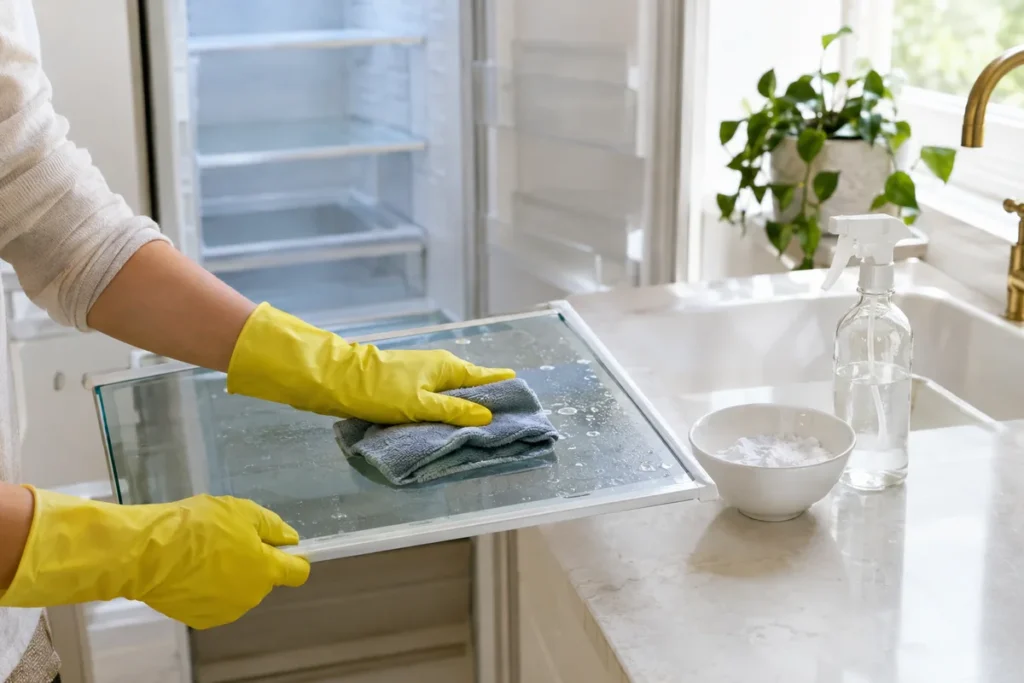
Start with a clean slate.
- Empty the fridge into a cooler or onto the counter. Work quickly so food does not warm up.
- Toss anything expired, spoiled or that you know will not get eaten.
- Remove shelves and drawers if they come out. Let glass shelves reach room temperature before washing, since cold glass can crack in hot water.
- Wash shelves and drawers in warm soapy water, rinse and dry.
- Wipe the inside with a mix of 2 tablespoons of baking soda in 1 quart of warm water. It cleans and helps remove odors without leaving a strong scent near your food.
- Dry everything before putting it back.
Safety Notes
- Unplug the fridge if you will be cleaning near the light, the fan or electrical parts.
- Never mix bleach with ammonia or vinegar. If you need to sanitize after a spill of raw meat juice, use one product only, follow the label for dilution, rinse with clean water and wipe dry.
- Ventilate the kitchen if you use anything stronger than soap and water.
- Test any cleaner on a hidden spot of plastic or seals first, since some products can cloud or crack fridge plastic.
Check the Temperature
An organized fridge only works if it is cold enough. Food safety guidelines recommend keeping the fridge at 40°F (4°C) or below and the freezer at 0°F (-18°C). An inexpensive fridge thermometer, usually a few dollars, tells you the real temperature, which can differ from the dial setting.
Where Everything Goes, Shelf by Shelf
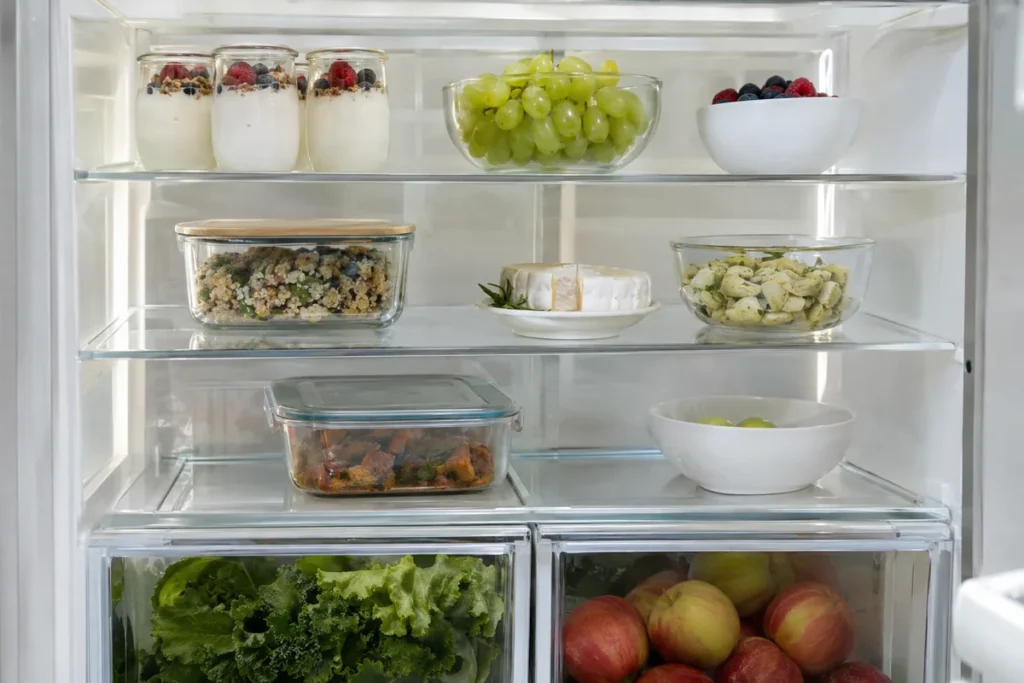
Different parts of the fridge have different temperatures. Use that to your advantage.
Top Shelf: Ready to Eat Foods
The top shelf is a good place for things that do not need cooking: leftovers, yogurt, drinks, deli items, hummus and dips. Put leftovers at eye level so they get eaten.
Middle Shelves: Dairy and Eggs
Milk, cheese and eggs do best on the middle or lower shelves, where the temperature is steady. Keep eggs in their carton or a covered container.
Bottom Shelf: Raw Meat and Fish
This is the coldest part of most fridges, and it is the safest place for raw meat, poultry and fish. Keep them in a sealed container or on a tray so juices cannot drip onto other foods. Never store raw meat above ready to eat foods.
Crisper Drawers: Produce
Many fridges have two drawers with humidity settings.
- High humidity (closed vent): leafy greens, herbs, carrots, broccoli and other vegetables that wilt.
- Low humidity (open vent): apples, pears, grapes and other fruits.
Keep fruits that give off ethylene, such as apples, away from leafy greens, which spoil faster around them.
The Door: Condiments Only
The door is the warmest part of the fridge because it opens and closes all day. Use it for condiments, sauces, jams, butter and drinks. Avoid storing milk or eggs there.
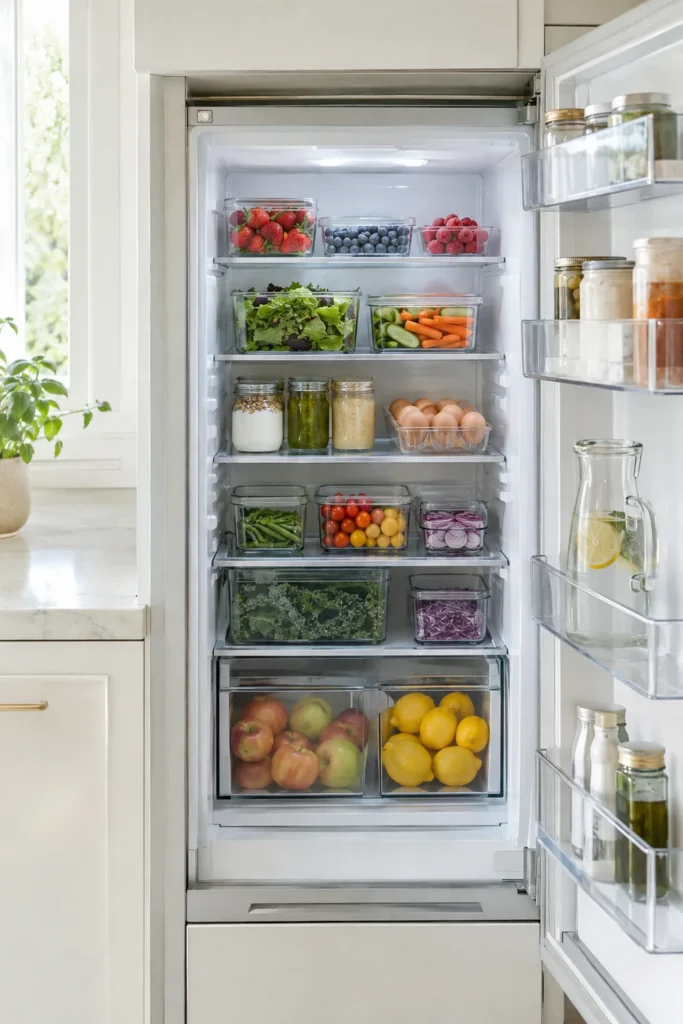
Use Clear Bins to Create Zones
Clear bins turn fridge shelves into easy drawers. Group similar items so you can pull a whole category out at once:
- A snack bin for cheese sticks, yogurts and cut fruit.
- A breakfast bin for butter, jam and cream cheese.
- A meal prep bin for chopped vegetables and cooked grains.
- An “eat first” bin for anything that needs to be used in the next day or two.
Measure shelf depth and height before buying, and choose bins that are easy to wipe. Many sets cost under $30.
Store Produce Smartly
A little prep extends freshness:
- Herbs: trim the stems and stand them in a glass of water, loosely covered, like a bouquet.
- Leafy greens: wash and spin dry, then store in a container lined with a paper towel.
- Berries: keep unwashed until you eat them, and store in a single layer if possible.
- Celery and carrots: stand them in a container of water to keep them crisp.
Some produce does better outside the fridge, such as whole tomatoes, bananas, onions, potatoes and garlic.
Label and Date Leftovers
A strip of masking tape and a marker are enough. Write what it is and the date it was cooked. Most cooked leftovers are best eaten within three to four days.
Use clear glass containers so you can see what is inside without opening every lid.
A Weekly 10 Minute Fridge Reset
Pick one day, ideally the day before grocery shopping:
- Toss anything spoiled or past its date.
- Move items that need to be eaten soon to the front or the “eat first” bin.
- Wipe any spills on shelves.
- Check what you have before making the shopping list.
This habit alone can noticeably cut food waste and grocery spending.
Wrapping Up
The best fridge organization tips are simple: store foods in the right zones, keep raw meat on the bottom, use the door for condiments, and group items in clear bins. Pair that with a quick weekly reset and your fridge will stay clean, safe and easy to use.
Which shelf in your fridge turns messy the fastest, and what will you change first? Tell us in the comments.
Quick Questions
Where should milk go in the fridge?
On a middle or lower shelf toward the back, where the temperature is coldest and most stable. The door is too warm for milk.
Should I line my fridge shelves?
Washable shelf liners can catch spills and make cleaning easier. Choose ones that are easy to wipe and replace them when they wear.
How often should I clean the fridge?
Do a quick wipe each week during your reset and a full clean out every three to four months.
How do I get rid of fridge smells?
Remove the source, wipe the interior with baking soda and water, and leave an open box or dish of baking soda on a shelf. Replace it every few months.