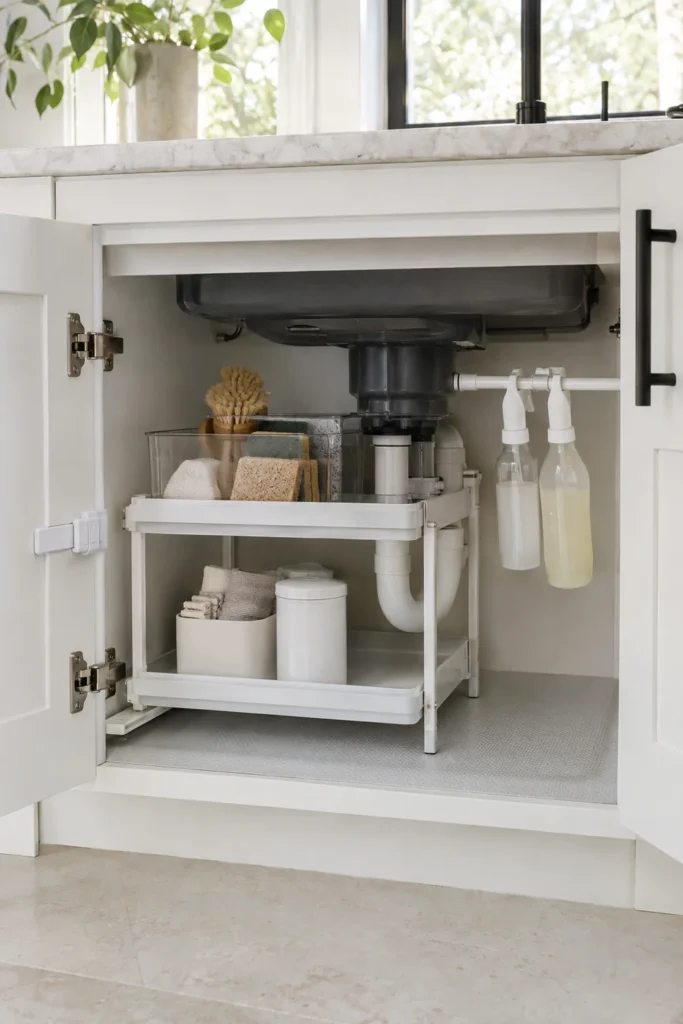
The cabinet under the kitchen sink might be the most awkward space in the house. Pipes run right through the middle, the back is hard to reach, and it is often a little damp. It also tends to hold the products you least want spilled or within reach of small hands.
With a few simple tools and some sorting, this cabinet can become one of the most useful spots in your kitchen. Here is how to organize under the kitchen sink step by step, with a strong focus on safety.
What You Will Need
- A waterproof cabinet liner or a shallow drip tray (often under $20)
- A two tier sliding organizer that fits around pipes
- A tension rod
- Two or three clear bins or caddies
- A small lazy Susan (optional)
- Adhesive hooks
- A child safety latch if you have young children or pets
Measure the cabinet width, depth and height, and the location of the pipes, before you buy anything.
1. Empty and Clean the Cabinet
Take everything out. This is a good moment to look for problems:
- Check for leaks. Look for drips under the pipes, warped wood, soft spots or water stains. If you find any, call a plumber or repair the leak before organizing.
- Look for pests. Crumbs and moisture can attract them.
- Wipe the cabinet with warm soapy water and dry it completely with the door open for an hour.
Go through what you removed and toss empty bottles, dried out sponges and products you do not use. Many households find duplicate bottles of the same cleaner. Combine them only if they are the exact same product, and never pour two different cleaners into one bottle.
2. Line the Floor
A waterproof liner protects the cabinet base from small leaks and spills. Silicone mats with raised edges hold liquid and are easy to wipe. They also make small leaks easier to spot, since water will pool where you can see it.
3. Hang Spray Bottles From a Tension Rod
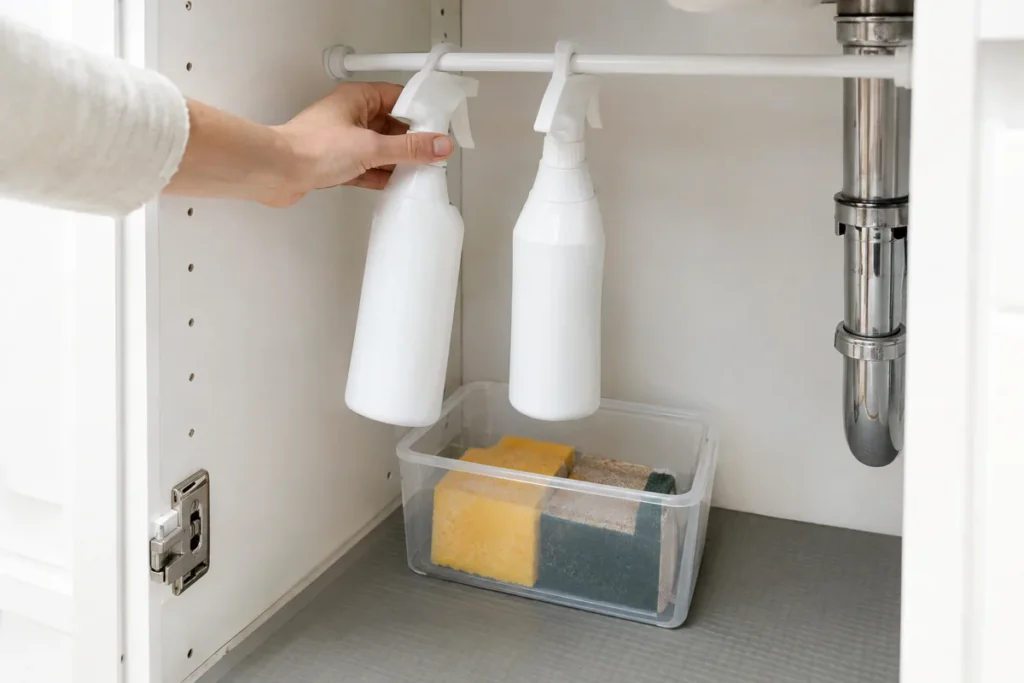
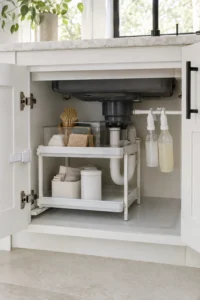
This is the easiest upgrade. Install a tension rod near the top of the cabinet, front to back or side to side, and hang spray bottles by their triggers. It frees up the entire floor space they would otherwise take.
Make sure the rod is firmly wedged so it does not drop when you pull a bottle off.
4. Add a Two Tier Organizer
A sliding two tier organizer fits around the pipes and pulls out like a drawer, so nothing gets lost in the back. Many models have adjustable shelves to fit around the drain trap.
Use the top tier for daily items and the bottom tier for backups and refills.
5. Sort Into Clear Bins by Category
Group like with like so you always know where to look:
- Dishwashing: dish soap refills, dishwasher tablets, brushes and sponges.
- Surface cleaning: all purpose spray, glass cleaner, microfiber cloths.
- Trash: a roll of bags, liners for small bins.
- Extras: rubber gloves, a scrub brush, a small bottle of baking soda.
Clear bins with handles slide out easily and keep any drips contained.
6. Use the Door
The inside of the cabinet door can hold:
- Rubber gloves on an adhesive hook.
- A small caddy for sponges and scrubbers.
- A roll of trash bags in a slim door mounted holder.
Check the door still closes without hitting the pipes or the organizer.
Safety Rules for Storing Cleaning Products
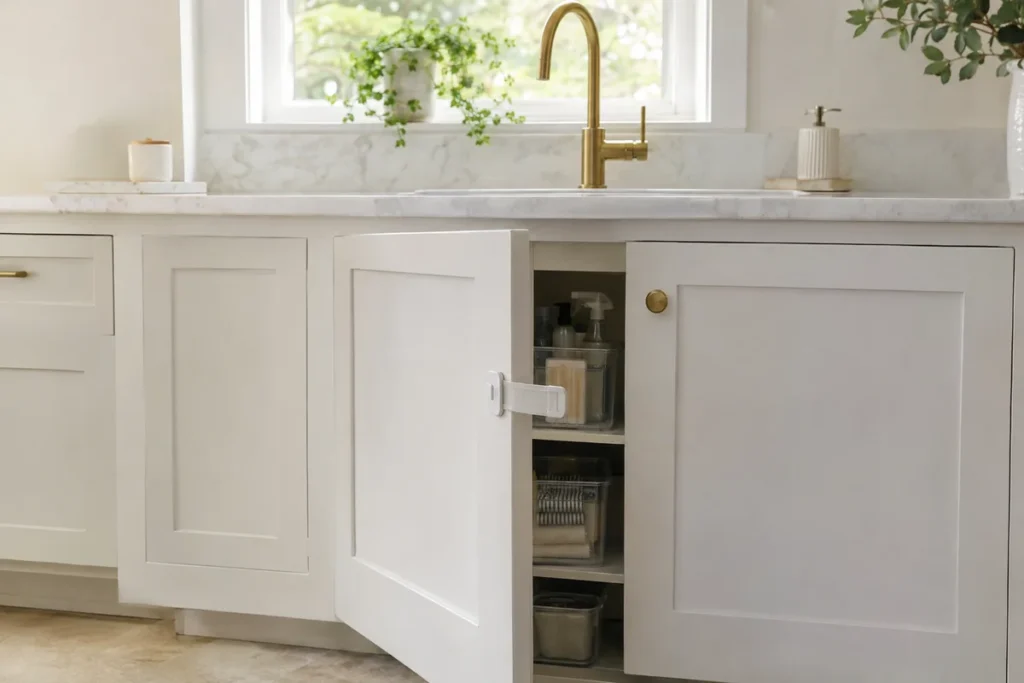
Under the sink is a common place for cleaning products, and it is also at the perfect height for a curious toddler or a dog. Take these steps seriously.
- Install a child safety latch if you have young children, visiting grandchildren or pets. Or move strong chemicals to a high cabinet instead.
- Keep products in their original containers with labels intact. Never pour cleaners into food or drink containers.
- Never store bleach next to ammonia or acidic products like vinegar on a crowded shelf where they could leak together. If bleach mixes with ammonia or vinegar, it releases toxic gases. Keep them in separate bins or separate areas.
- Close caps tightly and store bottles upright.
- Keep the cabinet ventilated by not overpacking it, and wipe up any spills right away.
- Know where your local poison control number is and keep it somewhere easy to find.
When you use any of these products, open a window or turn on a fan, and test new cleaners on a hidden spot before using them on counters or cabinet finishes.
Simple Natural Basics Worth Keeping
If you want fewer harsh products under the sink, a few basics handle most daily kitchen cleaning:
- Dish soap and warm water for counters and most surfaces.
- Baking soda for scrubbing sinks and stovetops.
- White vinegar diluted with water for glass and hard water spots (not on natural stone).
- Microfiber cloths that can be washed and reused.
A smaller, simpler collection is also much easier to keep organized.
What Not to Store Under the Sink
Some things are better kept elsewhere:
- Paper towels in bulk. One roll is fine, but moisture can ruin large packs.
- Food items or pet food. Keep them far away from cleaning chemicals.
- Anything flammable, such as certain aerosols, near a garbage disposal motor or other appliance.
- Items you rarely use, which crowd the space and make the daily items harder to reach.
Keep It Tidy With a Monthly Check
Once a month, take five minutes to:
- Look and feel for any moisture under the pipes.
- Wipe the liner.
- Toss empty bottles and worn sponges.
- Add anything running low to your shopping list.
These small checks catch leaks early, which can save a lot of trouble later.
Wrapping Up
Organizing under the kitchen sink is less about pretty bins and more about smart, safe storage. Line the floor, hang sprays from a tension rod, add a pull out organizer around the pipes and group items in clear bins. Most of all, keep strong chemicals apart, latched and out of reach.
What is the hardest thing to store neatly under your kitchen sink? Tell us in the comments.
Quick Questions
How do I organize under the sink with a garbage disposal?
Choose a narrow two tier organizer or two slim bins that fit on either side of the disposal. Keep the area right under the unit clear so you can reach it for repairs.
Is it safe to keep cleaning products under the sink?
It can be, if the cabinet is latched and products are kept in original containers, tightly closed and sorted so bleach is separate from ammonia and acids.
How can I stop the cabinet from smelling musty?
Fix any leaks, dry the cabinet completely, use a wipeable liner and place a small open dish of baking soda in a corner. Replace it every couple of months.
What is the best liner for under the sink?
A silicone mat with raised edges is easiest to clean and holds small spills so they do not reach the cabinet base.