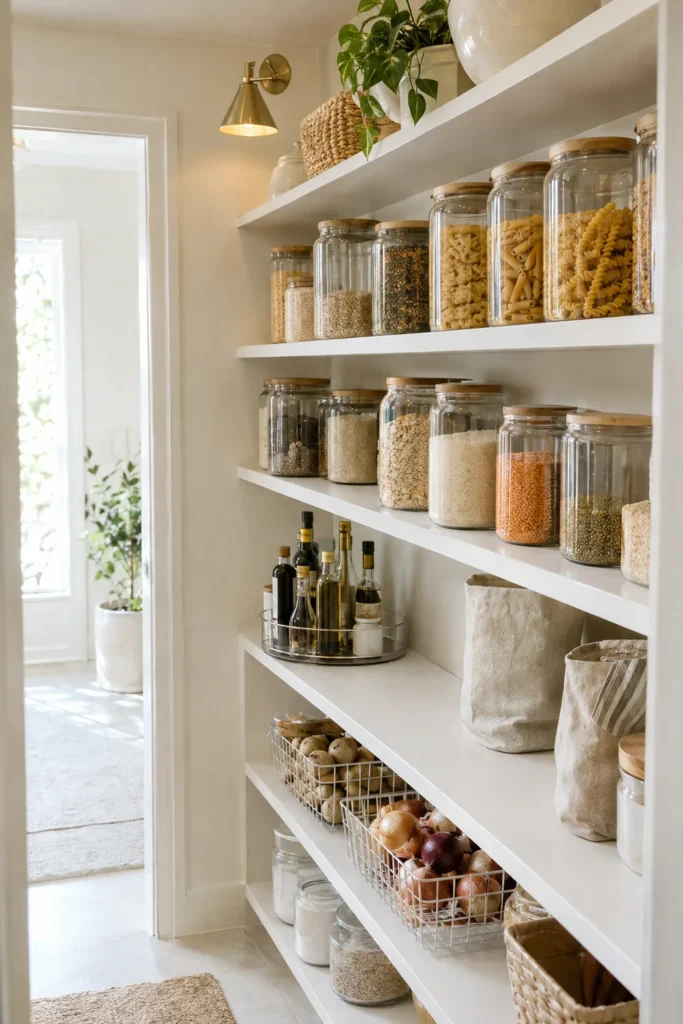
A pantry should make cooking easier. Instead, many pantries turn into a jumble of half open bags, duplicate jars of the same spice and a can of something that expired two winters ago.
The goal is not a picture perfect pantry with matching labels on every container. The goal is a pantry where you can see what you have, find it in seconds and put things back without thinking.
These pantry organization ideas work for a walk in pantry, a reach in closet or a single kitchen cabinet.
1. Empty Everything and Declutter
Every good pantry project starts with an empty pantry. Take everything out and set it on the counter or the table.
As you go:
- Toss anything expired, stale or showing signs of pantry pests.
- Donate unopened, in date food you will not use (many food banks welcome canned goods and dry staples).
- Combine duplicates, such as two half bags of rice or three open boxes of the same cereal.
Before putting anything back, wipe the shelves with warm soapy water and let them dry. Check corners for crumbs, which attract insects.
Plan about one to two hours for an average pantry.
2. Group Food Into Zones
Zones are the heart of an organized pantry. Instead of organizing item by item, give each category its own area.
Common pantry zones:
- Baking (flour, sugar, baking powder, chocolate chips)
- Grains and pasta
- Canned goods and jars
- Breakfast (cereal, oats, nut butters)
- Snacks
- Oils, vinegars and sauces
- Spices
- Potatoes, onions and garlic
Arrange the zones by how often you use them. Daily items go at eye level. Heavy things like bulk bags and drinks go on the lowest shelf. Rarely used items, such as holiday baking supplies, go up high.
3. Use Clear Bins for Loose Items
Small packets and snack bags are the reason most pantries look chaotic. Clear bins corral them and make it easy to see when you are running low.
- Measure your shelf depth before buying. A bin that is too deep wastes space or will not fit.
- Choose bins with a handle or open front so you can slide them out like drawers.
- Use one bin per category: snack bars, seasoning packets, baby food pouches, drink mixes.
Clear plastic bins are usually a few dollars each. You do not need to buy them all at once. Start with the messiest zone.
4. Decant Dry Goods Into Clear Containers
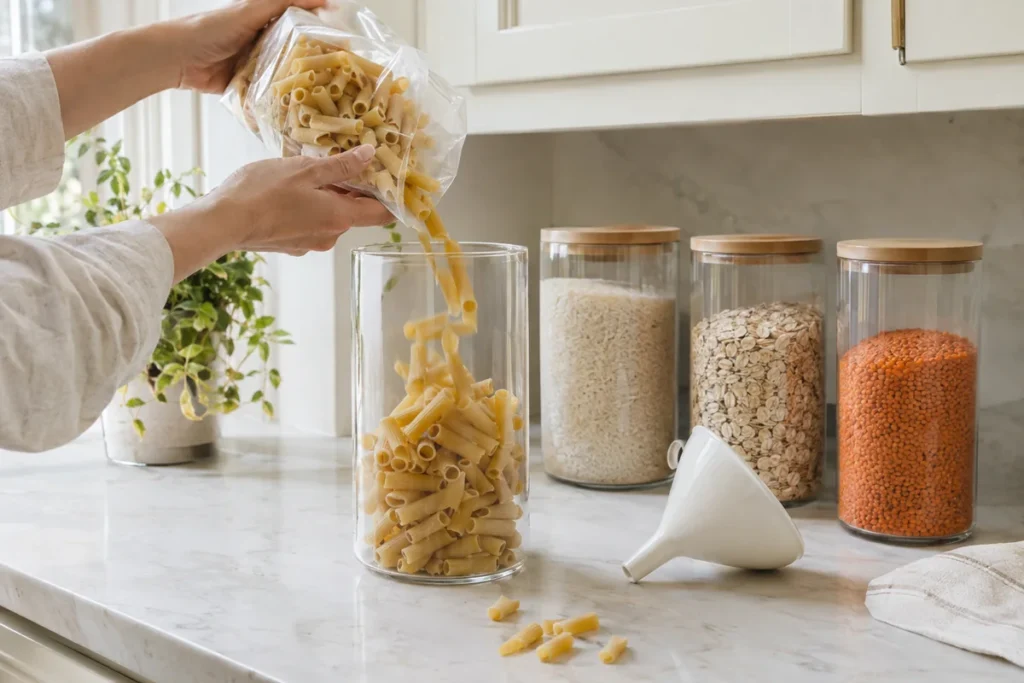
Moving staples like pasta, rice, oats and flour into clear airtight containers has several benefits. You can see quantities at a glance, the food stays fresher, and pests have a harder time getting in.
Tips for decanting:
- Start with what you buy often. There is no need to decant a box of crackers you buy twice a year.
- Choose square or rectangular containers. They waste less shelf space than round ones.
- Keep cooking instructions. Cut them from the package and tape them to the back of the container or the inside of the lid.
- Write the expiration date on a small piece of tape on the bottom.
- Wash and dry containers completely before refilling, so old crumbs do not mix with new food.
5. Add Risers and Turntables
Deep shelves hide things in the back. Two simple tools fix that.
Shelf risers create a step so you can see cans and jars in the back row. A two or three tier riser costs under $20.
Turntables are ideal for oils, vinegars, sauces and spice jars. A quick spin brings everything into view. They work beautifully in corners, which are otherwise very hard to reach.
6. Use the Door and the Walls
The back of a pantry door is valuable storage. An over the door rack with adjustable baskets can hold spices, small jars, foil and wraps, or snack packs.
If your pantry is a walk in, add hooks on the side walls for aprons, reusable shopping bags or a small step stool.
7. Label Simply
Labels help everyone in your home put things back in the right place. Keep them simple:
- Label the shelf edge or bin front with the category, not every single item.
- Use a label maker, chalk labels or plain handwritten tags. Any of them work.
- Keep the wording short, such as “Baking” or “Snacks.”
Labels are what keep a pantry organized after the first week, because they remove the guesswork.
8. Store Produce the Right Way
Potatoes, onions and garlic like a cool, dark, dry space with good air flow. Use open wire baskets or breathable bins on a low shelf.
Store potatoes and onions apart from each other, since onions can make potatoes sprout faster. Check them every few days and remove anything soft.
Ideas for a Small Cabinet Pantry
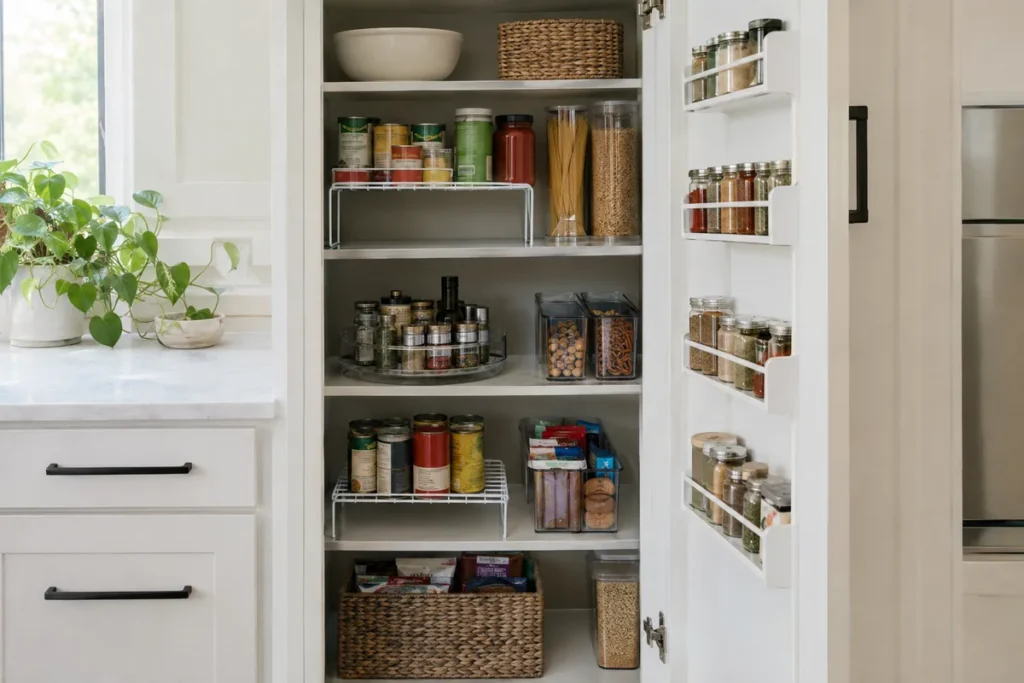
No walk in pantry? A single tall cabinet or a couple of upper cabinets can still work well.
- Use stacking shelves to double the usable space on each shelf.
- Add a door rack for spices and small jars.
- Use slim bins that fit side by side and slide out.
- Keep only what you use. Store bulk backups in a closet or a bin in the garage, and refill the kitchen cabinet from there.
- Try a rolling cart that fits between the fridge and the wall. Narrow carts can be as slim as 5 or 6 inches.
Keep It Organized With a Monthly Reset
An organized pantry needs a little maintenance. Once a month, take 15 minutes to:
- Pull forward items that are close to their date, so they get used first.
- Return wandering items to their zones.
- Wipe up any spills or crumbs.
- Start a shopping list of what is running low.
A good rule is to put new groceries behind older ones of the same kind. This first in, first out habit cuts food waste with no extra effort.
Wrapping Up
The best pantry organization ideas are simple: declutter, group food into zones, use clear containers so you can see what you own, and label each area. Start with one shelf or one zone if the whole pantry feels like too much, and build from there.
Which zone in your pantry is the messiest right now, and which idea will you try first? Tell us in the comments.
Quick Questions
How do I organize a pantry on a budget?
Start by decluttering and grouping food into zones, which costs nothing. Then add a few inexpensive clear bins for the messiest categories. Shoeboxes and cut down cereal boxes also work as free dividers.
Do I need to decant everything?
No. Decant the staples you use often and keep the rest in their original packages inside labeled bins.
How do I keep pantry pests away?
Store grains, flour and cereals in airtight containers, wipe up crumbs quickly and check new bags for signs of insects before storing.
How often should I clean out the pantry?
A quick 15 minute reset once a month and a full clean out once or twice a year keeps most pantries in good shape.