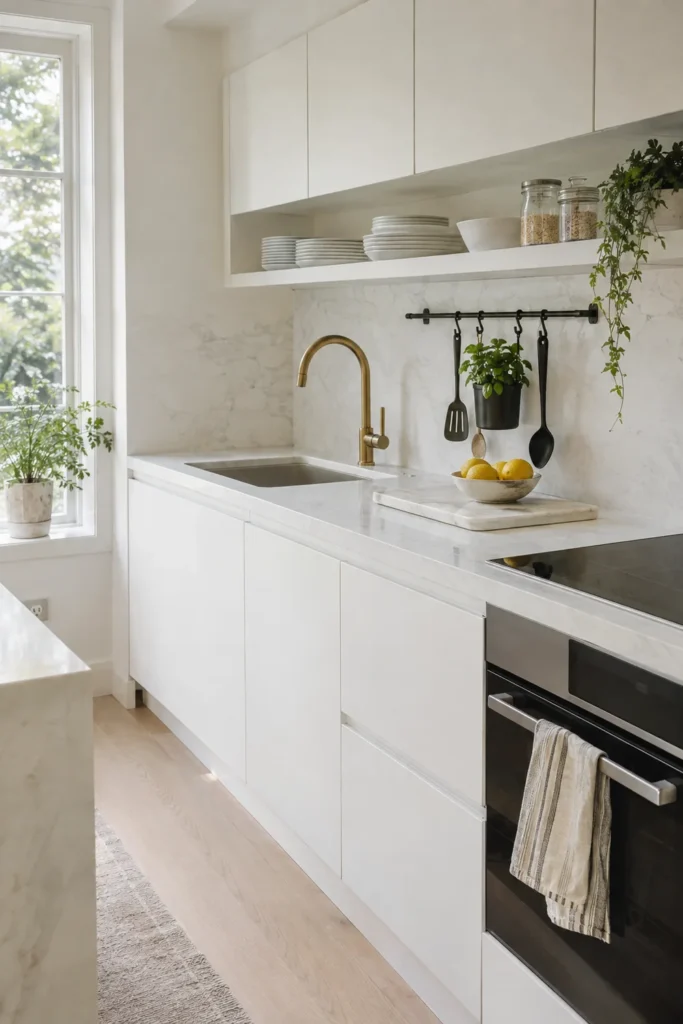
A small kitchen has a way of filling up fast. One new appliance, a stack of mixing bowls and a few gift mugs, and suddenly there is nowhere left to chop an onion.
The answer is rarely more cabinets. It is using the space you already have more cleverly: walls, the insides of doors, the top of the fridge, the gap beside the stove. Small kitchens also reward a little honesty about what you really use.
Here are practical small kitchen storage ideas, starting with the ones that give you the most room for the least money.
Start With a Quick Edit
Before buying any organizer, take 30 minutes to edit what you own. Pull out each cabinet and ask:
- Have I used this in the last year?
- Do I have more than one that does the same job? (Three spatulas, two cheese graters, five mixing bowls.)
- Does this need to live in the kitchen? Holiday platters and the big roasting pan can move to a closet or shelf elsewhere.
Most people find they can free up at least one full shelf this way, which is better than any product.
1. Use the Walls With Rails and Shelves
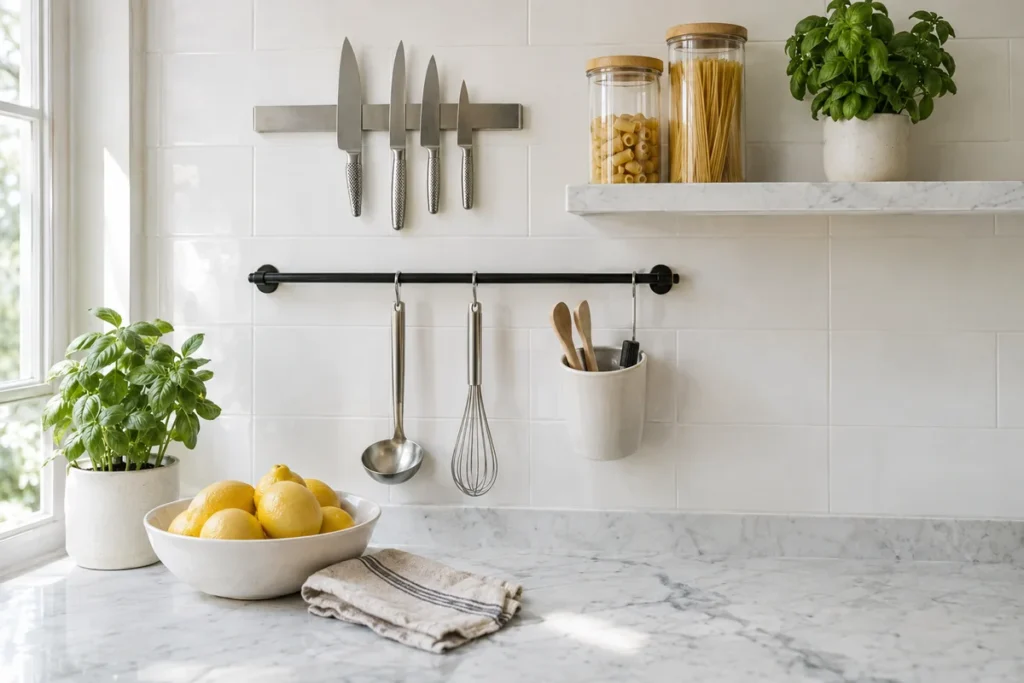
In a small kitchen, wall space is the most underused storage you have.
- Rails with S hooks hold utensils, mugs, small pans or a hanging herb pot. A rail kit usually costs under $30.
- A magnetic knife strip frees up a drawer or the counter space a knife block would take.
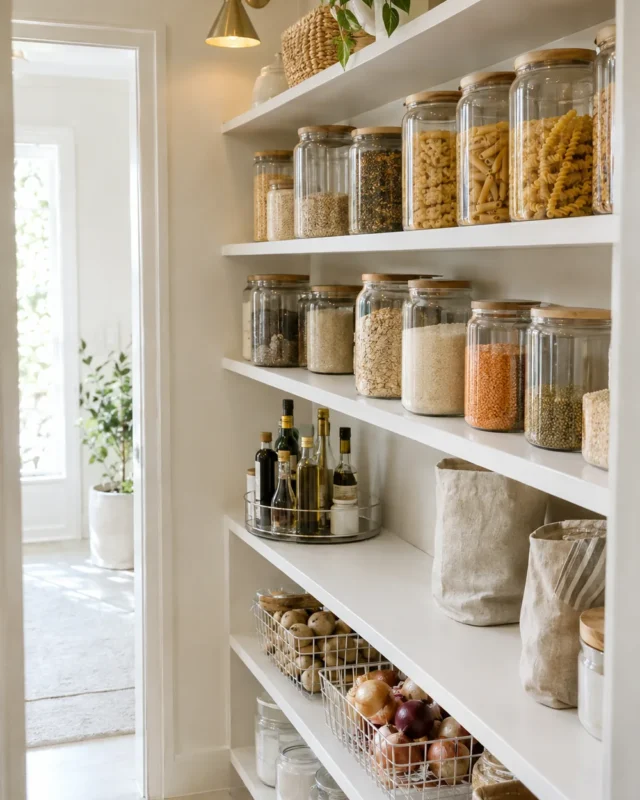
- Narrow floating shelves (about 6 to 8 inches deep) hold everyday dishes, glasses or a few jars. Keep them tidy with a limited color palette so they look calm, not cluttered.
- A pegboard panel painted the same color as the wall can hold pots, lids and tools in an adjustable layout.
Always mount shelves and rails into studs or with anchors rated for the weight, and keep them away from the direct heat of the stove.
2. Add Shelf Risers Inside Cabinets
Most cabinets have a lot of wasted air above the plates and bowls. A simple wire or acrylic shelf riser creates a second level. Put plates on the bottom and bowls on top, or mugs under the riser and glasses above.
Risers come in many widths. Measure the inside width and height of the cabinet first, and leave enough room to lift items out comfortably.
3. Use Cabinet Doors
The inside of a cabinet door is free storage.
- Adhesive hooks for measuring cups and spoons.
- A slim rack for cutting boards or baking sheets.
- A small bin for foil, plastic wrap and parchment.
- A pot lid organizer.
Check that items do not hit the shelves when you close the door. Leave about an inch of clearance.
4. Organize Drawers With Dividers
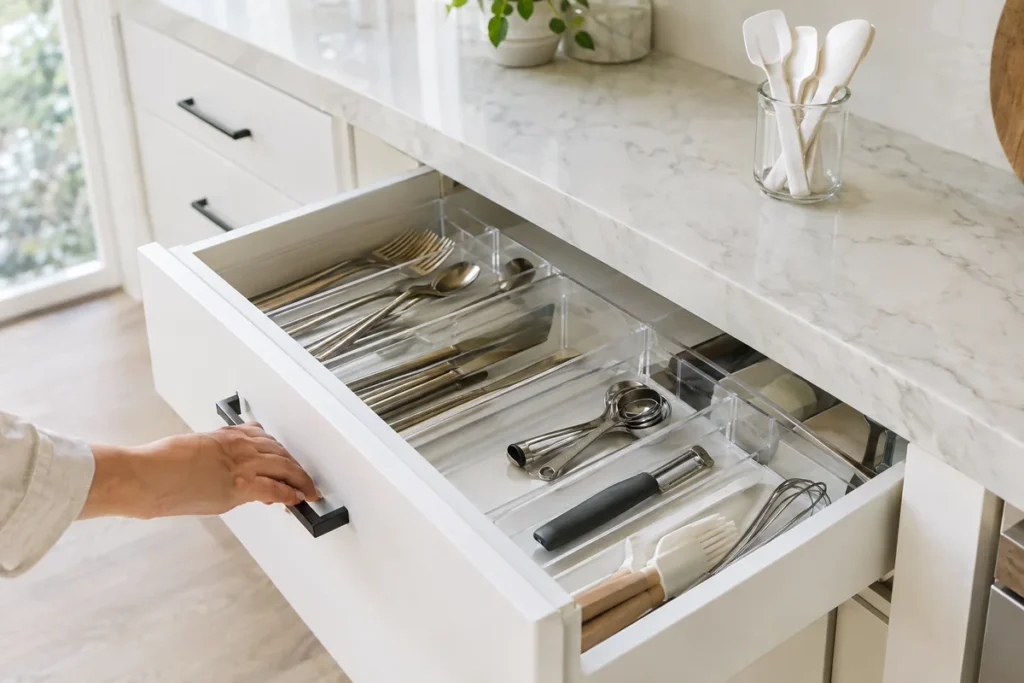
A drawer without dividers turns into a junk drawer within a week. Adjustable dividers keep categories separate:
- Cutlery in one drawer with a tray.
- Cooking utensils in another, laid flat in sections.
- Wraps, foil and bags standing upright in a drawer, so you can see them all at once.
Deep drawers are excellent for pots and pans. A pegged drawer system holds plates and bowls securely so they do not slide around.
5. Store Pans Vertically
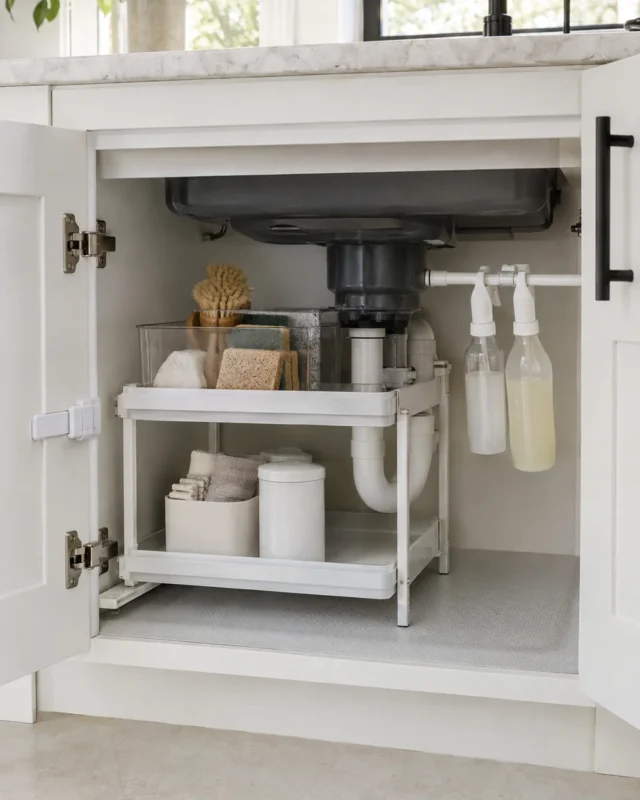
Stacking baking sheets, cutting boards and skillets means pulling everything out to reach the bottom one. Instead, use a vertical file rack or tension rods inside a cabinet to stand them on their sides like books. You can grab any one without moving the others.
6. Solve the Corner Cabinet
Corner cabinets are deep and awkward. A few ways to make them useful:
- A two tier turntable brings items to the front with a spin.
- Pull out baskets designed for blind corners.
- Store rarely used items in the deepest part, like the holiday cake stand or extra small appliances.
7. Bring In a Slim Rolling Cart
A narrow rolling cart can tuck between the fridge and the wall or beside the washer. Some are only 5 to 7 inches wide. Use it for oils, spices, canned goods or cleaning cloths.
A larger cart, around 30 inches high, doubles as extra prep space you can roll out of the way when you are done.
8. Use the Space Above
The tops of upper cabinets and the fridge can hold things you use only a few times a year. Use matching lidded baskets or bins so the area looks neat and stays dust free. Keep a sturdy step stool nearby and never stand on a chair or counter to reach high spots.
If your cabinets do not reach the ceiling, this space is ideal for extra serving platters, a slow cooker or seasonal baking supplies.
9. Keep Counters Nearly Clear
Clear counters make a small kitchen feel larger and give you room to work. A good rule is to keep out only what you use daily, such as the coffee maker and a small utensil crock. Everything else lives in a cabinet.
If you love the look of a few things on display, group them on a tray. A tray turns scattered items into one tidy unit and makes wiping the counter much easier.
10. Choose Multi Use Tools
In a small kitchen, every tool should earn its spot.
- A large sheet pan can roast, bake and serve.
- A good chef’s knife replaces many single purpose gadgets.
- Nesting bowls and measuring cups take up a fraction of the space.
- A stand up colander that folds flat saves a whole cabinet section.
Wrapping Up
The best small kitchen storage ideas start with less, not more. Edit what you own, then use walls, doors, drawers and corners so every item has a clear home. A few inexpensive rails, risers and dividers can make a tiny kitchen feel easy and open.
What is the one item in your small kitchen that never seems to have a good home? Tell us in the comments.
Quick Questions
How do I make a small kitchen look bigger?
Keep counters clear, choose light colors, store items behind closed doors where possible and add good lighting under the upper cabinets.
Where should I store pots and pans in a small kitchen?
Deep drawers or lower cabinets with vertical racks work well. A wall rail or ceiling rack can hold a few favorites if cabinet space is tight.
Are open shelves good for small kitchens?
They can be, as long as you keep them edited. Store only everyday items you use and wash often, so dust does not build up.
What is the cheapest way to add kitchen storage?
Decluttering costs nothing. After that, adhesive hooks, tension rods and a single shelf riser are all inexpensive upgrades.