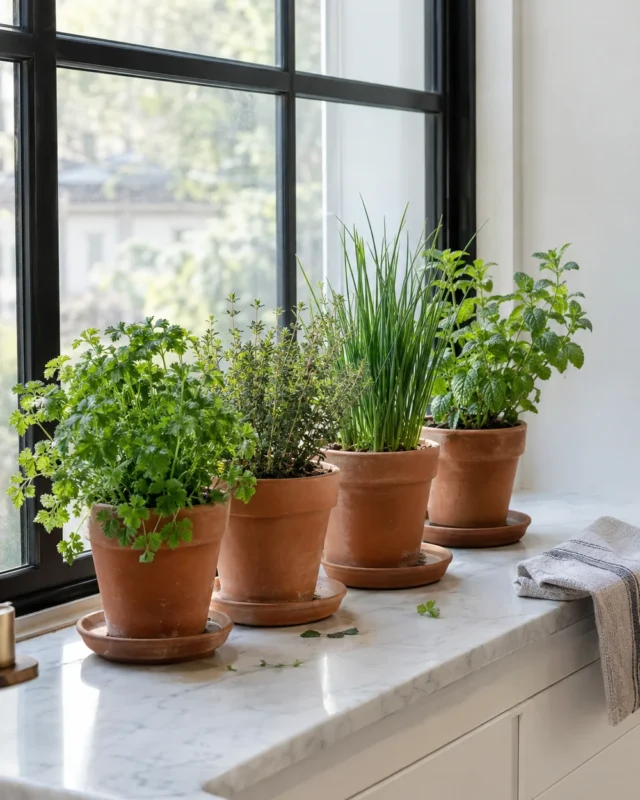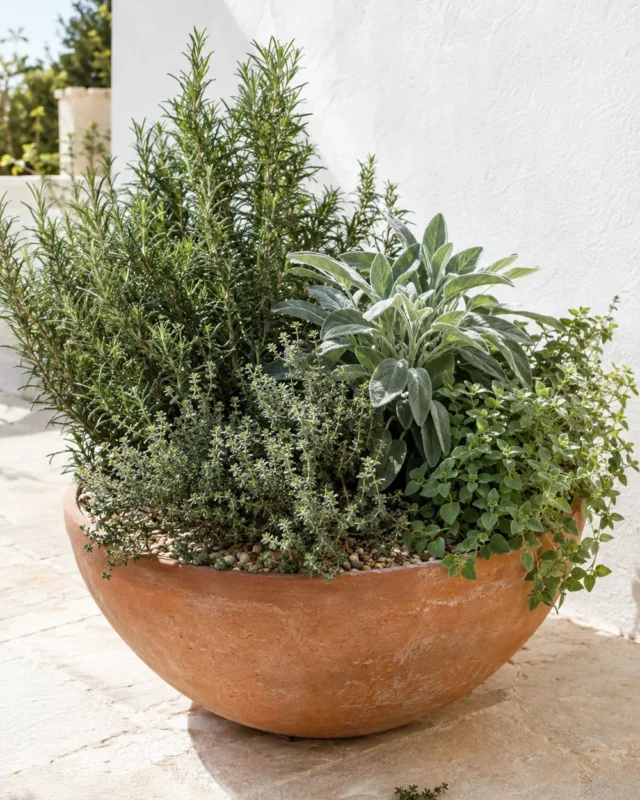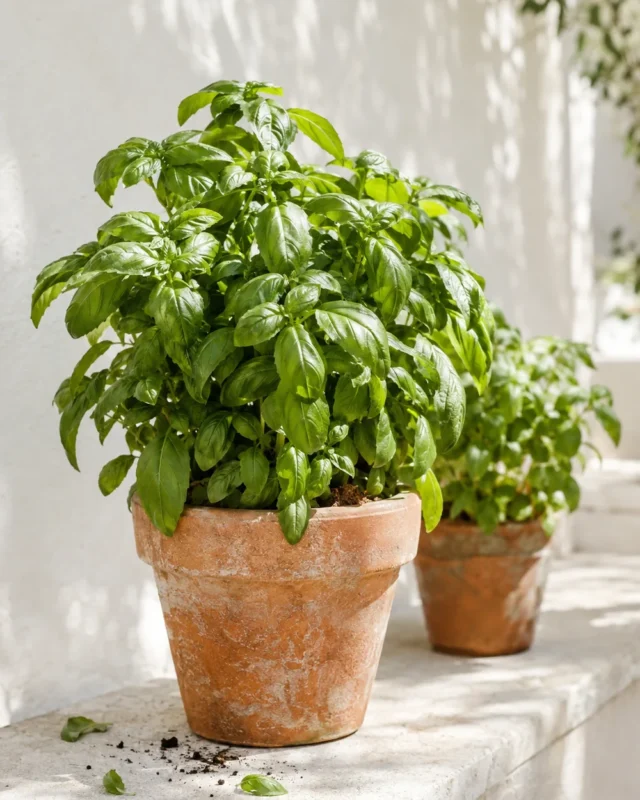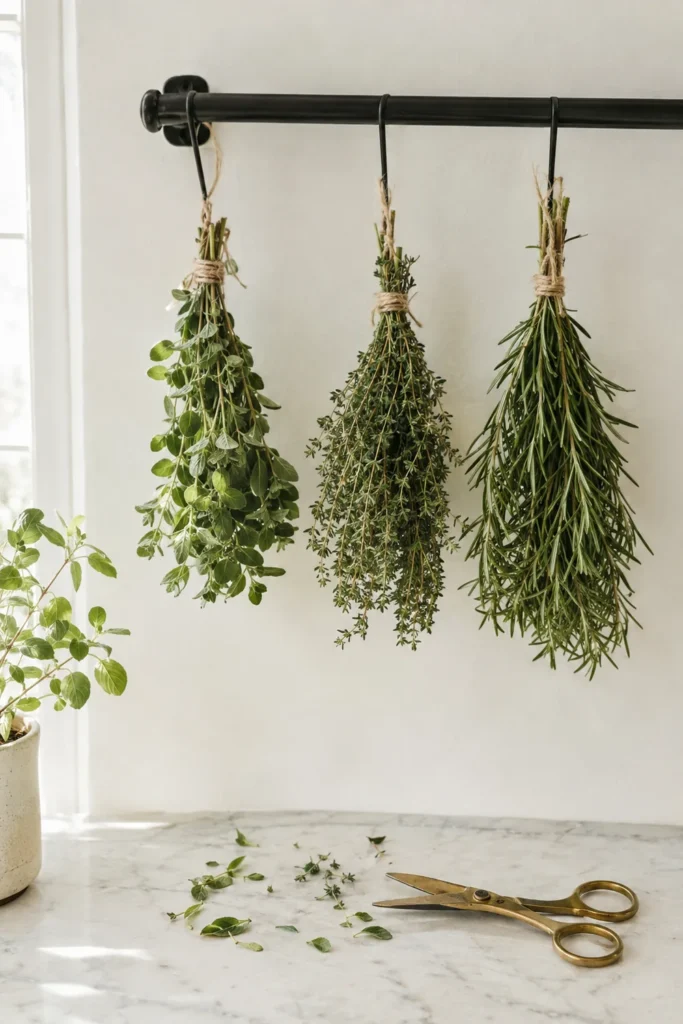
A healthy herb garden often grows faster than you can use it. By midsummer the oregano is sprawling, the thyme is flowering and the sage leaves are the size of your palm.
Drying the extra is the simplest way to keep that flavor for the colder months. Homemade dried herbs often taste brighter than store bought jars, and they cost next to nothing.
Here is how to harvest herbs at the right moment and dry them three easy ways.
When to Harvest Herbs
Timing makes a real difference to flavor.
- Time of day: harvest in the morning, after the dew has dried but before the midday heat. That is when aromatic oils are at their peak.
- Time of season: most herbs have the best flavor just before they flower. Look for plump flower buds that have not yet opened.
- Plant size: wait until the plant is well established, usually at least 6 to 8 inches tall.
- Weather: pick after 2 or 3 dry days if you can. Rain dilutes oils and wet leaves are more likely to mold while drying.
Harvest by herb:
- Basil, mint, oregano and lemon balm: cut stems just above a pair of leaves, taking up to one third of the plant.
- Thyme, rosemary and sage: clip the soft green top growth. Avoid cutting into old woody stems, which may not regrow.
- Parsley and chives: cut outer stems at the base and leave the center to keep producing.
In most climates you can take two or three good harvests from perennial herbs between late spring and late summer. Stop heavy cutting of perennials about 4 to 6 weeks before your first frost so they can harden off for winter.
Prepare Herbs for Drying
- Shake off insects and debris. Give each stem a gentle shake outside.
- Rinse only if needed. If the herbs are dusty or splashed with soil, rinse quickly in cool water.
- Dry thoroughly. Pat with a clean towel or spin in a salad spinner, then let them sit on a towel for an hour or so. Any surface water slows drying and invites mold.
- Remove damaged leaves. Discard yellow, spotted or insect damaged leaves.
Which Herbs Dry Best
Some herbs dry beautifully and others lose much of their flavor.
Best for drying: oregano, thyme, rosemary, sage, marjoram, mint, bay, dill and lemon balm. These have lower moisture content or sturdy oils that hold up well.
Better frozen than dried: basil, parsley, chives and cilantro. They are tender and watery, so they tend to turn brown and lose aroma when dried. You can still dry them, but freezing (chopped in a little oil or water in ice cube trays) keeps more flavor.
Method 1: Air Drying in Bundles
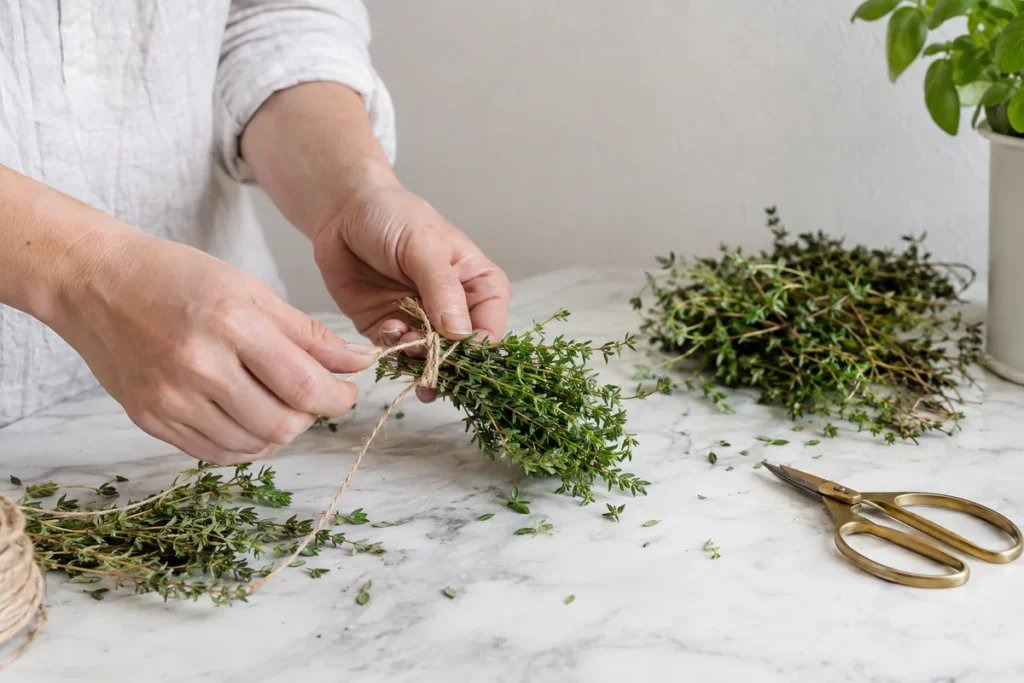
This is the easiest method and works best for low moisture herbs like thyme, oregano, rosemary and sage.
Supplies:
- Natural twine or small rubber bands
- Scissors or snips
- Paper bags (optional, to catch falling leaves and block dust)
Steps:
- Gather 5 to 10 stems into small bundles. Small bundles dry faster and are less likely to mold.
- Tie the stems together near the cut ends. Rubber bands work well because they tighten as the stems shrink.
- Hang the bundles upside down in a warm, dry, airy spot out of direct sunlight. Sunlight fades the color and flavor.
- If dust is a concern, slip a paper bag with a few small holes punched in it over each bundle.
- Check after a week. Most herbs take 1 to 3 weeks to dry fully.
Herbs are ready when the leaves crumble easily between your fingers and the stems snap rather than bend.
Method 2: Oven Drying
Oven drying is quick and good when you have a big harvest or humid weather.
- Set your oven to its lowest setting, ideally 170°F or lower.
- Spread leaves (stripped from stems) in a single layer on a baking sheet lined with parchment.
- Place in the oven and prop the door open slightly so moisture can escape.
- Check every 15 minutes and turn leaves as needed. Most herbs take 1 to 3 hours.
- Let them cool completely on the tray before storing.
Watch closely toward the end. Herbs go from dry to scorched quickly, and browned leaves taste bitter.
Method 3: Using a Dehydrator
A dehydrator gives the most even, controlled results, especially for moisture rich herbs like mint and basil.
- Spread leaves or small sprigs in a single layer on the trays.
- Set the temperature between 95 and 115°F. Higher temperatures drive off the aromatic oils.
- Drying takes about 2 to 4 hours for most leaves, sometimes longer for thick sage or rosemary.
- Check for crisp, crumbly leaves before removing.
Storing Dried Herbs
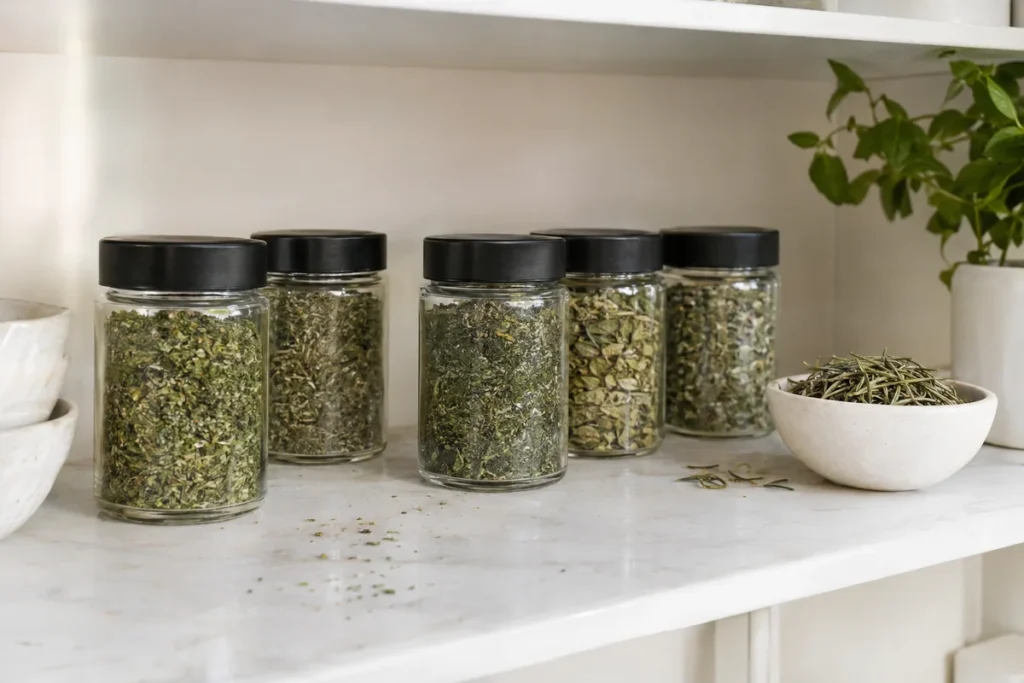
Proper storage keeps dried herbs fragrant for much longer.
- Strip leaves from stems once fully dry.
- Keep leaves whole if you can. Crush them just before cooking for the most flavor.
- Use airtight glass jars. Small jars mean less air contact each time you open one.
- Store in a cool, dark cupboard, away from the stove, oven and sunny windows.
- Label with the herb and date.
Check for moisture. For the first week, look at the jars daily. If you see any condensation inside, the herbs were not fully dry. Spread them out to dry longer before sealing again.
Dried herbs are at their best for about 6 months to 1 year. When they smell faint or look dull, it is time to refresh your supply.
Cooking tip: dried herbs are stronger than fresh. A good rule is 1 teaspoon dried for every tablespoon of fresh.
Drying herbs takes only a little effort, and opening a jar of your own summer oregano in January is a small, satisfying joy.
Which herb from your garden are you most excited to dry this year? Tell us in the comments.
Quick Questions
Can I dry herbs in the microwave?
Yes, for small amounts. Place leaves between two paper towels and heat in 20 to 30 second bursts, checking each time. It works best for sturdy herbs like oregano and thyme. Watch closely, as leaves can scorch quickly.
Why did my herbs mold while drying?
Usually the bundles were too large, the leaves were damp, or the room was humid with poor airflow. Use smaller bundles, dry leaves well before hanging, and choose a warm, airy spot.
Should I wash herbs before drying them?
Only if they are dirty. Homegrown herbs that look clean can simply be shaken off. If you do rinse them, make sure they are completely dry on the surface before drying.
How do I know when herbs are fully dry?
The leaves should crumble easily and feel crisp, and the stems should snap cleanly. Any bendy, soft feel means they need more time.