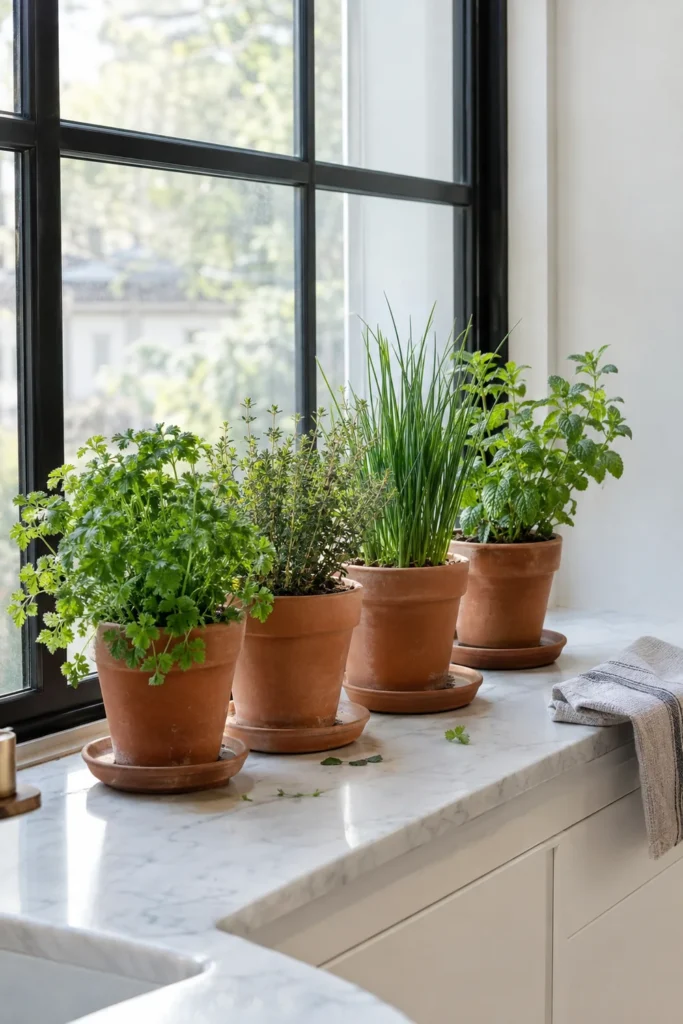
There is something lovely about snipping a few leaves of fresh herbs while you cook, without a trip to the store or a plastic clamshell that wilts in two days.
A windowsill herb garden makes that easy. The catch is that indoor herbs live on much less light than they would outside, so the secret is choosing the right plants for your window and giving them simple, steady care.
Here is how to plan a windowsill herb garden that stays green, fragrant and useful.
Light: The Make or Break Factor
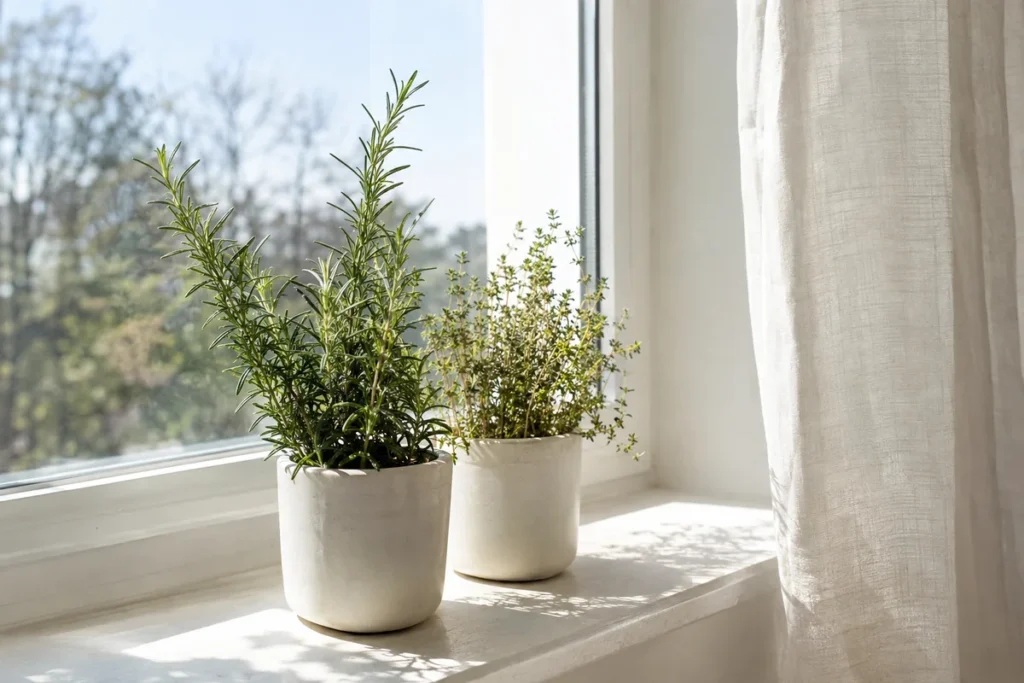
Most culinary herbs want 6 or more hours of sun. Indoors, glass and walls cut that down, so your window matters more than anything else.
- South facing windows (in the Northern Hemisphere) get the most light and suit sun lovers like rosemary, thyme, oregano and basil.
- East or west windows give 4 to 6 hours of direct light, which works well for parsley, chives, mint and cilantro.
- North windows rarely give enough light for herbs on their own. Add a grow light.
Signs your herbs need more light include pale leaves, long stretched stems and plants leaning hard toward the glass. Turn pots a quarter turn every few days so they grow evenly.
If your light is limited, a small full spectrum LED grow light placed 6 to 12 inches above the plants and run for 12 to 14 hours a day makes a huge difference. Simple clip on or bar lights cost roughly $20 to $40.
The Best Herbs for a Windowsill
Easy Herbs for Beginners
- Chives: grassy, mild onion flavor and very forgiving. Snip from the outside and they regrow.
- Parsley: flat leaf or curly, it handles moderate light and grows steadily for months.
- Mint: vigorous and tolerant of less sun. Always give it its own pot, because its roots crowd out everything else.
- Thyme: small leaves, low water needs, loves a bright, sunny spot.
- Oregano: compact, tough and happy to dry out a little between drinks.
Herbs That Need a Little More Care
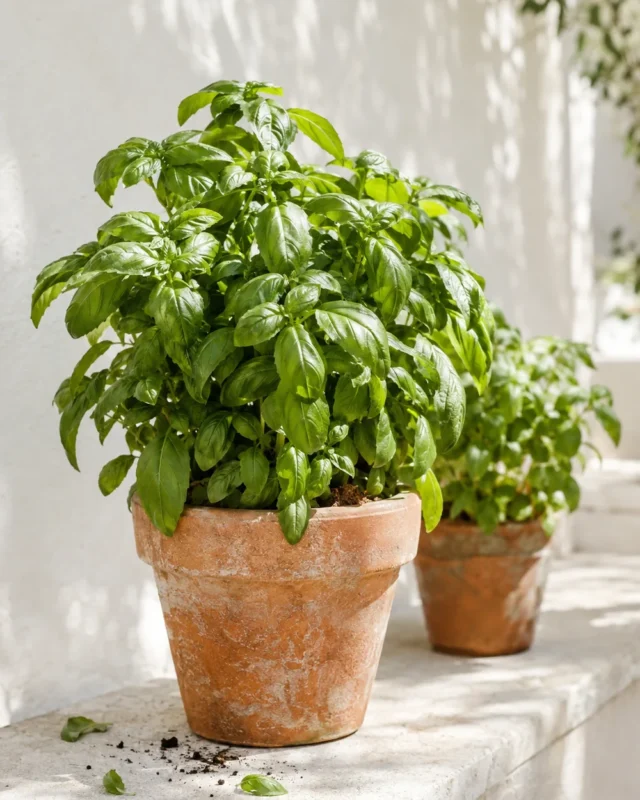
- Basil: wants warmth and lots of light. Keep it away from cold glass in winter.
- Rosemary: needs bright sun and good air circulation. It hates soggy roots but also dislikes drying out completely, so check it often.
- Cilantro: grows quickly and then bolts (flowers) within a few weeks. Sow a small pot every 3 to 4 weeks for a steady supply.
Choosing Pots and Soil
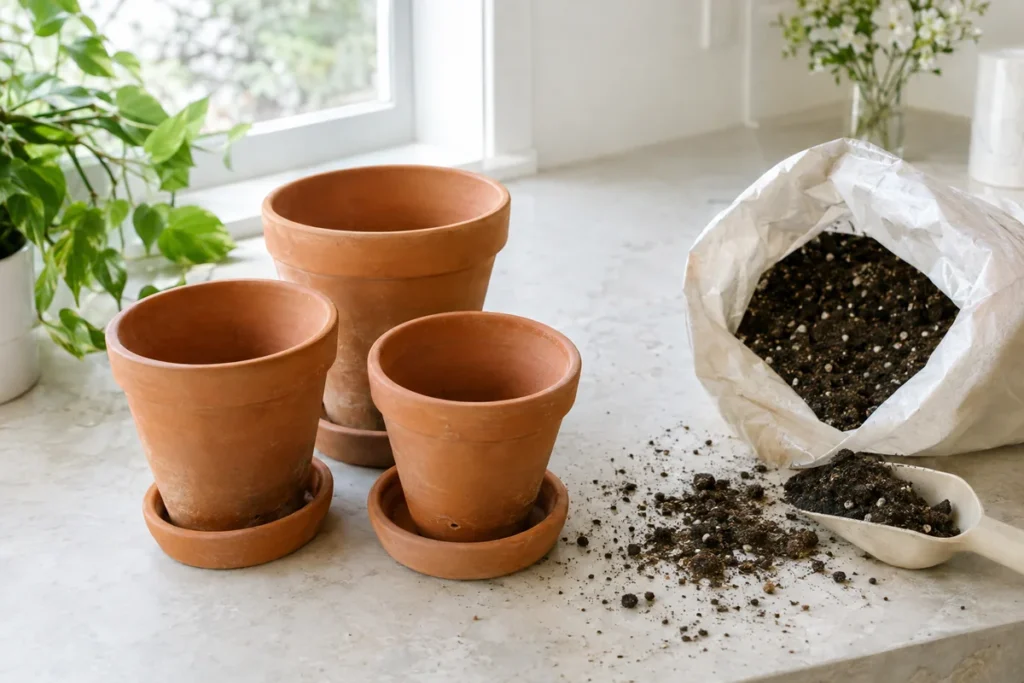
Every pot must have a drainage hole. Herbs sitting in water develop root rot quickly, and it is the number one reason indoor herb gardens fail.
- Pot size: 4 to 6 inches wide for most herbs, 6 to 8 inches for rosemary and parsley, which have deeper roots.
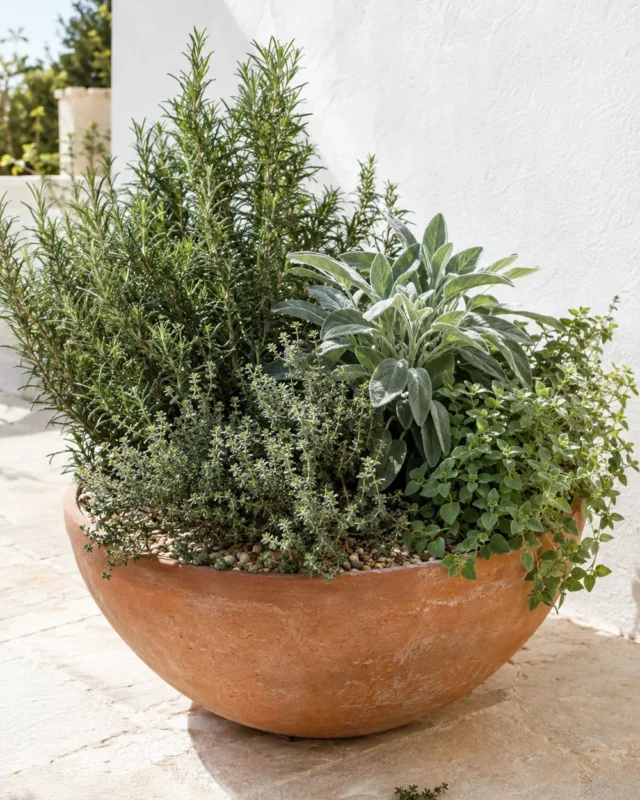
- Material: terracotta breathes and dries faster, ideal for Mediterranean herbs like rosemary, thyme and oregano. Glazed ceramic or plastic holds moisture longer, better for parsley, chives, mint and basil.
- Saucers: use one under every pot and empty any standing water after watering.
- Soil: use a light, well draining potting mix, never garden soil, which compacts in pots. For rosemary and thyme, mix in a handful of perlite or coarse sand.
A long, shallow trough can look pretty, but individual pots let you water each herb according to its own needs.
Watering Without Drowning Them
Check the soil with your finger rather than watering on a schedule.
- Thyme, rosemary, oregano and sage: water when the top inch is dry.
- Basil, parsley, chives, mint and cilantro: water when the surface just begins to feel dry.
Water slowly until it runs out of the drainage hole, then empty the saucer after 10 minutes. In winter, with low light and indoor heating, most herbs need less water than you would expect, but dry indoor air can also crisp leaf tips. Grouping pots together raises humidity a little around the plants.
Feeding and Harvesting
Indoor herbs grow in a small amount of soil, so they run out of nutrients over time. Feed every 4 to 6 weeks in spring and summer with a balanced liquid fertilizer at half strength. In late fall and winter, when growth slows, feed every 8 weeks or skip it.
Harvest little and often. Regular snipping keeps plants compact and bushy.
- Cut leafy herbs like basil and mint just above a pair of leaves.
- Snip parsley and chives from the outer stems near the base, leaving the center to grow.
- Clip woody herbs like rosemary and thyme from the soft green tips, never into old bare wood.
- Never take more than one third of a plant at once.
Temperature, Drafts and Seasons
Most herbs are comfortable between 60 and 75°F, which matches most homes. Watch for a few trouble spots:
- Cold glass in winter: leaves touching a freezing pane can blacken. Pull pots back a few inches on cold nights.
- Heat vents and radiators: they dry plants quickly. Avoid placing herbs directly above them.
- Summer sun through glass: a south window in midsummer can scorch tender herbs. A sheer curtain softens the light.
In warm months, many windowsill herbs enjoy a summer outside on a bright patio. Move them gradually, starting in shade for a few days, then bring them back inside before nights drop below 50°F.
Pet Safety Notes
If you share your home with cats or dogs, place herbs thoughtfully. According to widely used veterinary toxic plant lists, chives (like all onion family plants) are toxic to cats and dogs, and mint, oregano and parsley can cause stomach upset or other problems if eaten in quantity. Basil, rosemary, thyme, sage, dill and cilantro are generally considered safe. Keep any risky pots on a high sill or a shelf pets cannot reach, and call your vet if you suspect a pet has eaten something harmful.
A windowsill herb garden does not need to be big to be useful. Three or four healthy pots in a bright window, watered with a little attention, will give you fresh flavor most of the year.
Which herb would you put on your windowsill first? Tell us in the comments.
Quick Questions
Can I grow herbs from grocery store plants?
Yes. Potted supermarket herbs are often crowded with many seedlings. Divide the clump into 2 or 3 smaller groups and repot each one into fresh mix. They will grow much stronger.
Why are my indoor herbs getting leggy?
Leggy, stretched stems almost always mean too little light. Move them to a brighter window or add a grow light, and pinch the tips to encourage bushier growth.
How long do windowsill herbs last?
Perennial herbs like chives, thyme, oregano and mint can last for years with repotting. Annuals like basil and cilantro last a season or less, so start new pots from seed every few months.
Do indoor herbs need fertilizer?
Yes, but lightly. Half strength liquid fertilizer every 4 to 6 weeks during the growing season is plenty. Too much makes soft, less flavorful leaves.