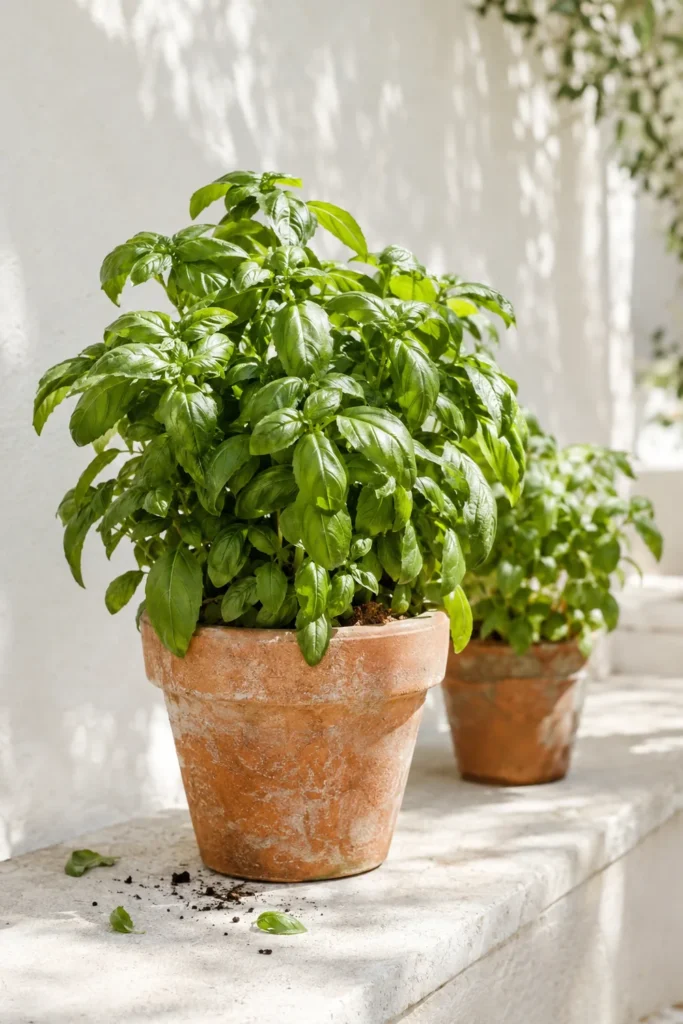
Basil is one of those plants that looks easy at the garden center and then quietly falls apart at home. It wilts, it gets tall and floppy, it flowers, and suddenly the leaves taste bitter.
The good news is that basil is not fussy. It just has a few clear needs: warmth, plenty of sun, steady moisture and a gardener who is willing to pinch it. Get those right and one plant can give you leaves from early summer until the first cold night.
Here is how to grow basil that stays full, fragrant and productive.
What Basil Needs to Thrive
Basil is a tender annual from warm climates, so think of it as a summer plant through and through.
- Sun: 6 to 8 hours of direct sun a day. In very hot regions, a little afternoon shade keeps leaves from scorching.
- Temperature: it grows best between about 70 and 90°F. Below 50°F the leaves darken and the plant stalls. A single night near freezing will kill it.
- Soil: loose, rich and well drained, with a pH around 6.0 to 7.0. Mix compost into garden beds, or use a quality potting mix in containers.
- Water: evenly moist but never soggy. Basil wilts quickly when dry and rots when it sits in water.
In most of the US (roughly USDA zones 3 to 9), basil is grown as an annual and planted outside after the last frost. In frost-free areas like zones 10 and 11, it can grow most of the year but still tends to get woody after a season.
Starting Basil From Seed or Starter Plants
Starting From Seed
Seed is cheap (a packet is usually a few dollars) and basil germinates easily.
- Indoors: sow seeds 6 to 8 weeks before your last frost date. Press them about 1/4 inch deep into moist seed starting mix.
- Keep them warm: basil seeds sprout in 5 to 10 days at around 70°F. A warm spot on top of the fridge or a seedling heat mat helps.
- Give them light: once sprouted, they need a bright south window or a grow light set 2 to 4 inches above the seedlings for 14 to 16 hours a day.
- Outdoors: you can also sow directly in the garden once the soil has warmed to about 60°F, usually 1 to 2 weeks after the last frost.
Buying Starter Plants
Grocery store and garden center basil pots often hold 10 or more seedlings crammed together. They look full, but they compete for water and roots. Gently tease the clump apart into 3 or 4 smaller groups and plant each one separately. You will get stronger plants and far more leaves.
Planting Basil in Pots and Beds
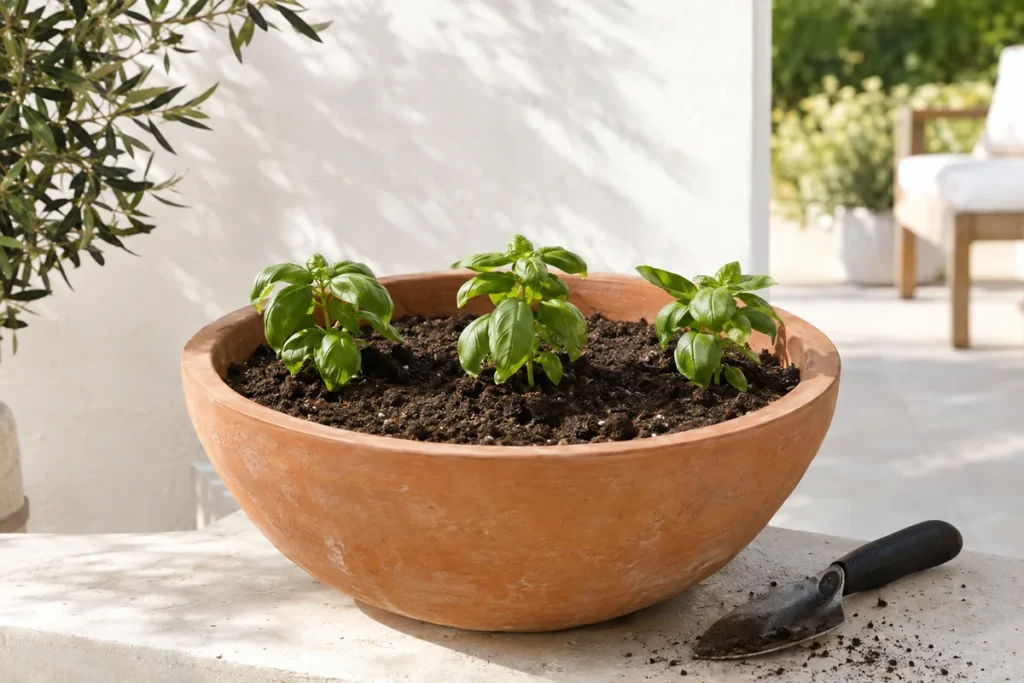
Wait until nights stay above 50°F before planting outside. Planting too early is the most common reason basil sulks for weeks.
In the ground: space plants 12 to 18 inches apart. Larger varieties like Genovese and lettuce leaf basil appreciate the full 18 inches.
In containers: choose a pot at least 8 inches wide and deep for one plant, or a 12 to 16 inch pot for three plants. Terracotta looks lovely and breathes well, but it dries out faster in summer heat, so check it daily. Every pot needs a drainage hole.
Set plants at the same depth they were growing, water them in well, and add a thin layer of mulch in beds to hold moisture.
Watering and Feeding
Water when the top inch of soil feels dry. In summer that can mean every day for pots and every 2 to 3 days for beds. Water at the base in the morning so the leaves stay dry, which helps prevent fungal problems like downy mildew.
Basil is a leafy crop, so a light, regular feed keeps it growing. Use a balanced liquid fertilizer at half strength every 3 to 4 weeks for plants in the ground, or every 2 weeks for containers. Too much fertilizer makes big leaves with less flavor, so go gently.
Pinch Early, Pinch Often
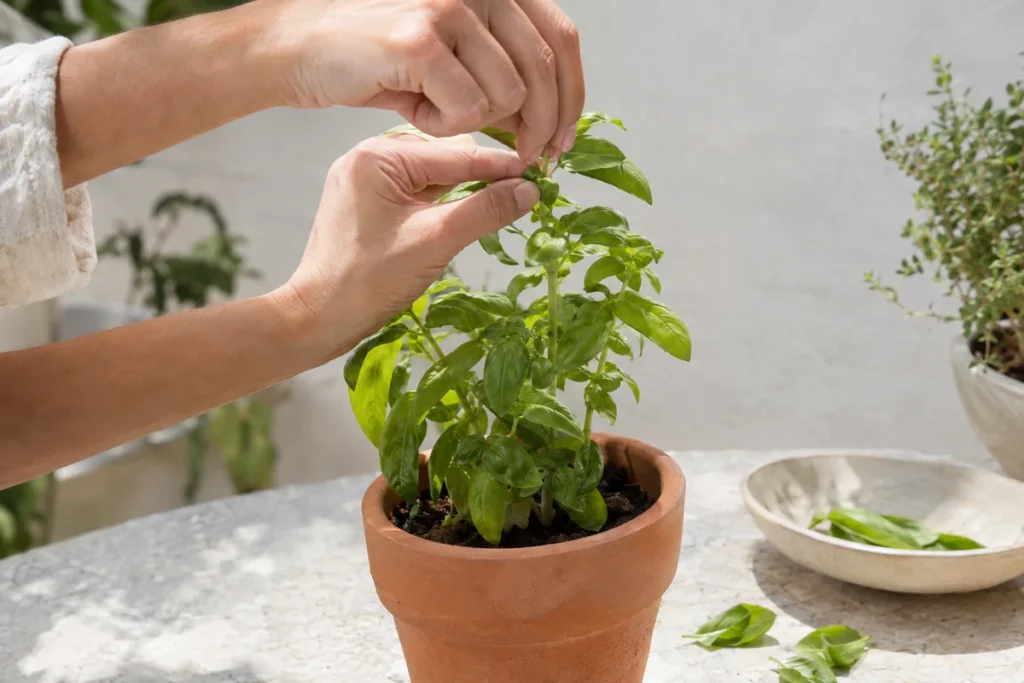
This is the step that turns a spindly stalk into a bushy plant.
When a seedling has 3 to 4 sets of true leaves and stands about 6 inches tall, snip or pinch the main stem just above a pair of leaves. Two new stems will grow from that spot. Repeat on each new stem as it grows, and the plant branches again and again.
Remove flower buds as soon as you see them. Basil flowers form as small spikes at the tips of the stems. Once a plant flowers, it puts its energy into seed and the leaves get smaller and sharper in taste. Pinching the buds off as they appear keeps the plant focused on leaves.
Harvesting Basil the Right Way
Start harvesting once the plant is 6 to 8 inches tall. Always cut just above a pair of leaves, never strip the bottom leaves off a bare stem. A good rule is to take no more than one third of the plant at a time.
The best time to pick is in the morning, after the dew dries and before the heat of the day, when the leaves are full of aromatic oils.
To store fresh basil, keep it out of the fridge. Cold turns the leaves black. Instead, trim the stems and set them in a glass of water on the counter, like a small bouquet, out of direct sun. It will stay fresh for several days.
Common Basil Problems and Fixes
- Yellow lower leaves: usually overwatering or poor drainage. Let the soil dry slightly between waterings.
- Black or dark patches after a cool night: cold damage. Bring pots in when nights dip below 50°F.
- Fuzzy gray growth under the leaves: downy mildew. Remove affected leaves, water at the soil only and give plants more space for airflow.
- Holes in leaves: often slugs or Japanese beetles. Check plants in the evening and hand pick, or set a shallow dish of beer or a ring of crushed shells around beds for slugs.
- Leggy stems: not enough sun or not enough pinching.
Varieties Worth Trying
- Genovese: the classic large leaf basil for pesto and tomato dishes.
- Thai basil: purple stems and a gentle anise flavor, more heat tolerant.
- Lemon basil: bright citrus scent, lovely with fish and in iced tea.
- Purple basil: dark leaves that look beautiful in mixed containers.
- Greek or bush basil: small leaves on a compact dome, ideal for small pots and windowsills.
Basil is safe around cats and dogs, which makes it an easy choice for a pet friendly patio or kitchen garden.
With warm soil, full sun and a habit of pinching every week or so, basil rewards you generously. One healthy plant can easily keep a household in fresh leaves all summer.
Do you grow your basil in pots, in the ground, or on a sunny windowsill? Tell us in the comments.
Quick Questions
Why does my basil keep wilting?
Most often it is thirsty, especially in small or terracotta pots on hot days. Water deeply and check the soil daily. If the soil is already wet and the plant still wilts, the roots may be rotting from poor drainage.
Can I grow basil indoors in winter?
Yes, but it needs a lot of light. A south facing window may be enough in mild climates, though a grow light for 12 to 14 hours a day gives much better results. Keep it away from cold glass and drafts.
Should I cut basil flowers off?
Yes, if you want leaves. Pinch flower buds as soon as they appear. If you let a few plants bloom late in the season, bees will love them, and you can collect seed for next year.
How long does a basil plant live?
As an annual, basil lives one growing season, usually until the first frost. You can root cuttings in a glass of water in late summer to keep a few small plants going indoors.