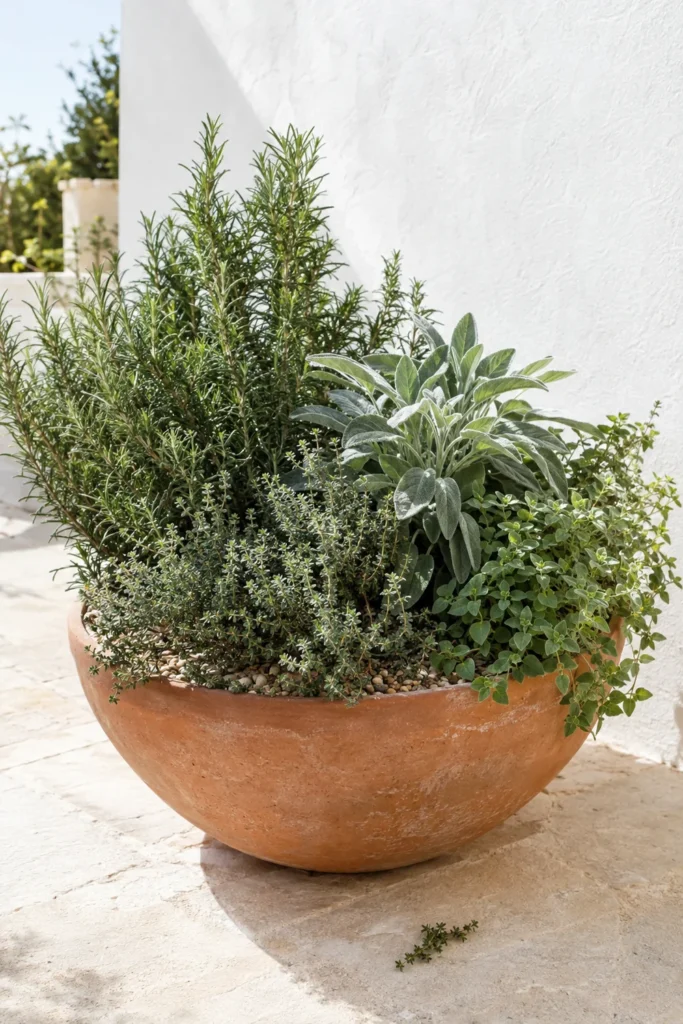
Planting several herbs in one pot or bed is a pretty, space saving idea. It is also an easy way to watch half of them struggle while the other half takes over.
The reason is simple. Herbs come from very different places. Some grew wild on dry, rocky hillsides, and others in rich, moist soil. When you plant a thirsty herb next to one that likes to dry out, one of them is always unhappy.
The fix is to group herbs by what they need. Here are the herbs that grow well together, the ones to keep apart, and how to plant a mixed herb container that lasts.
The Golden Rule: Match Water, Sun and Soil
Before thinking about flavor or looks, sort herbs by three questions:
- How much water do they want? Dry between drinks, or evenly moist?
- How much sun? Full sun (6 to 8 hours) or happy with part shade (4 to 6 hours)?
- Annual or perennial? Annuals like basil are replaced every year, while perennials like thyme stay put. Mixing them means disturbing roots each spring.
Herbs that answer these questions the same way make good neighbors.
Group 1: The Mediterranean Sun Lovers
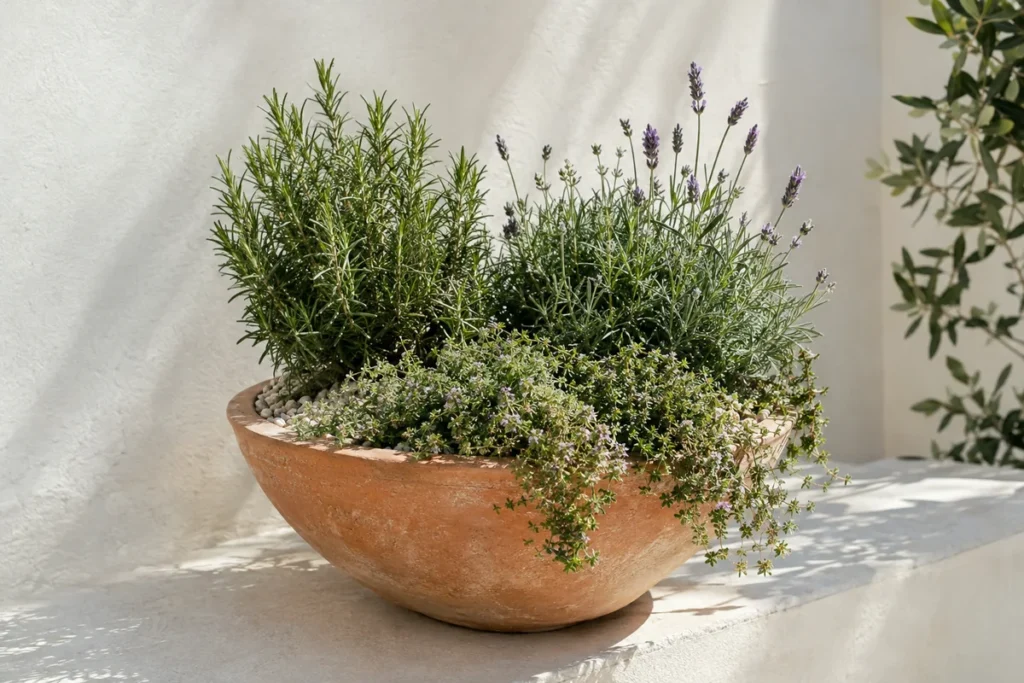
These herbs like full sun, lean and gritty soil, and drying out between waterings. Rich soil and constant moisture actually make them weaker and less flavorful.
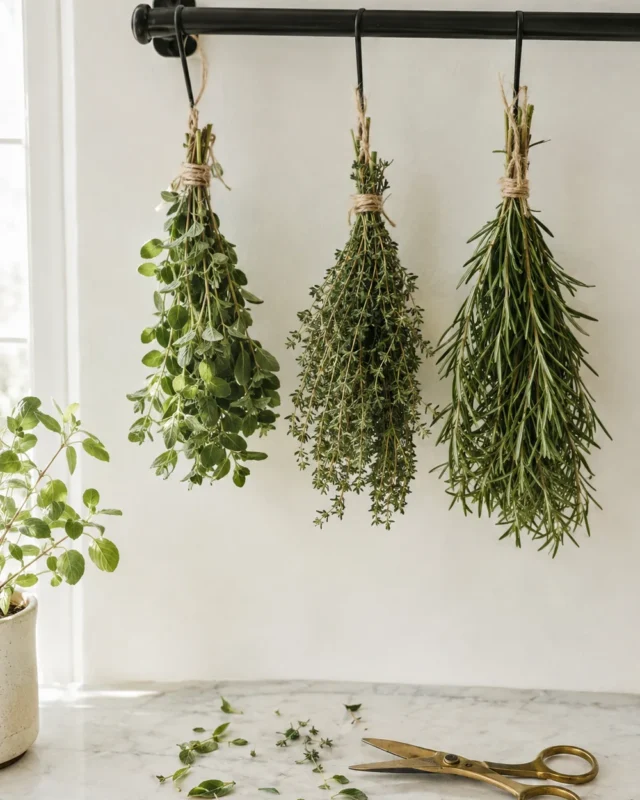
- Rosemary
- Thyme
- Oregano
- Sage
- Lavender
- Marjoram
How to plant them: use a wide terracotta pot or a raised spot in the garden. Mix potting soil with about one quarter perlite or coarse grit. Space them 12 to 18 inches apart in beds (rosemary and lavender eventually want 24 to 36 inches). Water deeply, then let the top inch or two dry out before watering again.
Most of these are perennial in USDA zones 5 to 9 (rosemary is reliably hardy only to about zone 7 or 8, and lavender varies by type). In colder zones, grow them in pots you can move to a sheltered spot for winter.
Pretty pairing: rosemary as the tall center, sage and oregano around it, and creeping thyme spilling over the edge.
Group 2: The Moisture Lovers
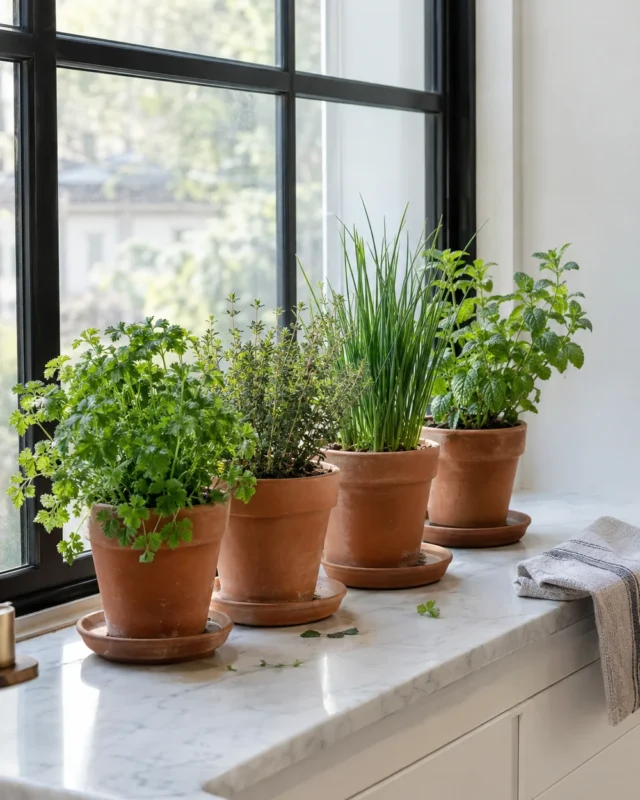
These leafy herbs like rich soil that stays evenly moist, and most appreciate a little afternoon shade in hot summers.
- Parsley
- Chives
- Cilantro
- Chervil
- Tarragon (prefers slightly drier than the others, but tolerates this group)
How to plant them: use a quality potting mix with some compost. Space parsley 8 to 10 inches apart and chives about 8 inches. Water when the surface starts to feel dry, and mulch beds to hold moisture.
Cilantro and chervil both prefer cool weather and tend to bolt in summer heat. Sow them in early spring and again in late summer for fall harvests.
Group 3: Warm Weather Annuals
These herbs love heat, sun and steady moisture, and all are replaced each year.
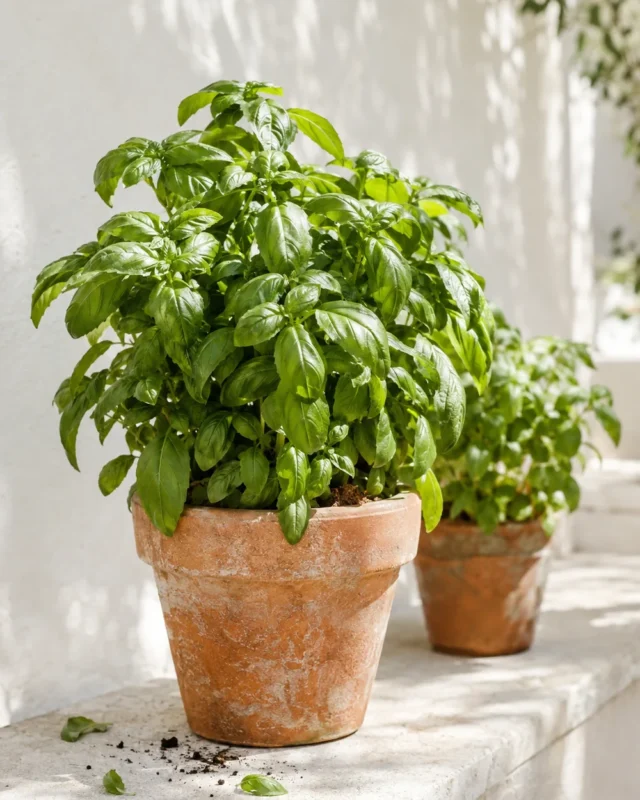
- Basil
- Dill
- Summer savory
Basil and dill both appreciate full sun and regular watering, but dill grows tall (up to 3 to 4 feet) with a long taproot, so give it a deep pot or plant it at the back of a bed. Basil makes a classic partner for tomatoes in the vegetable garden, too, with similar sun and water needs.
Herbs to Plant on Their Own
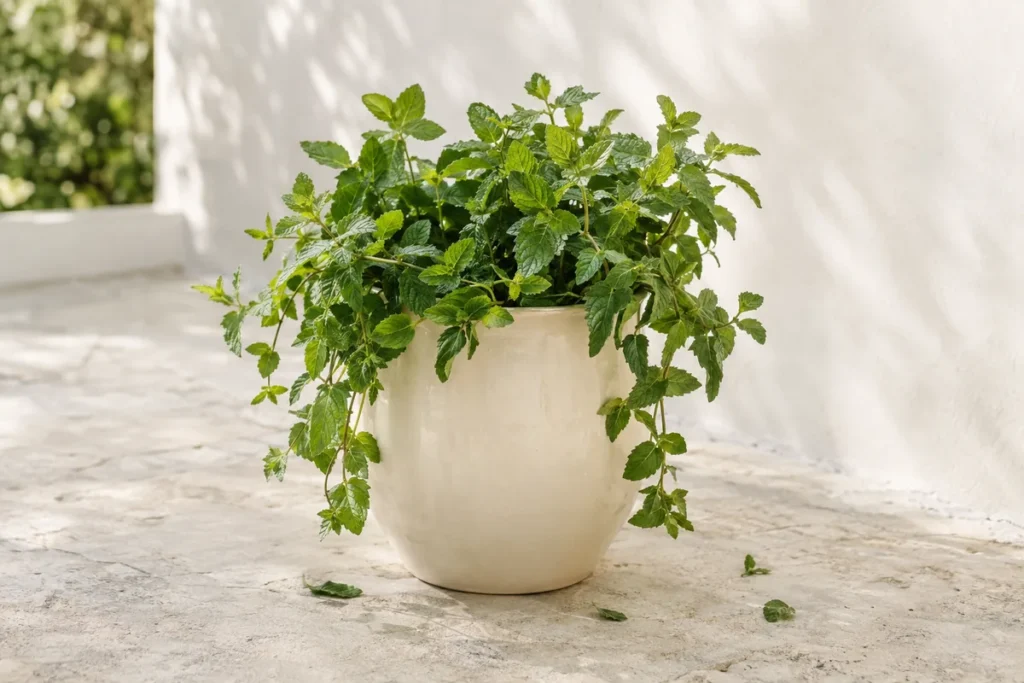
Some herbs are simply too vigorous or too particular to share.
- Mint: spreads by underground runners and will choke out every other plant in a pot or bed. Grow it alone in a container. If you want it in a bed, sink a bottomless pot or a pot with a drainage hole into the ground with the rim 2 inches above the soil.
- Lemon balm: a mint family member with the same spreading habit, and it seeds itself freely.
- Fennel: releases compounds that can stunt the growth of many nearby plants. Give it a separate spot.
- Dill and cilantro near fennel: they can cross pollinate, which affects saved seed.
How to Plant a Mixed Herb Container
Supplies:
- A pot at least 14 to 18 inches wide with drainage holes
- Potting mix (plus perlite or grit for Mediterranean herbs)
- 3 to 5 herb plants from the same group
- A trowel and a watering can
Steps:
- Fill the pot to about 2 inches below the rim with moistened mix.
- Arrange plants while still in their nursery pots: tallest in the center or back, mounding herbs in the middle, trailing ones at the edge.
- Leave 4 to 6 inches between plants in a pot. They fill in fast.
- Plant at the same depth they grew in the nursery pot, then firm the soil gently.
- Water thoroughly. For a Mediterranean pot, top the soil with a thin layer of pale gravel, which keeps the crowns dry and looks tidy.
Plan about 30 minutes for the whole job. A mixed herb pot with four plants usually costs under $30, including soil.
Herbs and Their Garden Helpers
Herbs can also help other plants. Their flowers attract bees, hoverflies and small beneficial wasps that pollinate crops and eat aphids.
- Thyme, oregano and lavender flowers draw in pollinators all summer.
- Dill and cilantro in flower attract hoverflies, whose larvae feed on aphids.
- Chives produce lovely purple blooms that bees love.
Letting a few herb plants flower at the edge of a vegetable bed is an easy, natural way to support a healthy garden.
Pet Safety Notes
If cats or dogs share your garden, choose with care. Veterinary toxic plant lists include chives (toxic to cats and dogs), oregano, mint, lavender, tarragon and parsley (can cause stomach upset or other symptoms if eaten in quantity). Rosemary, thyme, sage, basil, dill and cilantro are generally considered safe. Place risky pots out of reach of curious pets.
When herbs share the same needs, a mixed planting is easier to care for than separate pots, and it looks lush and full all season.
Which herb combination are you planning to plant together this season? Tell us in the comments.
Quick Questions
Can I plant basil and rosemary together?
It is not ideal. Basil wants rich, evenly moist soil, while rosemary prefers to dry out between waterings. One of them will always be slightly unhappy. Give each its own pot or plant them at opposite ends of a bed.
What herbs can share a pot with mint?
None, really. Mint is too aggressive for shared containers. It will spread through the root zone and crowd out its neighbors within one season.
How many herbs can I put in one pot?
A 14 inch pot comfortably holds 3 herbs, and an 18 inch pot holds 4 or 5. Crowding leads to poor airflow and competition for water.
Do mixed herb pots need repotting?
Perennial herb pots benefit from refreshing every 2 to 3 years. Divide or trim back overgrown plants in spring and replace some of the old soil with fresh mix.