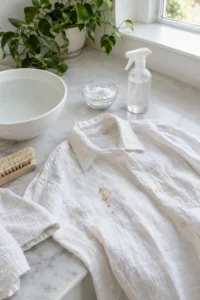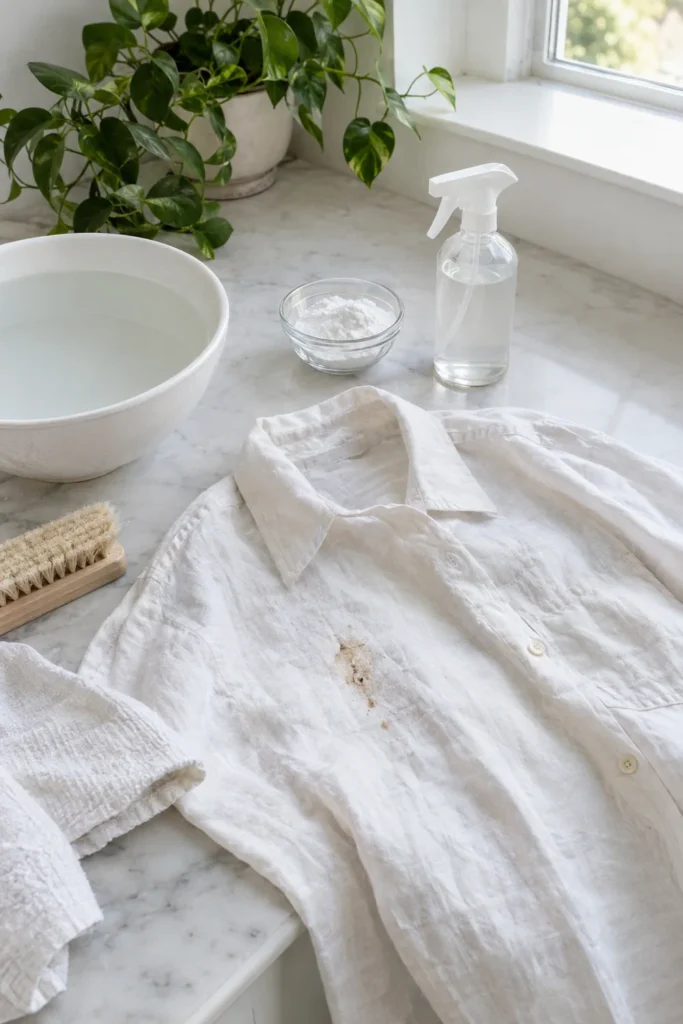
A splash of coffee on a white shirt or a smear of grease on your favorite jeans can ruin a morning. The good news is that most everyday stains are not permanent, especially if you treat them quickly.
This guide covers how to remove stains from clothes and linens with simple supplies you probably already own. It also includes important safety notes, because some common stain removers should never be mixed.
Your Basic Stain Kit
Keep these together in a small bin in the laundry area:
- Liquid dish soap (a plain, clear one)
- Baking soda
- White vinegar
- Hydrogen peroxide (3 percent, from the pharmacy)
- Rubbing alcohol
- Liquid laundry detergent
- A soft bristle brush or old toothbrush
- White cloths or paper towels
- A spray bottle
Most of these cost a few dollars each.
The Golden Rules of Stain Removal
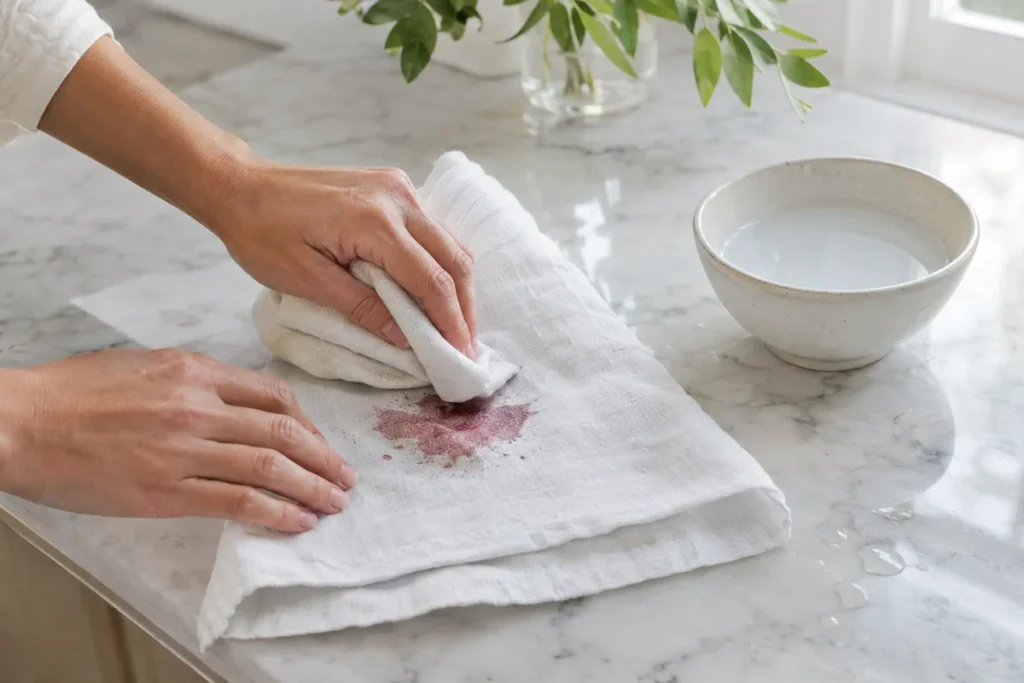
These apply to almost every stain:
- Act fast. Fresh stains are far easier to lift than set ones.
- Blot, do not rub. Rubbing pushes the stain deeper and spreads it.
- Work from the outside in so you do not make the stain bigger.
- Use cold water first. Hot water can set protein stains like blood, egg and dairy.
- Test first. Try any product on a hidden seam before using it on the stain.
- Check before drying. Heat from the dryer can set a stain permanently. Air dry until you are sure it is gone.
- Read the care label. Dry clean only, silk and wool need gentler treatment or a professional.
Important Safety Notes
Stain removal uses real chemicals, so a few rules matter:
- Never mix bleach with ammonia, vinegar, rubbing alcohol or other cleaners. These combinations can release toxic gases.
- Do not mix hydrogen peroxide and vinegar in the same container.
- Work in a ventilated area, with a window open or a fan running.
- Rubbing alcohol is flammable. Keep it away from flames and heat, and let treated items air out before washing.
- Wear gloves if you have sensitive skin.
- Hydrogen peroxide can lighten colors. Test on a hidden spot first and use it mainly on whites.
- Rinse each product out fully before trying a different one.
How to Remove Specific Stains
Coffee and Tea
- Rinse the back of the stain under cold running water.
- Rub in a drop of liquid laundry detergent with your fingers.
- Let it sit for 5 to 10 minutes.
- Wash as usual in the warmest water the fabric allows.
For an older coffee stain, soak the item for 30 minutes in cool water with a splash of white vinegar before treating.
Red Wine
- Blot up as much as possible with a white cloth.
- Sprinkle with salt or baking soda to draw out liquid.
- Rinse from the back with cold water.
- For white fabrics, dab with a little hydrogen peroxide mixed with a drop of dish soap, then rinse.
- Wash as usual.
Grass
- Dab rubbing alcohol on the stain with a cloth to loosen the green pigment.
- Rinse with cool water.
- Rub in liquid detergent and let it sit for 15 minutes.
- Wash in warm water.
Grease and Oil
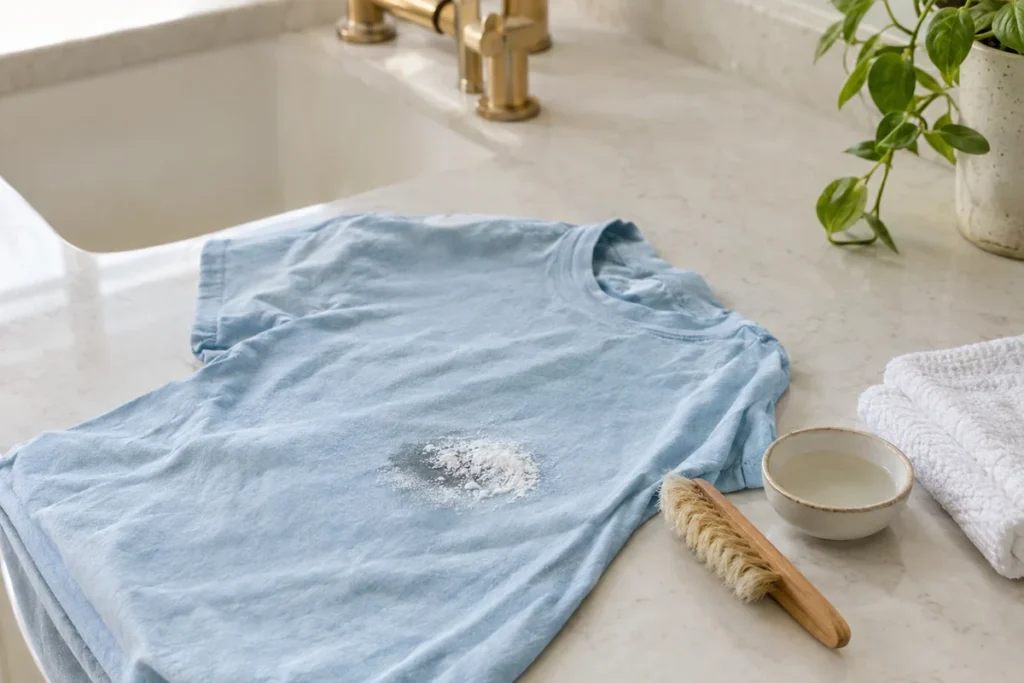
Grease needs something to grab it before washing.
- Blot extra oil with a paper towel.
- Sprinkle baking soda or cornstarch on the spot and let it sit 15 to 30 minutes to absorb the oil.
- Brush off the powder.
- Work in a drop of dish soap, which is made to break up grease.
- Wash in the warmest water safe for the fabric.
Blood
Always use cold water. Warm water cooks the proteins into the fibers.
- Rinse from the back under cold running water.
- Rub gently with liquid detergent or a paste of baking soda and cold water.
- For white fabrics, dab a small amount of hydrogen peroxide on the stain. It will fizz as it works.
- Rinse and wash in cold water.
Sweat and Yellow Underarm Marks
- Make a paste of baking soda and a little water.
- Spread it on the stain and let it sit for an hour.
- Brush off and wash as usual.
For white shirts, adding a cup of white vinegar to a cool soak for 30 minutes before washing can help. Do not add bleach to a vinegar soak.
Makeup
- Foundation: dab with dish soap and cool water, then rinse.
- Lipstick: blot with rubbing alcohol on a cloth, then treat with dish soap.
- Mascara: use a little dish soap and a soft brush, then rinse.
Ink
- Place a paper towel under the stain.
- Dab with rubbing alcohol until the ink stops transferring.
- Rinse, apply detergent, and wash.
When to Use Bleach
Chlorine bleach is best for sturdy white cottons only. Always dilute it according to the label, add it to the wash water rather than pouring it directly on fabric, and never combine it with other stain removers. For colors, choose an oxygen based color safe bleach instead.
When a Stain Will Not Budge
If a stain survives one round, repeat the treatment before drying. Some stains need two or three tries. If it still remains after air drying, take valuable or delicate items to a professional cleaner and tell them what caused the stain.
Most stains are a race against time. Keep a small kit ready, remember to blot and use cold water first, and you will save far more clothes and linens than you lose.
Which stain gives you the most trouble in your laundry? Tell us in the comments.
Quick Questions
Does hot water remove stains better?
Not always. Hot water sets protein stains like blood, egg and dairy. Start with cold water, then wash warm once the stain is gone.
Can I use vinegar and baking soda together?
They fizz but mostly cancel each other out. Use them separately, rinsing between steps.
How do I remove a stain that has already been through the dryer?
Soak the item in cool water with an oxygen based cleaner for several hours, then treat and wash again. Older set stains may need a few rounds.
Is it safe to mix stain removers?
No. Use one product at a time and rinse fully before trying another. Never combine bleach with ammonia, vinegar or alcohol.