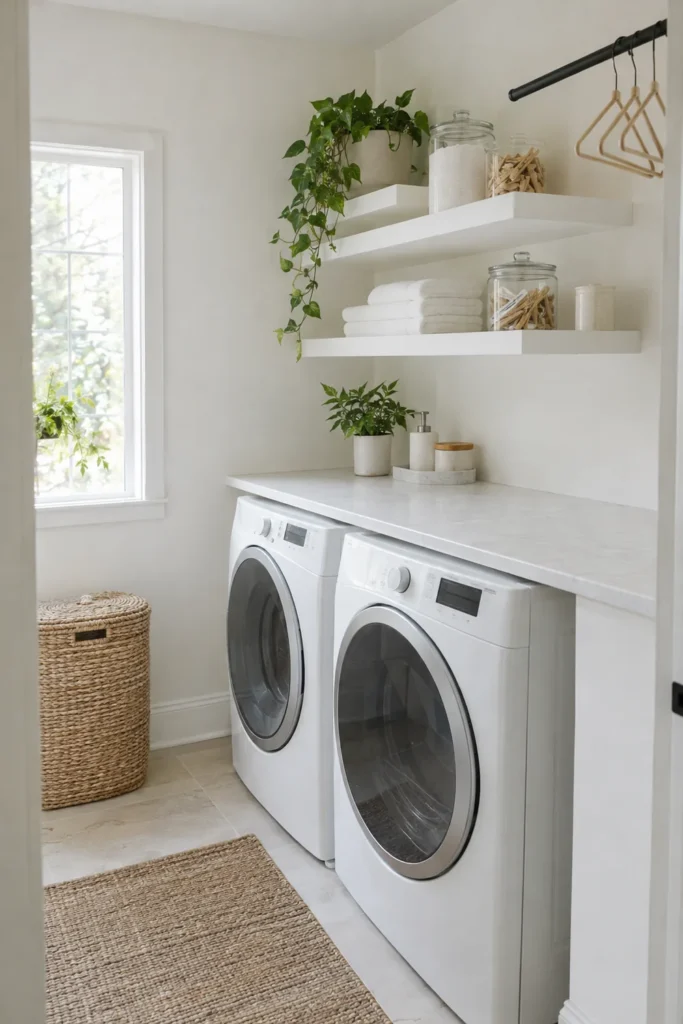
The laundry area is often the hardest working spot in the house and the least planned. In many homes it is a closet with two machines and a pile of bottles balanced on top.
With a few smart changes, even a small space can feel organized and pleasant. These laundry room organization ideas focus on using vertical space, giving every supply a home and keeping cleaning chemicals stored safely.
Most of these projects take an afternoon or less and cost anywhere from a few dollars to around $100.
Start With a Quick Clear Out
Before you add anything new, empty the space completely.
- Toss empty or nearly empty bottles.
- Throw away dried out stain sticks and old dryer sheets.
- Move anything that does not belong (tools, pet food, paint) to a better home.
- Wipe the tops and sides of the machines, and pull them out if you can to clean the floor and lint behind them.
You will be surprised how much room appears once the extras are gone.
1. Add a Folding Counter
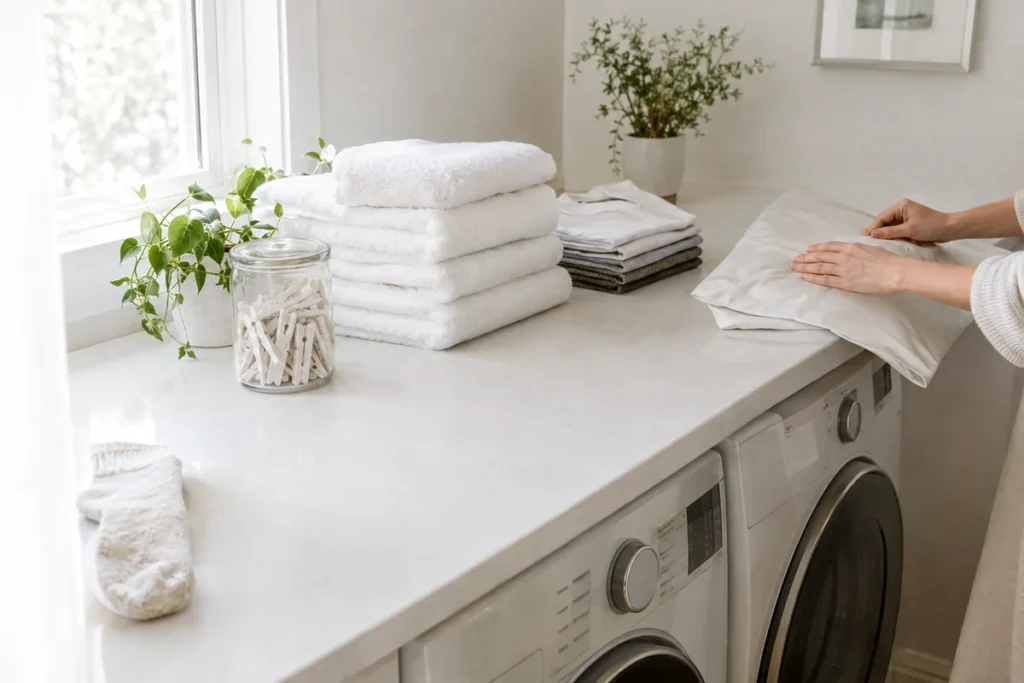
If you have front loading machines, a counter across the top gives you a folding station and a place for baskets.
Options:
- A piece of laminate or solid surface countertop cut to size at a home improvement store
- A ready made laundry topper designed to sit on machines
- A sturdy shelf board mounted on wall cleats just above the machines
Leave about 2 to 3 inches of space above the machines so they can vibrate without hitting the counter. For top loading machines, a fold-down wall shelf works better.
2. Use the Wall Space
Small laundry rooms usually have plenty of unused wall.
- Floating shelves above the machines hold everyday supplies.
- A pegboard with hooks keeps lint rollers, scissors and brushes in reach.
- A wall mounted rod gives you a spot to hang shirts straight from the dryer.
- Slim rolling carts fit in the gap between the machines and the wall, often only 5 to 7 inches wide.
3. Set Up a Sorting System
Sorting as you go saves time on wash day.
- Use two or three hampers or a divided sorter: whites, darks and delicates is a simple start.
- Choose breathable fabric or woven hampers so damp items do not get musty.
- If space is tight, a tall slim hamper with two compartments works well.
4. Decant Everyday Supplies
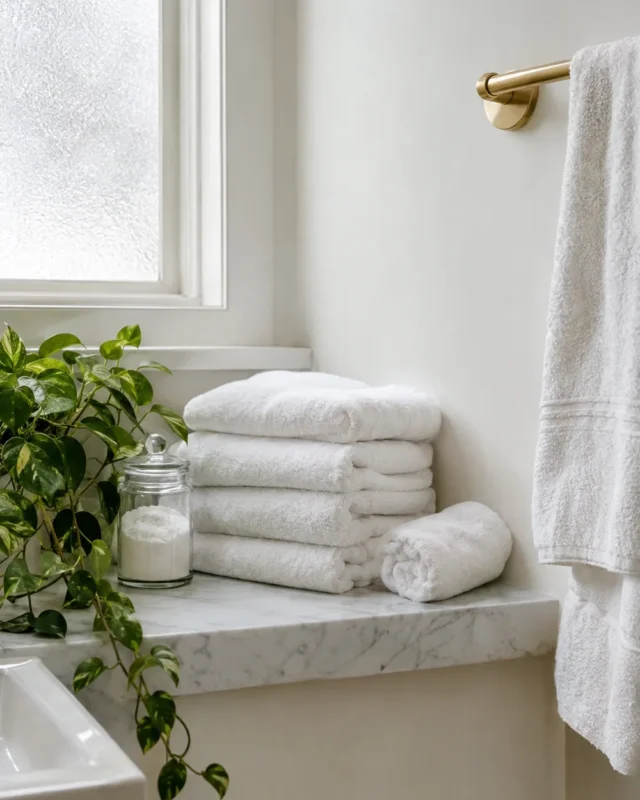
Pouring powder and pods into clear jars looks neat and makes it easy to see when you are running low.
- Use jars with tight lids to keep out moisture.
- Label the jars clearly by contents.
- Keep the original container or cut out the label and directions, and store them nearby so you can check instructions and safety information.
Do not decant bleach or any strong chemical. Keep those in their original bottles with the label intact.
5. Give Drying a Home
Not everything belongs in the dryer.
- A wall mounted drying rack folds flat when not in use.
- A retractable clothesline can stretch across the room for delicates.
- Over the door hooks hold hangers for air drying shirts.
Keep air drying spots near a window or vent so clothes dry quickly and the room does not get damp.
6. Store Chemicals Safely
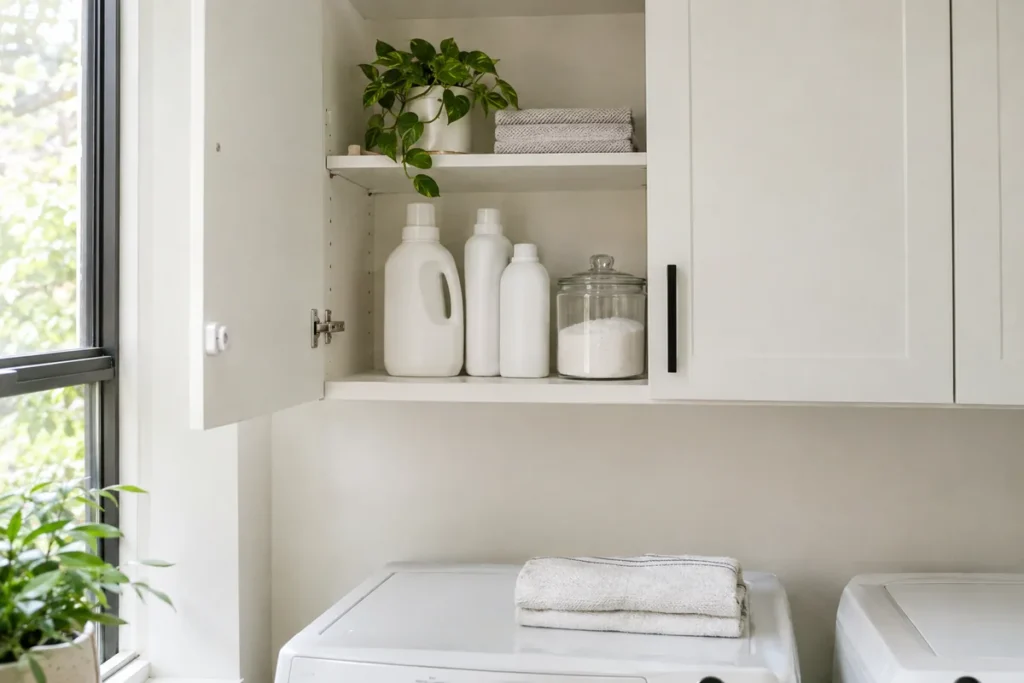
Laundry products are among the most common cleaning chemicals in a home, so storage matters.
- Keep bleach, stain removers and detergents up high, ideally in a cabinet with a child safety latch if young kids or pets live in the house.
- Store pods out of reach. They look like candy to children and can be very harmful if bitten.
- Never store bleach next to ammonia based cleaners or acids like vinegar. Mixing them, even by accident, can release toxic fumes.
- Keep lids tightly closed and wipe up drips right away.
- Ventilate the room when using bleach. Crack a window or run a fan.
7. Create a Lost Sock and Pocket Station
A small bin or a few clips on the wall catch single socks until their partners appear. A little dish on a shelf holds coins, hair ties and anything else found in pockets.
8. Add Simple Finishing Touches
A few details make the room nicer to spend time in:
- Brighter lighting. A plug-in or battery powered under shelf light helps you spot stains.
- A washable runner on the floor.
- A small plant that likes humidity, such as a pothos, on a high shelf.
- A trash can for lint and used dryer sheets.
A Simple Weekly Laundry Room Routine
Once the space is organized, a short weekly routine keeps it that way:
- Clean the lint trap after every load.
- Wipe the machine tops and the folding counter.
- Leave the washer door open after washing to let it dry.
- Check supply levels and add what you need to the shopping list.
- Return hangers and clear the lost sock bin.
Monthly, run a hot cleaning cycle on the washer and wipe the door seal, where moisture and lint tend to collect.
A well organized laundry room does not have to be big. Give each supply a home, use your walls, keep chemicals up high and out of reach, and wash day will feel much less like a chore.
What is the one thing you wish your laundry space had more of? Tell us in the comments.
Quick Questions
How do I organize a laundry closet with no shelves?
Add a tension rod for hangers, a slim rolling cart beside the machines and an over the door organizer for small supplies. These need no drilling.
Where should laundry pods be stored?
In a closed container on a high shelf or in a latched cabinet, well out of reach of children and pets.
Is it safe to store detergent in glass jars?
Powder is fine in airtight jars that are clearly labeled. Keep bleach and liquid chemicals in their original containers.
How can I make my laundry room smell fresh?
Clean the lint trap every load, leave the washer door open to dry, and wipe the door seal once a month.