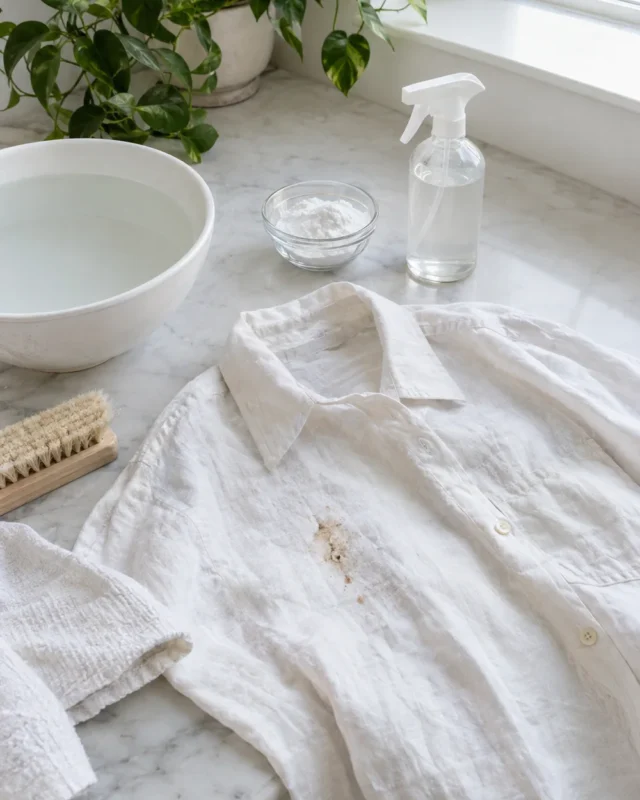
There is nothing quite like a stack of crisp white towels. They look fresh, they suit every bathroom, and they feel a little like a hotel at home.
Keeping them that way is another story. Over time, white towels can turn gray, yellow or stiff, and they often stop absorbing water as well as they used to.
Most of the time, the problem is not the towels. It is buildup from too much detergent, fabric softener or hard water. Here is how to wash white towels so they stay bright, soft and absorbent.
Why White Towels Turn Dingy
A few common causes:
- Too much detergent. Extra soap does not rinse out and leaves a film that traps dirt.
- Fabric softener. It coats the fibers, making towels less absorbent and dull.
- Mixed loads. Washing whites with colors can transfer dye.
- Hard water. Minerals build up in the fibers, leaving them stiff and gray.
- Overloading the machine. Towels need room to move to get clean.
- Body oils and skin care products that build up over time.
What You Need
- Liquid or powder laundry detergent
- Oxygen based bleach powder (color safe and gentle on fibers)
- Baking soda
- White vinegar
- Wool dryer balls (optional)
Step by Step: How to Wash White Towels
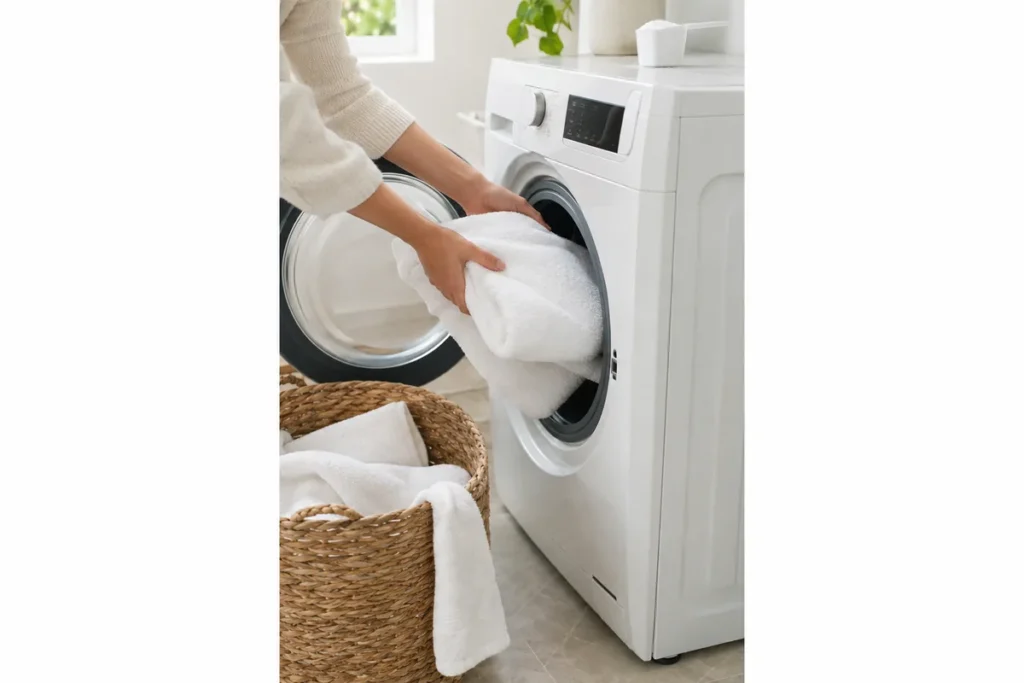
- Wash white towels on their own. Keep them separate from colored items and from clothes with zippers or hooks that can snag loops.
- Use less detergent than you think. About half the amount the bottle suggests is usually plenty for towels.
- Choose warm or hot water. Check the care label, but most cotton towels handle hot water well, which helps lift oils and kill odors.
- Add a booster. A scoop of oxygen based bleach or half a cup of baking soda in the drum helps brighten whites.
- Do not overfill. Leave room in the drum for the towels to tumble. In most machines that means 6 to 8 bath towels per load.
- Add an extra rinse if your machine has one. This removes leftover detergent.
Skip the Fabric Softener
Fabric softener makes towels feel soft at first, but it coats the fibers and makes them less absorbent. Over time, it can also make whites look dull.
Instead, try half a cup of white vinegar in the softener compartment once in a while. It helps rinse away detergent residue. Do not add vinegar in the same cycle as chlorine bleach.
How to Dry White Towels
- Shake each towel before putting it in the dryer to fluff the loops.
- Dry on medium heat. High heat can damage cotton fibers over time.
- Use wool dryer balls to help towels dry evenly and stay fluffy.
- Do not overdry. Take towels out as soon as they are dry to keep them soft.
- Line dry in sunlight when you can. Sunshine is a natural whitener, though line drying can feel a little stiffer. A short tumble in the dryer afterward softens them.
How to Strip Dingy White Towels
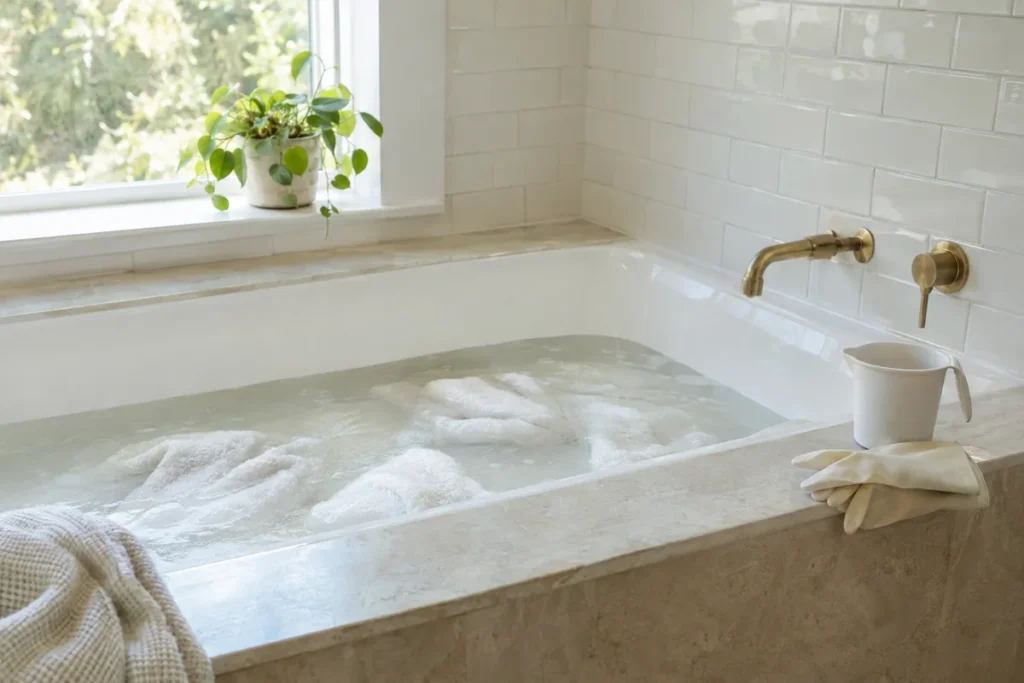
If your towels already feel stiff or look gray, a deep soak can help remove buildup. Try this every few months.
What you need: a bathtub or large tub, hot water, 1/4 cup baking soda, 1/4 cup laundry detergent and 1/4 cup oxygen bleach powder (optional).
- Fill the tub with the hottest tap water you have.
- Add the baking soda, detergent and oxygen bleach. Stir with a long handled spoon until dissolved.
- Add clean, dry towels and push them under the water.
- Let them soak for 4 to 6 hours, stirring every hour or so.
- The water will likely turn cloudy or gray. That is the buildup coming out.
- Drain, wring out the towels, and run them through a rinse cycle with no detergent.
- Dry as usual.
Safety note: wear rubber gloves when handling hot soaking water, and keep children and pets away from a full tub.
Should You Use Chlorine Bleach?
Chlorine bleach does whiten, but it can weaken cotton fibers and turn some towels yellow over time. Use it sparingly, and only on 100 percent cotton white towels.
If you do use it:
- Dilute it according to the label, and add it to the bleach dispenser or the wash water, never directly on dry towels.
- Never mix chlorine bleach with ammonia, vinegar or other cleaners. These can release dangerous fumes.
- Ventilate the room while using it.
- Run an extra rinse to remove any residue.
For regular washing, oxygen bleach is a gentler option.
How Often to Wash Towels
Most people find washing bath towels after three or four uses works well. Hang them fully open to dry between uses so they do not get musty. Hand towels in a busy bathroom do best with a wash every day or two.
Small Habits That Keep Towels White
- Hang towels to dry completely after each use.
- Keep a separate hamper for white laundry.
- Wash makeup off before using a white towel, or use a dark towel for removing makeup.
- Replace towels when they become thin or frayed.
Bright white towels are mostly about using less product, not more. Wash them separately, skip the softener, add a gentle booster and give them a deep soak now and then, and they will stay soft and fresh for years.
Do you prefer all white towels or a mix of colors in your bathroom? Tell us in the comments.
Quick Questions
Why do my white towels smell musty after washing?
Usually there is detergent buildup or towels sat wet too long. Strip them, use less detergent, and dry them right after the cycle ends.
Can I wash white towels with white sheets?
Yes, but towels shed lint, so sheets may pick some up. Washing them separately gives the best results.
How do I make old white towels fluffy again?
Strip them to remove buildup, skip fabric softener, and dry on medium heat with wool dryer balls.
Is baking soda safe for all towels?
Yes, baking soda is gentle on cotton and safe for most towels. Check the care label for specialty fabrics like bamboo blends.