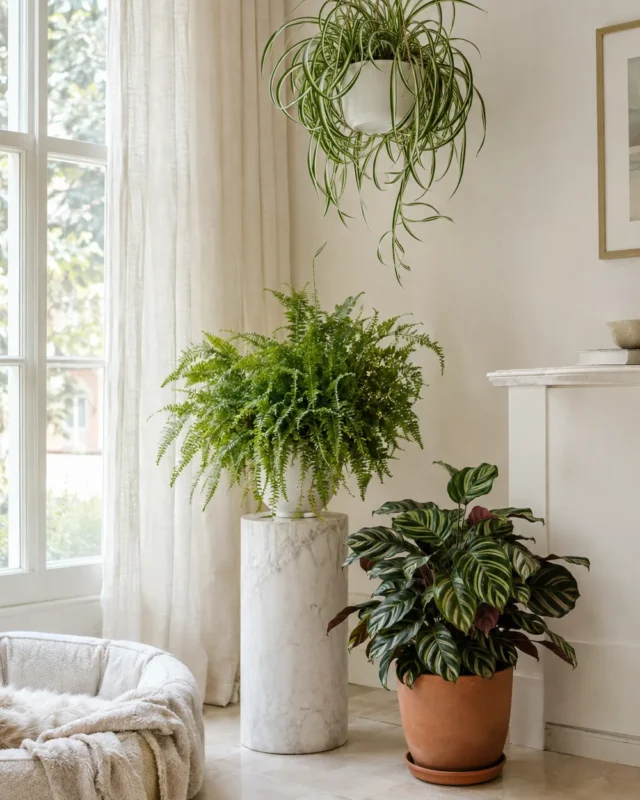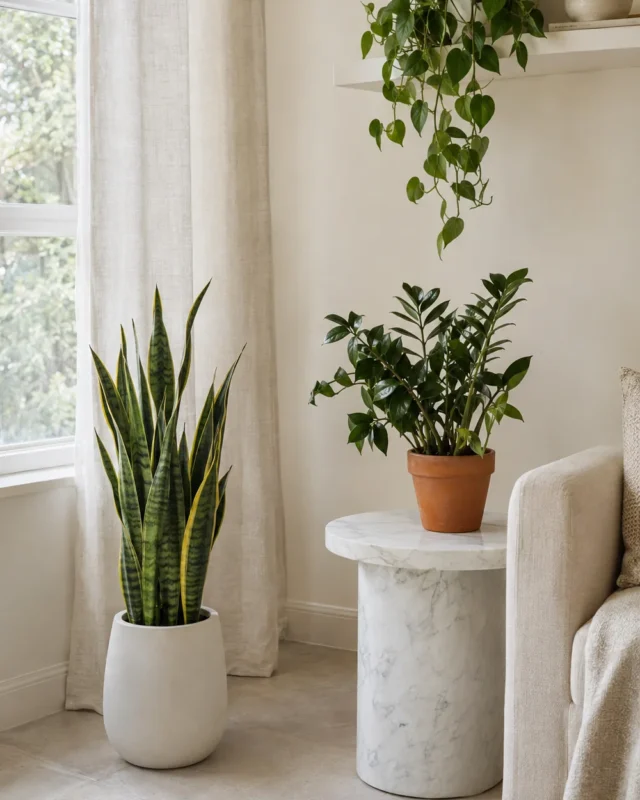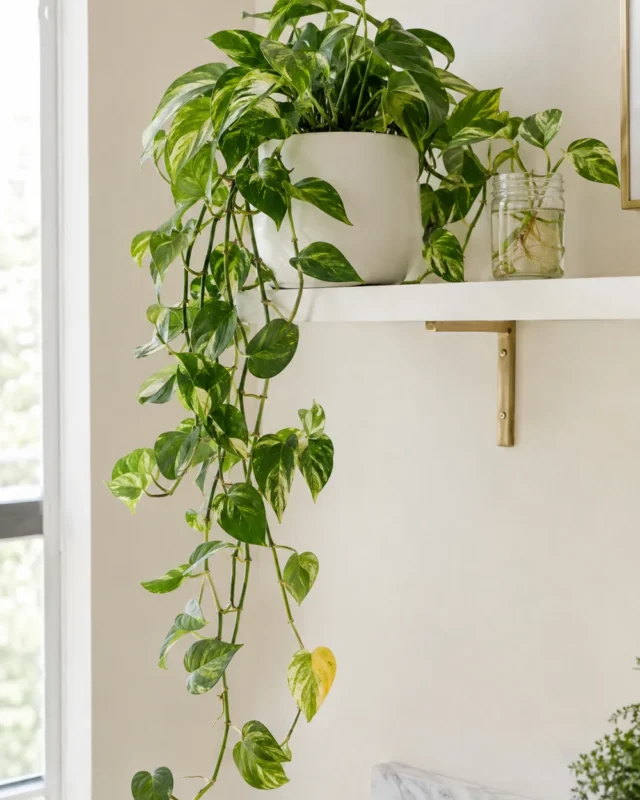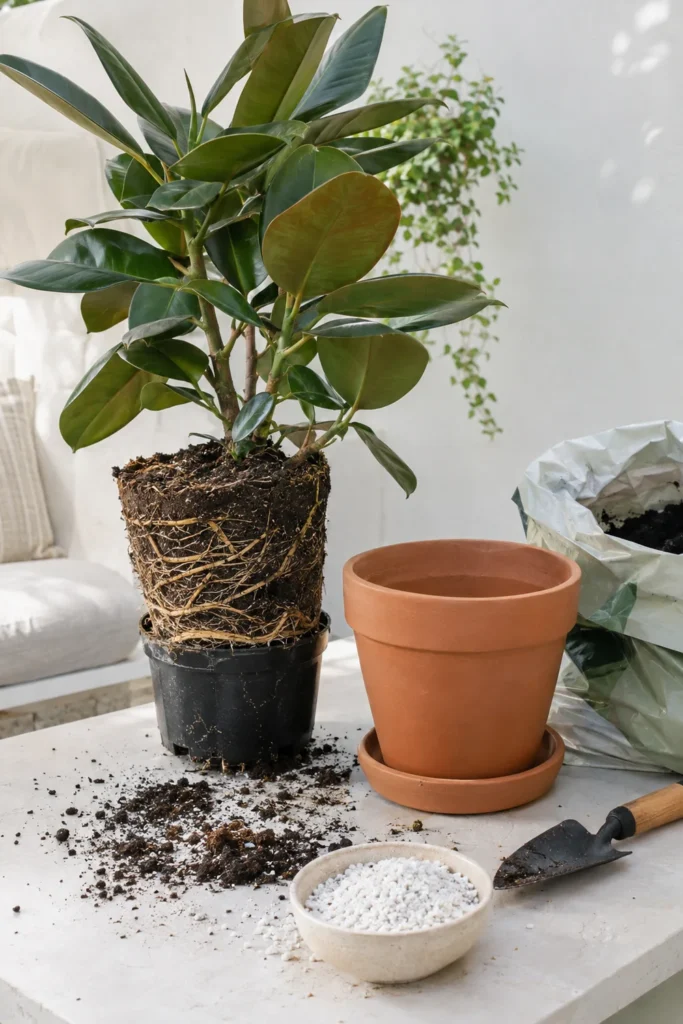
Your plant used to grow happily, and now it seems stuck. Water runs straight through the pot, roots are poking out of the drainage hole, and the soil dries out in a day or two.
Those are signs it has outgrown its home. Repotting gives the roots fresh soil and room to spread, and it is one of the simplest things you can do for an indoor plant.
The whole job takes about 20 minutes per plant. Here is how to know when to repot, what you need, and how to do it so your plant settles in quickly.
Signs Your Plant Needs Repotting
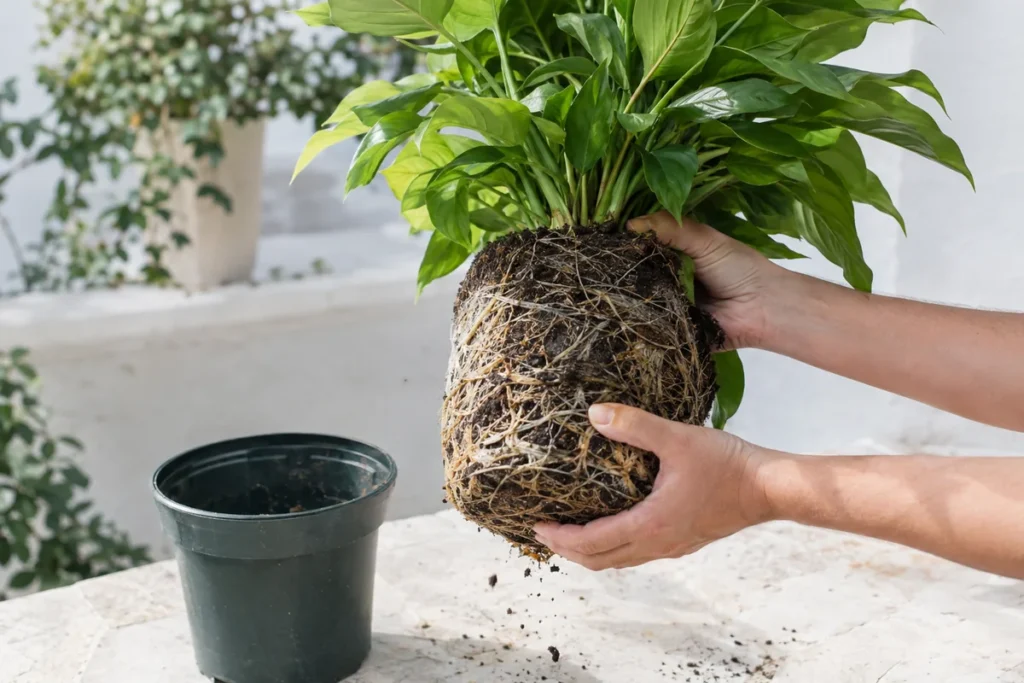
Not every plant needs a new pot every year. Look for two or more of these signs:
- Roots growing out of the drainage hole or circling the top of the soil
- Water rushing through the pot and out the bottom almost immediately
- Soil drying out much faster than it used to
- The plant is top heavy and tips over easily
- Growth has slowed in spring or summer even with good light and feeding
- The soil has shrunk away from the sides of the pot or looks crusty and hard
- It has been two or more years in the same soil
When in doubt, slide the plant out of its pot. If you see more roots than soil, or roots wrapped tightly around the outside of the root ball, it is ready.
When to Repot
Spring and early summer are best. Plants are growing actively and recover quickly. Late summer is fine too.
Try to avoid repotting in late fall and winter unless there is an emergency, like root rot or a broken pot. Growth is slow then, and roots take longer to settle into new soil.
Also avoid repotting a plant that is flowering or one you just brought home. Give a new plant a couple of weeks to adjust to your home first.
Choosing the Right Pot
The most common mistake is going too big. A huge pot holds a lot of wet soil that the roots cannot reach, which leads to soggy soil and root rot.
- Go up only one size: about 1 to 2 inches wider for small and medium plants (pots up to 10 inches), and 2 to 4 inches wider for large floor plants.
- Always choose a drainage hole. This matters more than any other feature.
- Terracotta breathes and dries faster, great for succulents, snake plants and anyone who overwaters.
- Glazed ceramic and plastic hold moisture longer, better for ferns, calatheas and plants that like steady moisture.
Choosing the Right Soil
Never use garden soil for houseplants. It packs down hard in a pot and can carry pests.
Match the mix to the plant:
- Most tropical foliage plants (pothos, philodendron, monstera, peace lily): indoor potting mix with about a third perlite or orchid bark mixed in
- Succulents, cacti, snake plants, ZZ plants: cactus and succulent mix, or potting mix with half perlite or coarse sand
- Orchids: orchid bark mix only
- Ferns and calatheas: potting mix with extra peat free coir or compost to hold moisture
A medium bag of potting mix costs around $8 to $15 and is enough for several plants.
How to Repot a Houseplant, Step by Step
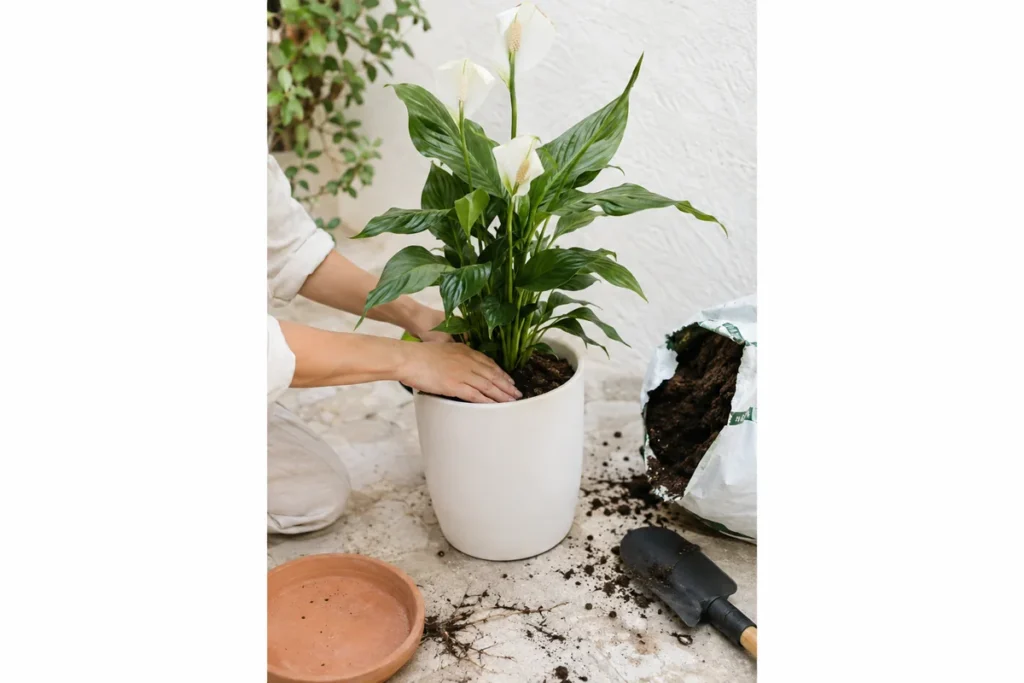
Supplies:
- New pot with a drainage hole
- Fresh potting mix suited to the plant
- Small trowel or large spoon
- Clean scissors or pruners
- An old sheet, tarp or newspaper (or work outside)
- Watering can
Steps:
- Water the day before. Moist roots slide out more easily and handle the move with less stress.
- Prepare the new pot. Add a layer of fresh mix to the bottom so the top of the root ball will sit about an inch below the rim. You do not need gravel or rocks in the bottom. They actually make drainage worse.
- Remove the plant. Turn the pot on its side, hold the plant at the base of the stems, and gently slide it out. Squeeze or tap a plastic pot to loosen it. For a stuck plant, run a butter knife around the inside edge.
- Loosen the roots. Gently tease apart circling roots with your fingers. If the root ball is a solid mat, make three or four shallow vertical cuts down the sides with a clean knife to encourage new roots to grow outward.
- Trim damaged roots. Cut away any roots that are brown, mushy or smell sour. Healthy roots are firm and white, tan or orange depending on the plant.
- Set the plant in place. Center it in the new pot at the same depth it was growing before. Burying the stems deeper can cause rot.
- Fill in around the sides. Add potting mix around the root ball and press it lightly with your fingers to remove large air pockets. Do not pack it hard.
- Water thoroughly. Water until it drains from the bottom. If the soil settles and exposes roots, top it up with a little more mix.
Aftercare: Helping Your Plant Settle In
A little drooping for a few days after repotting is normal. This is mild transplant shock while roots recover.
- Keep the plant out of strong direct sun for about a week.
- Let the top inch or two of soil dry before watering again. Fresh mix holds more water than old, tired soil.
- Skip fertilizer for four to six weeks. Most fresh potting mixes contain some nutrients, and tender new roots burn easily.
- Avoid moving the plant around. Pick its spot and leave it there.
New leaves within a few weeks are the best sign the move was a success.
Repotting Without a Bigger Pot
Some plants are already as big as you want them. You can refresh them without sizing up:
- Remove the plant from its pot.
- Trim about an inch of roots from the bottom and sides of the root ball.
- Shake off some old soil.
- Replant in the same pot with fresh mix.
This root pruning keeps the plant healthy while holding it at its current size.
A fresh pot and new soil can wake up a plant that has been stalled for months. Pick a mild spring morning, lay down a sheet, and repot one plant at a time.
Which of your houseplants is overdue for a bigger pot? Tell us in the comments.
Quick Questions
How often should I repot houseplants?
Fast growers like pothos and spider plants often need it every 12 to 18 months. Slow growers like snake plants, ZZ plants and cacti can go two to four years.
Should I put rocks in the bottom of the pot?
No. A layer of rocks raises the wet zone of the soil closer to the roots rather than improving drainage. A drainage hole and a well draining mix are what keep roots healthy.
Is it okay to repot a plant in winter?
Only if it has to be done, for example if roots are rotting or the pot is cracked. Otherwise, wait for spring when the plant can recover faster.