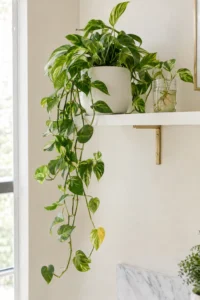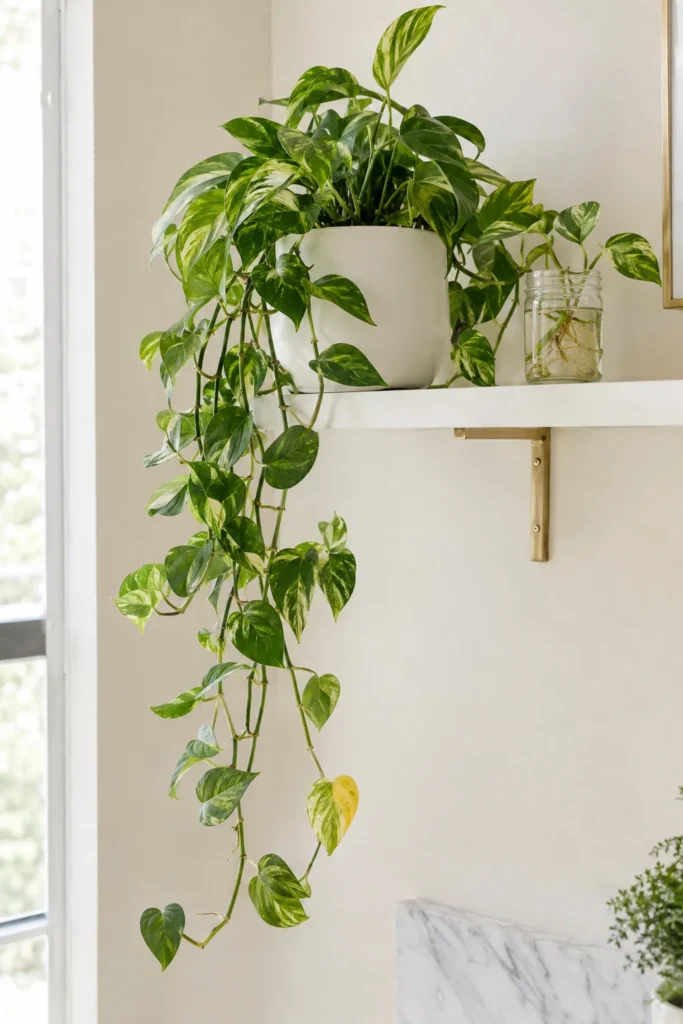
Pothos is often the first houseplant people buy, and for good reason. It forgives missed waterings, grows in less than perfect light, and roots from a cutting in a glass of water.
Still, easy does not mean effortless. Plenty of pothos end up as a few long, bare stems with a cluster of leaves at the very end. If yours looks more stringy than lush, a few changes to light, watering and pruning will turn it around.
Here is a complete, no fuss pothos care guide.
Meet the Plant
Pothos (Epipremnum aureum) is a tropical vine that climbs trees in the wild. Indoors it trails or climbs, and its leaves stay fairly small unless it has something to grow up.
Popular types include:
- Golden pothos: green leaves streaked with yellow, the most vigorous and forgiving
- Marble queen: heavily marbled white and green, a little slower
- Neon: bright chartreuse leaves that glow in a shady room
- Jade: solid green and the most tolerant of low light
Pet safety: pothos is toxic to cats and dogs. Chewing the leaves can cause mouth irritation, drooling and vomiting. Keep it on a high shelf or in a hanging planter if you have pets, and contact your vet if a pet has chewed it.
The Best Light for Pothos
Pothos grows best in bright, indirect light: a few feet from an east or west window, or right beside a north window. It tolerates lower light, but growth slows, vines stretch between leaves, and variegated types lose their color.
Avoid strong direct afternoon sun through glass, which can scorch the leaves and leave pale, crispy patches. Gentle morning sun is fine.
If your pothos has long gaps between leaves, it is asking for more light.
How Often to Water Pothos
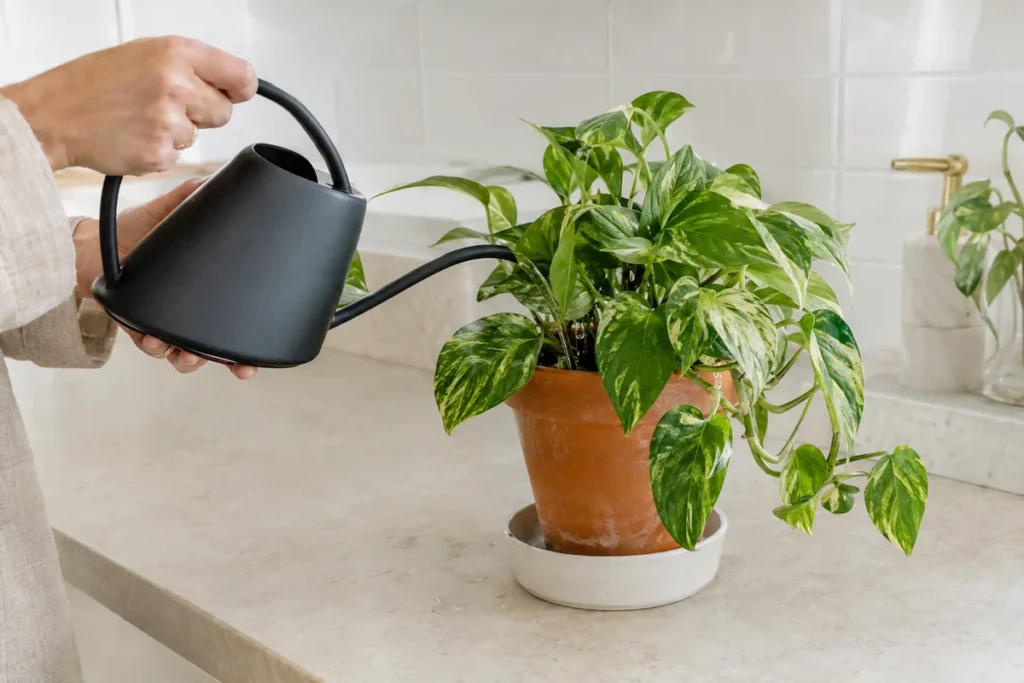
Water when the top inch or two of soil is dry. For most homes that works out to roughly every one to two weeks in spring and summer and every two to three weeks in winter, but always check the soil first.
- Push a finger into the soil up to the second knuckle.
- If it is dry, water slowly until it runs out of the drainage hole.
- Let the pot drain for 10 to 15 minutes and empty the saucer.
Pothos gives clear signals. Slight drooping and soft leaves mean it is thirsty, and it perks up within a few hours of watering. Yellow leaves with damp soil usually mean too much water.
Soil, Pot and Temperature
Use a light, well draining potting mix. A simple blend is two parts indoor potting mix to one part perlite, with a handful of orchid bark if you have it. Always choose a pot with a drainage hole.
Pothos likes normal home temperatures between 65°F and 85°F. Keep it away from cold drafts, heating vents and windows that get frosty in winter. Average household humidity is fine, though it grows a little faster in a bathroom or kitchen.
Feed with a balanced liquid houseplant fertilizer at half strength about once a month from spring through late summer. Skip fertilizer in fall and winter.
How to Get a Fuller Pothos
A full, bushy pothos comes from pruning, more light, and sometimes adding cuttings back into the pot.
Prune the Long Vines
Cut leggy vines back by a third or even half, just above a leaf. Each cut usually sends out one or two new shoots from the nearest node, so the plant fills in rather than just getting longer. Spring and summer are the best time, when growth is quick.
Give It Something to Climb
A moss pole, coir pole or simple trellis lets the vine climb the way it would in nature. Climbing pothos often grows larger leaves. Tie the stems loosely with soft plant ties and press the aerial roots against the pole.
Plant Cuttings Back In
Root the trimmings you remove (see below), then tuck them into the bare top of the same pot. This is the quickest way to make a thin plant look full again.
How to Propagate Pothos in Water
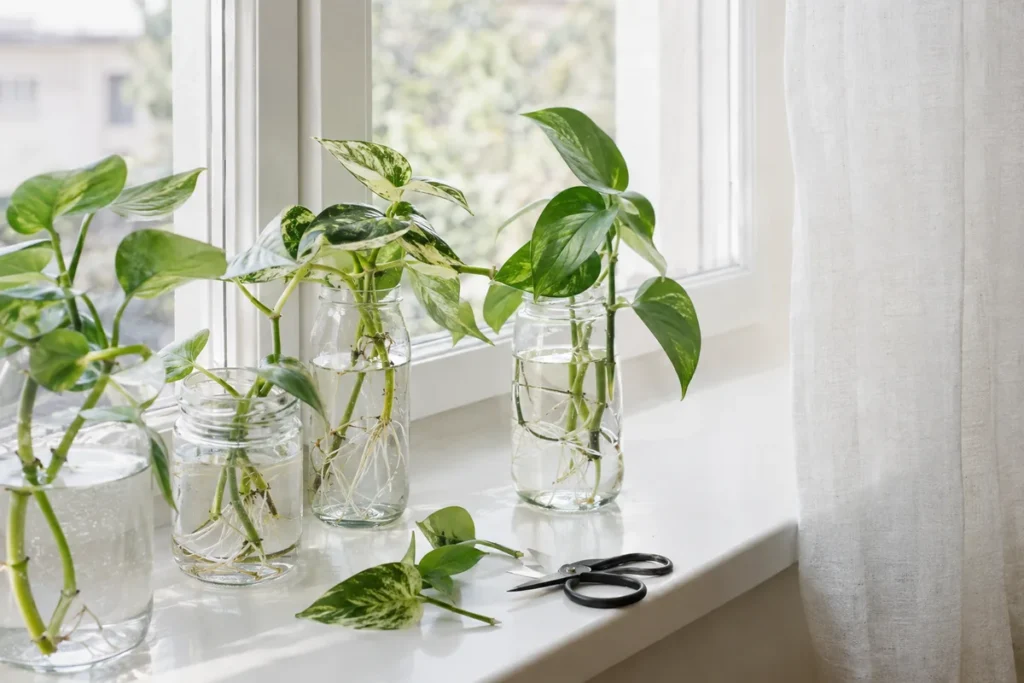
Pothos roots so easily that one plant can become several within a couple of months.
Supplies:
- Clean, sharp scissors or pruners
- A clear glass jar or vase
- Room temperature water
- A small pot and fresh potting mix for later
Steps:
- Cut a section of vine with at least two or three leaves. Make the cut about a quarter inch below a node, the small brown bump where a leaf meets the stem.
- Remove the lowest leaf so the node can sit under water without a leaf rotting.
- Place the cutting in the jar so one or two nodes are submerged.
- Set it in bright, indirect light and change the water every week.
- Roots usually appear in two to four weeks. Once they are two to three inches long, plant the cutting in moist potting mix and keep the soil lightly damp for the first couple of weeks.
Common Pothos Problems
- Yellow leaves: usually overwatering. Let the soil dry more between drinks. One old yellow leaf at the base now and then is normal.
- Brown, crispy edges: underwatering, very dry air, or too much direct sun.
- Brown, mushy stems at the soil line: root rot from soggy soil. Cut off healthy vines and root them fresh.
- Small leaves and long bare stems: not enough light.
- Losing variegation: move it to brighter, indirect light.
- Pests: check under leaves for mealybugs (white cottony spots) or spider mites (fine webbing). Wipe leaves with a damp cloth and treat with insecticidal soap if needed.
Pothos really is one of the most rewarding houseplants you can own. Give it bright indirect light, let it dry a little between waterings, and do not be shy with the scissors.
Do you let your pothos trail down or train it to climb? Tell us in the comments.
Quick Questions
Can pothos grow in water forever?
Pothos can live in water for a long time if you change the water regularly and add a few drops of liquid fertilizer every month or so. Growth is usually slower than in soil.
Why is my pothos drooping even after watering?
If the soil is wet and the plant still droops, the roots may be rotting. Slide it out of the pot and check for brown, mushy roots. Trim them away and repot in fresh, dry mix.
How fast does pothos grow?
In good light during spring and summer, healthy vines can grow several inches a month. In low light or winter, growth slows to a crawl, which is normal.