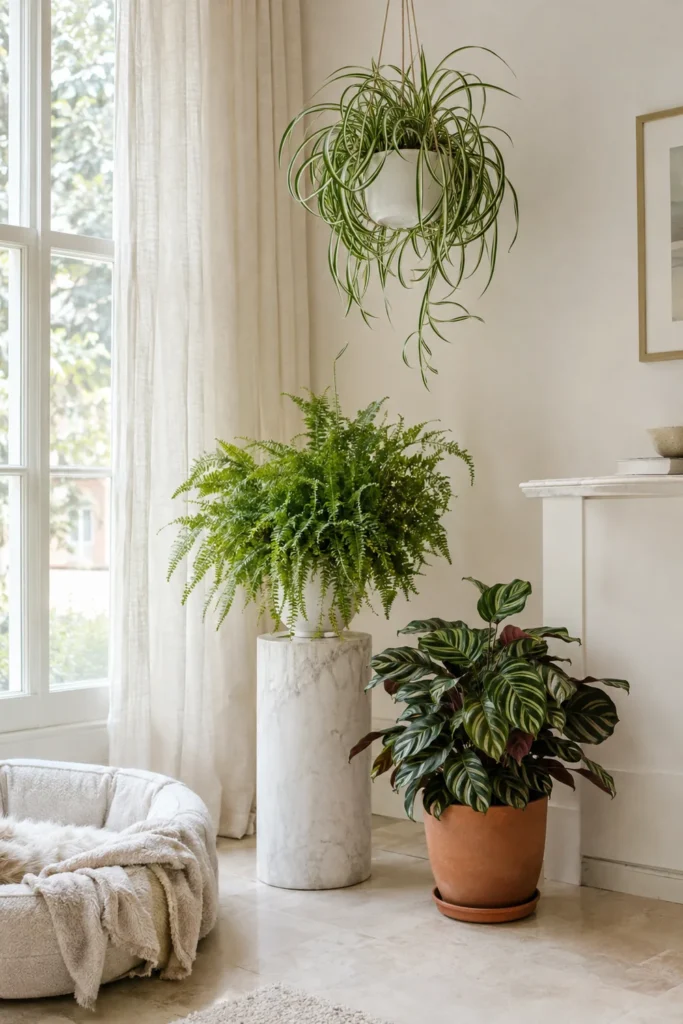
Pets and plants can share a home happily, but it takes a little planning. Many of the most popular houseplants contain compounds that irritate a pet’s mouth and stomach if chewed, and a few are seriously dangerous.
The easiest fix is to fill your home with plants that are considered non-toxic to cats and dogs. That way a curious nibble is not an emergency.
Here are twelve pet-safe houseplants that are also easy to care for, plus a short list of common plants to avoid or keep well out of reach.
A Quick Note Before You Shop
“Non-toxic” means a plant is not known to poison cats or dogs. It does not mean it is a snack. Any plant eaten in quantity can cause mild vomiting or an upset stomach, especially in cats.
A few more tips:
- Check the botanical name on the plant tag. Common names overlap, and “lily” or “palm” can mean very different plants.
- Avoid pesticide sprays and systemic granules on plants your pets can reach.
- If you think your pet has eaten something toxic, call your vet or an animal poison control line right away.
12 Pet-Safe Houseplants to Try
1. Spider Plant
Arching striped leaves and baby plantlets that dangle from long stems. Bright indirect light and watering when the top inch is dry keep it happy. Cats are often drawn to the leaves, so a hanging basket saves the plant from chewing.
2. Boston Fern
Lush, feathery fronds for a bathroom or bright bedroom. It likes bright indirect light, steady moisture and humidity. Never let it dry out completely.
3. Calathea
Bold patterned leaves in green, pink and cream. Calatheas prefer medium indirect light, evenly moist soil and higher humidity. Filtered water helps prevent crispy brown edges.
4. Prayer Plant
A close cousin of calathea whose leaves fold upward at night. It tolerates lower light than most and likes the same steady moisture.
5. Parlor Palm
A compact, graceful palm that handles low to medium light. Keep the soil lightly moist and wipe the fronds now and then.
6. Areca Palm
A larger, airy palm for a bright room. Give it bright indirect light and water when the top inch of soil is dry. It can grow 6 to 7 feet tall indoors over time.
7. Cast Iron Plant
Broad dark leaves that shrug off shade, dry air and occasional neglect. Water when the top two inches are dry.
8. Peperomia
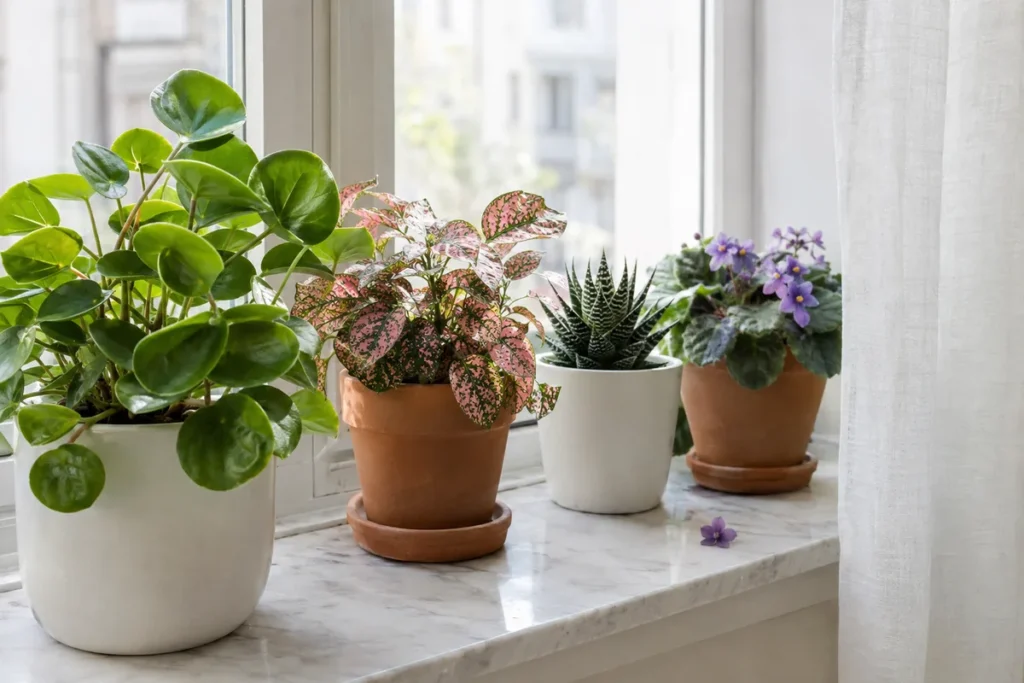
Small, compact plants with thick, often glossy leaves in many patterns. They store water in their leaves, so let the soil dry halfway down before watering. Perfect for shelves and desks.
9. African Violet
Velvety leaves and purple, pink or white flowers that bloom on and off all year in bright indirect light. Water from the bottom with room temperature water and keep the leaves dry.
10. Haworthia
A small succulent with striped, pointed leaves. Unlike aloe, which is toxic to pets, haworthia is considered safe. Bright light, gritty soil and watering only when fully dry.
11. Polka Dot Plant
Speckled leaves in pink, red or white. Bright indirect light keeps the colors strong. Pinch the tips often to keep it bushy, and keep the soil lightly moist.
12. Chinese Money Plant
Round, coin shaped leaves on thin stems. It likes bright indirect light and drying out an inch or two between waterings. Rotate it weekly so it grows evenly, since the stems lean hard toward the window.
Where to Place Pet-Safe Plants
Even safe plants do better when pets cannot dig in them or knock them over. Ferns and palms are happiest on sturdy floor stands near a bright window, where a dog brushing past will not tip them. Small plants like peperomia, haworthia and African violets suit windowsills and shelves, though cats may still treat a sill as their personal walkway. Spider plants and polka dot plants look lovely in hanging planters, which also keeps them from being chewed down to stubs. Group plants by their light needs rather than scattering them, so watering day is quick and every plant gets what it likes.
Common Toxic Plants to Keep Away From Pets
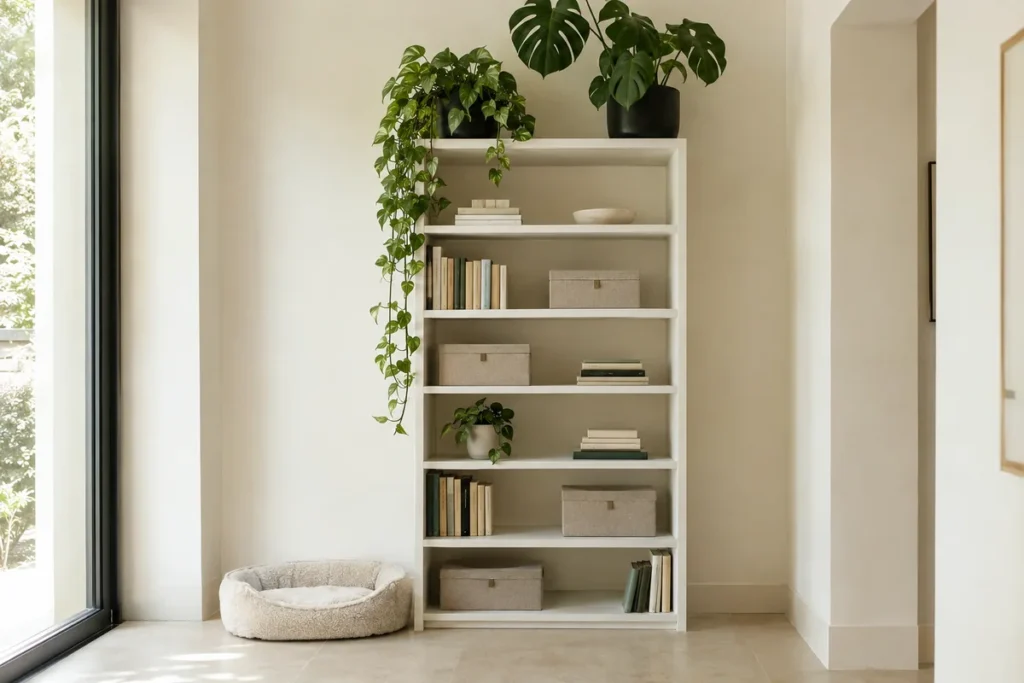
Some of the most popular houseplants are toxic. Most cause mouth irritation, drooling and vomiting rather than lasting harm, but a few are truly dangerous.
Highly dangerous, best kept out of pet homes entirely:
- True lilies and daylilies (Lilium and Hemerocallis): even a small amount of leaf, flower or pollen can cause kidney failure in cats. This includes cut flower bouquets.
- Sago palm: every part is toxic to cats and dogs, especially the seeds, and can cause liver failure.
Toxic, keep well out of reach:
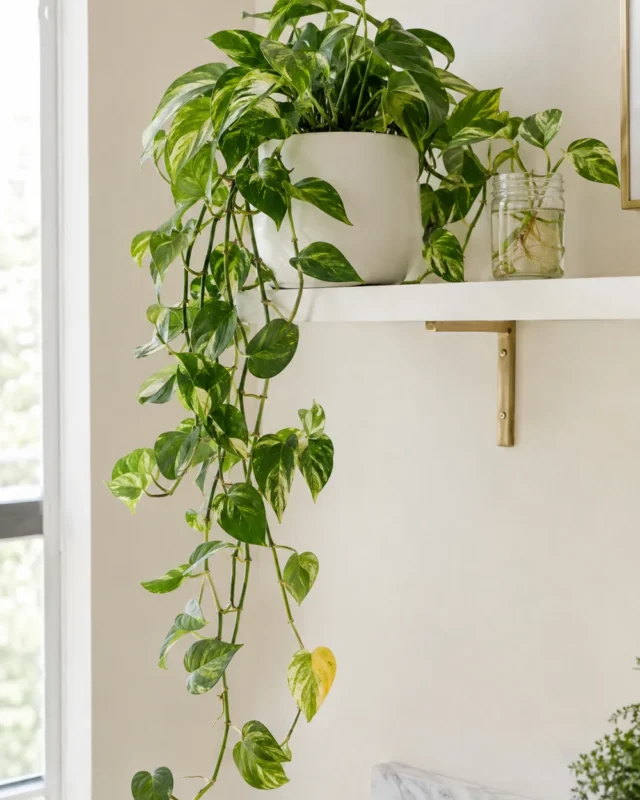
- Pothos and philodendron
- Monstera
- Dieffenbachia (dumb cane)
- Peace lily
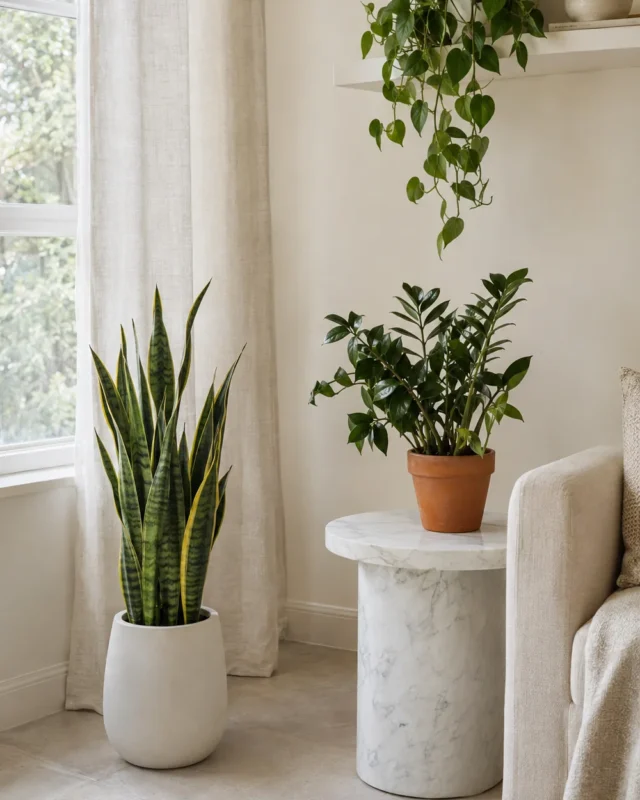
- Snake plant and ZZ plant
- Aloe vera and jade plant
- Dracaena
- English ivy
- Chinese evergreen
If you already own some of these, move them to high shelves, hanging planters, or a room your pets do not use.
Tips for Keeping Plants and Pets Happy Together
- Hang trailing plants and use tall plant stands. Cats climb, so check what can be reached from nearby furniture.
- Offer a pet-friendly alternative. Many cats leave other plants alone when they have their own pot of cat grass (wheat or oat grass) to chew.
- Cover the soil with a layer of smooth river stones if cats dig in pots.
- Choose heavy, wide pots that are hard to knock over.
- Clean up fallen leaves and spent flowers so they do not become toys.
A home full of plants and pets is completely doable. Start with a few of these non-toxic favorites, place them thoughtfully, and enjoy the green without the worry.
Which pet-safe plant would you add to your home first? Tell us in the comments.
Quick Questions
Is the spider plant really safe for cats?
Spider plant is considered non-toxic to cats and dogs. Some cats love chewing it and may vomit if they eat a lot, so hanging it is still a good idea.
Are succulents safe for pets?
Some are and some are not. Haworthia and echeveria are generally considered safe, while aloe, jade plant, kalanchoe and euphorbia are toxic. Check each plant by its botanical name.
What should I do if my pet chews a toxic plant?
Remove any plant material from their mouth if you can do so safely, note the plant name, and call your vet or an animal poison control line right away. Do not wait for symptoms.