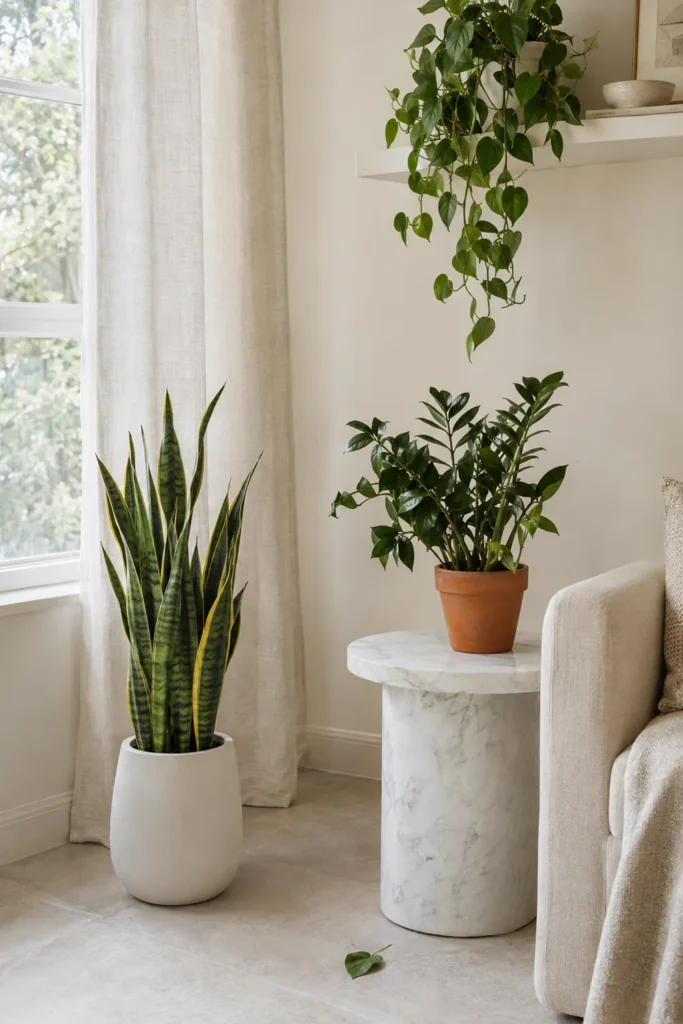
Some rooms just do not get much sun. A bedroom with one north facing window, a bathroom with frosted glass, a hallway that only borrows light from the next room. You want something green in there, but every plant you bring home slowly fades.
The good news is that a handful of houseplants evolved on shady forest floors and are perfectly happy with less light. The trick is choosing the right ones and adjusting how you water, because a plant in low light drinks far less than the same plant in a sunny window.
Here are ten low light houseplants worth trying, plus the care habits that keep them looking full.
What Low Light Really Means
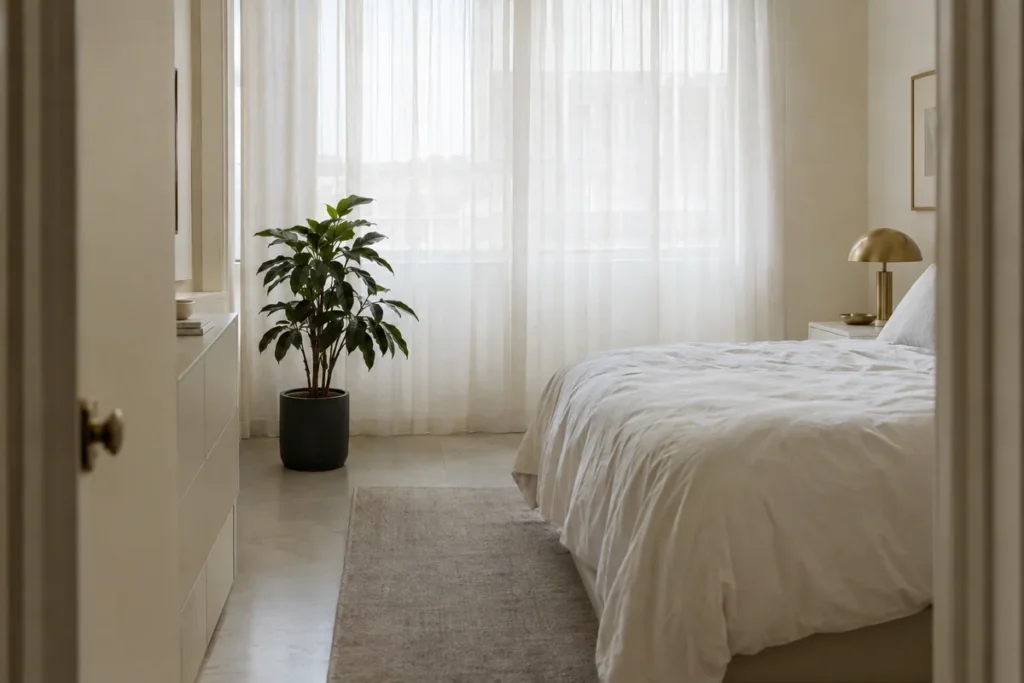
No plant grows in the dark. “Low light” means bright enough to read a book comfortably during the day without turning on a lamp. A few real examples:
- A north facing window, even right up against the glass
- Six to ten feet back from an east or west window
- A room with a window partly blocked by a building, porch roof or large tree
- A bathroom with a frosted window
A simple test: hold your hand about a foot above where the plant will sit at midday. A soft, fuzzy shadow means low to medium light. Almost no shadow at all means the spot is too dark for most plants, and a small LED grow light on a timer for 10 to 12 hours a day will make a real difference.
The 10 Best Low Light Houseplants
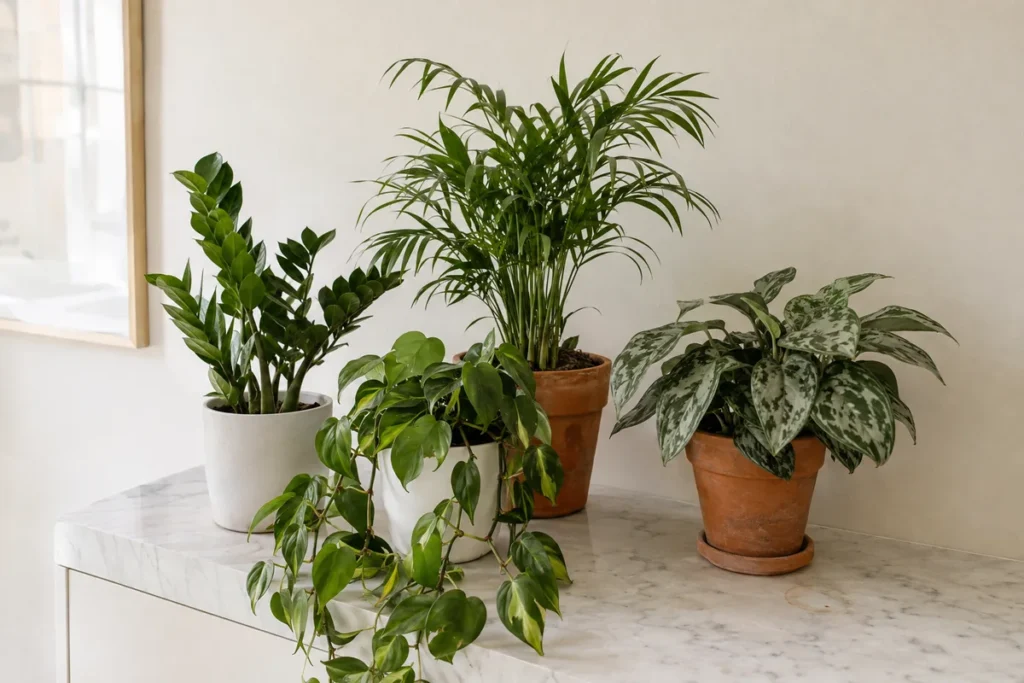
1. ZZ Plant
Thick, glossy leaves and potato-like rhizomes that store water make this one of the toughest plants you can buy. Water only when the soil is completely dry, which in low light can mean every three to four weeks. It is toxic to cats and dogs if chewed, so place it out of reach.
2. Snake Plant
Upright, architectural and nearly impossible to kill with neglect. In dim rooms it grows slowly but keeps its shape. Use a gritty cactus mix and let it dry fully between waterings. Snake plants are mildly toxic to pets and can cause stomach upset.
3. Cast Iron Plant
The name says it all. Broad, dark green leaves handle deep shade, dry air and missed waterings. Water when the top two inches of soil are dry. It is considered non-toxic to cats and dogs, which makes it one of the best low light choices for pet homes.
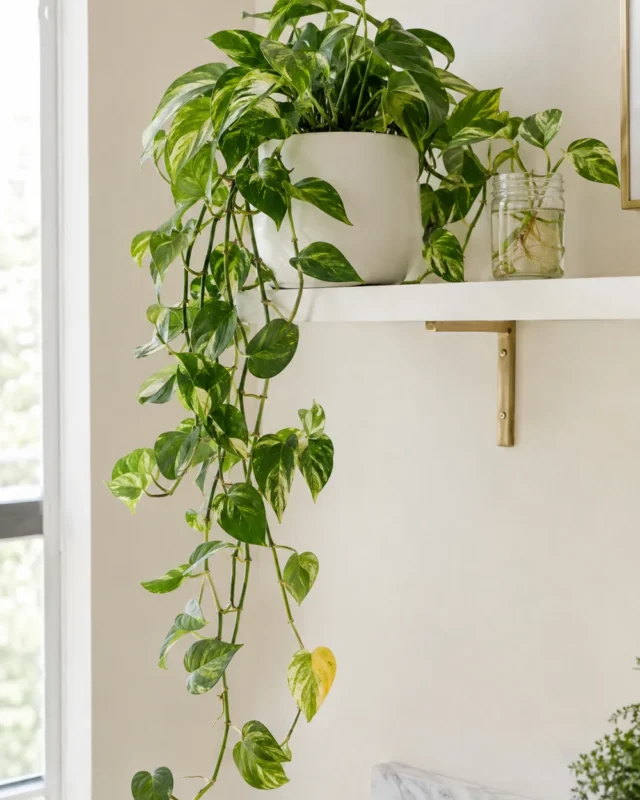
4. Golden Pothos
Trailing vines that look lovely on a shelf or top of a cabinet. In low light the variegation fades toward solid green, but the plant keeps growing. Water when the top inch or two is dry. Pothos is toxic to pets, so hang it high.
5. Heartleaf Philodendron
Similar to pothos, with softer, heart shaped leaves. It tolerates low light well and tells you when it is thirsty by drooping slightly, then perks up within hours of a drink. Toxic to cats and dogs.
6. Parlor Palm
A small, feathery palm that has been grown indoors for generations because it handles low light so well. Keep the soil lightly moist but never soggy. Non-toxic to pets.
7. Chinese Evergreen
Patterned leaves in silver, green and sometimes pink. The darker green varieties are the most shade tolerant. Let the top inch dry between waterings and keep it away from cold drafts below 60°F. Toxic to pets.
8. Peace Lily
One of the few flowering plants that blooms in modest light, though it flowers more with brighter indirect light. It wilts dramatically when dry and recovers quickly after watering. Peace lily is toxic to cats and dogs, though it is not a true lily.
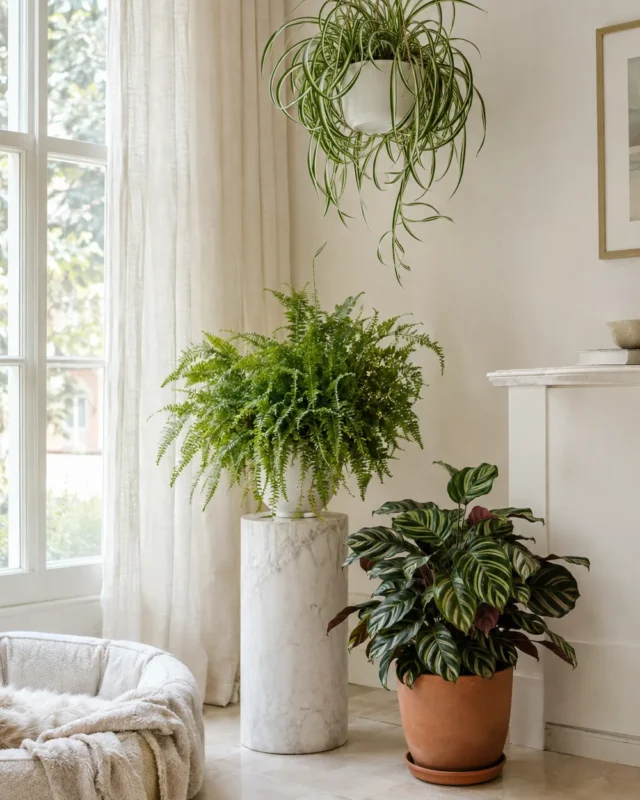
9. Prayer Plant
Striking striped leaves that fold up at night. It likes low to medium light, steady moisture and higher humidity, so it does well in a bathroom. Use filtered or rested tap water if leaf edges brown. Non-toxic to pets.
10. Dracaena
Corn plant and other dracaenas grow slowly in low light and make good floor plants. Let the top half of the soil dry out, and avoid overwatering, which causes brown tips and yellow leaves. Dracaena is toxic to cats and dogs.
How to Water Plants in Low Light
Overwatering kills far more low light plants than darkness does. Less light means less growth, and less growth means the roots use much less water.
- Check the soil, not the calendar. Push a finger two inches into the soil. If it feels damp, wait.
- Water thoroughly, then let it drain. Pour until water runs from the drainage hole, then empty the saucer after 15 minutes.
- Expect long gaps. Every two to four weeks is normal for many of these plants in a dim room, and even longer in winter.
- Use pots with drainage holes. If you love a decorative pot without one, keep the plant in a plastic nursery pot inside it and lift it out to water.
Soil, Pots and Feeding
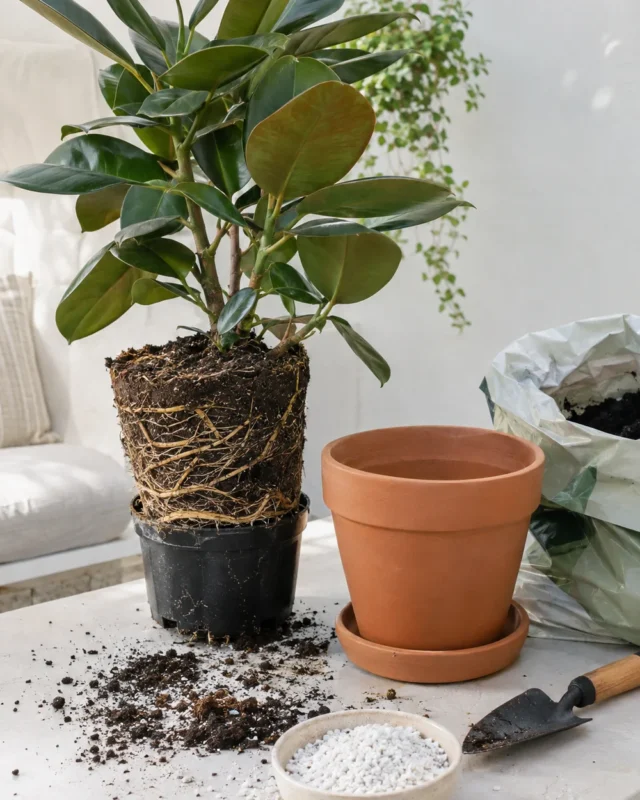
Most low light plants want a light, airy potting mix. A good all purpose blend is two parts indoor potting mix to one part perlite or orchid bark. Snake plants and ZZ plants prefer a gritty cactus mix.
Terracotta pots dry faster than glazed ceramic or plastic, which is helpful for anyone who tends to overwater.
Feed lightly. A balanced liquid houseplant fertilizer at half strength once a month in spring and summer is plenty. Skip feeding in fall and winter when growth slows.
Small Habits That Keep Them Looking Good
- Rotate the pot a quarter turn every time you water so the plant does not lean toward the window.
- Wipe the leaves with a damp soft cloth every month or two. Dust blocks light that the plant cannot spare.
- Move plants closer to the window in winter. Days are shorter and the sun is weaker, so a spot that worked in June can be too dark in January.
- Trim yellow leaves at the base with clean scissors. One or two yellow lower leaves now and then is normal.
A dim room can still feel alive and green. Start with one or two of the toughest plants on this list, water less than you think you need to, and give them a few months to settle in.
Which dim corner of your home are you hoping to fill with a plant first? Tell us in the comments.
Quick Questions
Can a houseplant survive in a room with no windows?
Not on room lighting alone for long. A windowless room needs a full spectrum LED grow light on a timer for about 10 to 12 hours a day. With that, ZZ plants, pothos and snake plants can do well.
Why are the leaves on my low light plant turning yellow?
The most common cause is too much water for the amount of light. Let the soil dry further between waterings and make sure the pot drains freely.
Which low light houseplants are safe for cats and dogs?
Cast iron plant, parlor palm and prayer plant are all considered non-toxic. ZZ plant, snake plant, pothos, philodendron, Chinese evergreen, peace lily and dracaena should be kept out of reach of pets.
Should I mist low light plants?
Misting raises humidity only for a few minutes. If a plant like a prayer plant needs more humidity, a tray of pebbles and water under the pot or grouping plants together works better.